

10/349-351 MacDonnell Rd,
Clontarf, Qld 4019
How to Protect Outdoor Furniture from Sun: The 2026 Brisbane Guide
Angie Neal | September 26, 2026
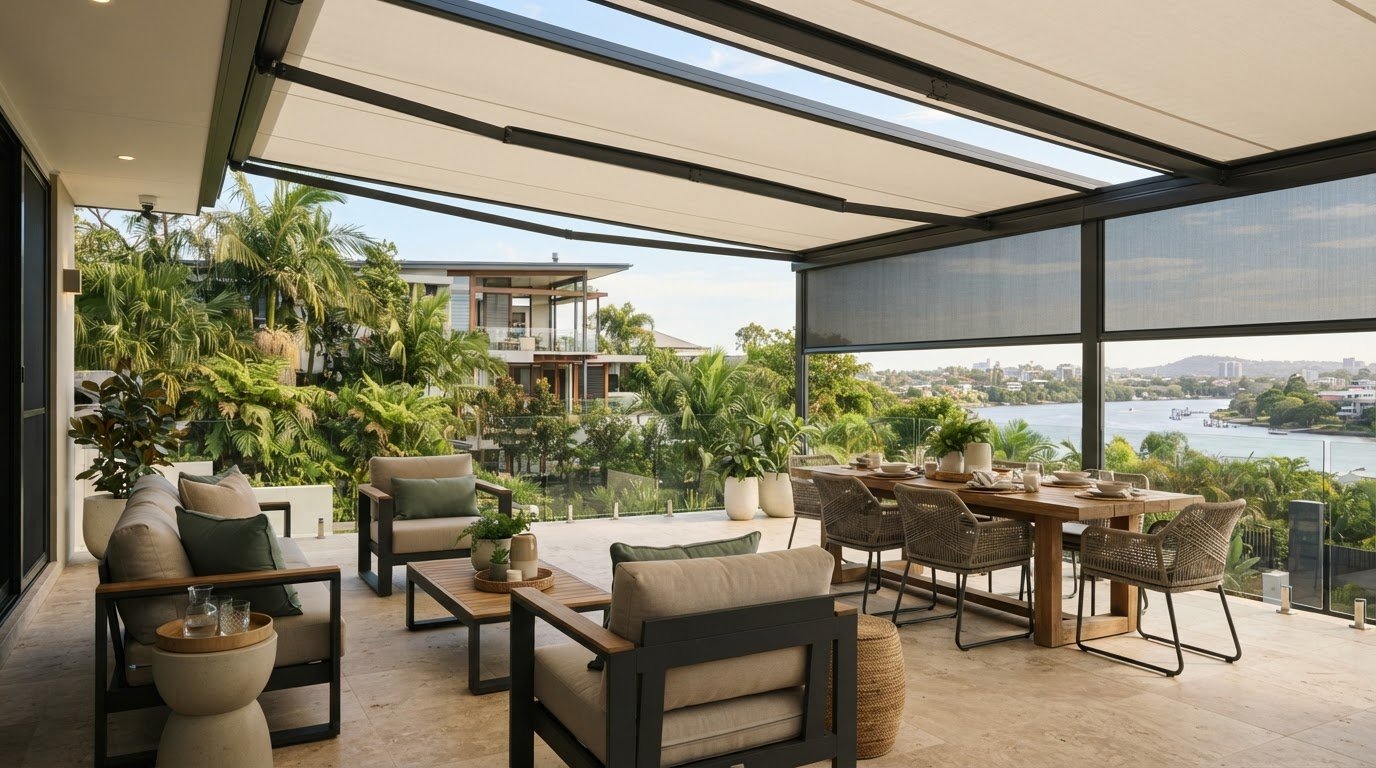
If you’re searching for “protect outdoor furniture sun” advice, start by tackling sun exposure at its source. In Brisbane, a dependable shade barrier can help prevent strong rays from fading cushions, drying timber or heating metal furniture until it is uncomfortable to touch.
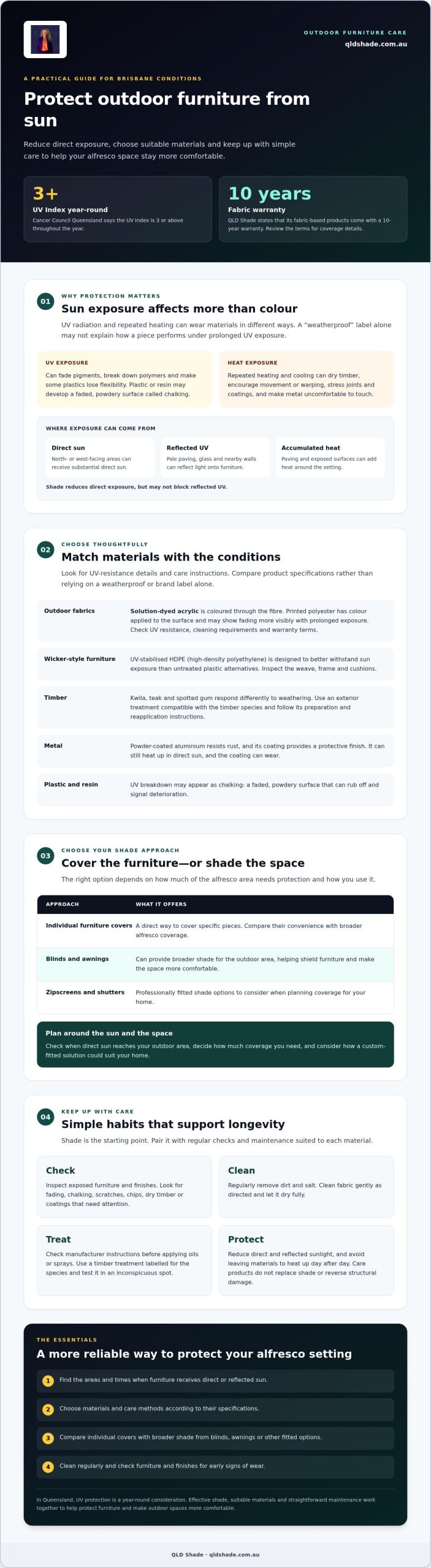
It’s frustrating to invest in an inviting alfresco area, only to watch it weather quickly or carry cushions indoors every day. In Queensland, sun protection matters year-round: Cancer Council Queensland says the UV Index is 3 or above throughout the year. Practical shade can help protect your furniture and make outdoor spaces more comfortable.
In this guide, you’ll find ways to protect outdoor furniture from the sun using effective shade, suitable materials and straightforward maintenance. We’ll look at how Zipscreens and awnings can create a more reliable barrier from direct sun, alongside care tips for timber, metal and cushions. QLD Shade’s Australian-made Zipscreens, awnings and shutters are designed for Brisbane conditions, and fabric-based products come with a 10-year warranty. The goal is a cooler, more welcoming alfresco space without constantly moving cushions or repeating treatments.
Key Takeaways
- Choose outdoor materials and cushion fabrics designed to resist UV exposure and Brisbane’s humidity, then use suitable protective coatings to support their longevity.
- To protect outdoor furniture from sun damage, compare the convenience of individual furniture covers with the broader alfresco coverage provided by blinds and awnings.
- Check when your outdoor area gets the strongest direct sun, and clean away dirt and salt regularly.
- Consider professionally fitted shade options, including Zipscreens and awnings, to help shield furniture and make your outdoor space more comfortable.
- When planning shade, consider how much coverage you need and how a custom-fitted solution could suit your home.
The Impact of the Queensland Sun on Outdoor Furniture
Brisbane’s outdoor furniture faces more than occasional strong sunshine. Cancer Council Queensland says the UV Index in Queensland is 3 or above year-round, so exposure can affect surfaces even outside the hottest part of summer. Over time, pigments fade, plastics can become brittle, timber can dry out, and hot surfaces may put stress on finishes and joints.
A “weatherproof” label doesn’t necessarily explain how a piece performs under prolonged UV exposure. Check whether the manufacturer specifies UV resistance and care requirements, not just resistance to rain or moisture. Placement matters too: north- or west-facing areas can receive substantial direct sun, while nearby paving and walls may reflect light onto furniture.
UV Damage vs. Heat Damage
Photodegradation is the chemical breakdown of material bonds caused by sunlight. UV radiation can alter pigments and polymers, making colours fade and some plastics lose flexibility. Learn more about the process of photodegradation. Heat damage is different: repeated heating and cooling can dry timber, encourage movement or warping, and stress joints and surface coatings.
Shade reduces direct exposure, but it may not block reflected UV from pale paving, glass or nearby walls. Metal furniture can also absorb solar energy and become uncomfortable to touch. Accumulated heat may accelerate wear in paint or protective finishes, particularly where the coating is already scratched or chipped.
Material Breakdown: From Plastic to Teak
On plastic and resin furniture, UV breakdown can appear as chalking, a faded, powdery surface that may rub off and signal deterioration. Timber responds differently. Sunlight and heat can dry its surface and contribute to the loss of natural oils. Exposed wood may turn silver-grey as the outer layer weathers. Silvering is mainly a surface colour change, but it doesn’t mean the timber is protected from cracking or other deterioration.
Powder-coated aluminium is a practical choice for Brisbane because aluminium resists rust and the coating provides a protective finish. It can still heat up in direct sun, and its coating can wear, so shade and routine checks remain worthwhile. Teak is naturally durable, but it still benefits from care suited to the manufacturer’s guidance.
For longer-lasting furniture, address both forms of exposure: reduce direct and reflected sunlight, and avoid leaving materials to heat up day after day. This is a more reliable starting point for limiting sun damage than relying on a weatherproof label alone.
Choosing Sun-Resistant Materials and Protective Coatings
Material choice matters across the whole setting, not just the cushions. In Brisbane’s sunny, humid conditions, UV-resistant surfaces and appropriate maintenance can help slow fading, brittleness and wear. Check product care instructions before applying oils or sprays, since the wrong treatment can leave residue or affect a finish.
The Gold Standard: Solution-Dyed Acrylics
Solution-dyed acrylic is coloured during fibre production, so pigment runs through the fibre rather than sitting only on its surface. Printed polyester, by contrast, has colour applied to the fabric surface and may show fading more visibly with prolonged exposure. Sunbrella is one example of a named outdoor fabric brand, but compare specifications rather than relying on a label. Ask about UV resistance, cleaning requirements and warranty terms. QLD Shade offers a 10-year warranty on fabrics; review its terms to understand what’s covered.
For wicker-style furniture, UV-stabilised HDPE (high-density polyethylene) is designed to better withstand sun exposure than untreated plastic alternatives. Inspect the weave and frame as well as the cushions. Clean fabric gently as directed, let it dry fully, and avoid harsh products that may wear away protective finishes.
Timber Care for the SEQ Climate
Kwila, teak and spotted gum each respond differently to weathering, so don’t assume one oil suits all three. Choose an exterior treatment labelled as compatible with your timber species, and follow its preparation and reapplication instructions. Inspect furniture in exposed areas more often than pieces kept under cover, and follow the product guidance rather than applying oil on an arbitrary calendar.
A dry, faded-looking surface or a finish that no longer repels water as it once did can be a cue to check the care instructions. Clean off dirt first, let the timber dry, and test any treatment in an inconspicuous spot. Oil can nourish or refresh the surface, but it can’t replace shade or reverse structural damage.
For coastal Brisbane locations, salt carried in the air can add another maintenance challenge. A marine-grade finish may suit some exposed furniture, but confirm it’s compatible with the material and intended use, then follow the maker’s cleaning and recoating guidance. Powder-coated aluminium is another practical frame option: it avoids the rust concerns of untreated steel, though the finish still needs care if it’s scratched or chipped.
To protect outdoor furniture from sun exposure, combine suitable materials with shade and routine checks instead of relying on a coating alone. If you’re considering fabric-based shade for your alfresco area, explore QLD Shade’s Brisbane options and compare fabric details and warranty terms.
Structural Shade vs. Furniture Covers: A Comparison
Furniture covers and fixed shade solve different problems. A well-fitted, breathable cover can protect a set when it’s not in use, but it only shields the items it covers. Structural shade, such as an awning or outdoor blind, can help protect furniture across a wider alfresco area while making the space more comfortable to use.
For a practical plan to protect outdoor furniture from sun damage, consider the time spent covering, uncovering and checking furniture as well as the coverage you need. Covers may suit furniture that’s used occasionally; a shade solution may be more convenient for a regularly used patio. Neither removes the need to clean and maintain furniture.
The Limitations of Furniture Covers
A quality cover can reduce direct sun exposure and keep dust or debris off furniture. Choose one that fits securely and is designed for outdoor use. Covers can trap moisture if damp cushions or furniture are enclosed, creating conditions for mildew. Remove covers periodically, air the furniture and let everything dry fully before covering it again.
Cheap plastic covers can be a poor fit for Brisbane’s heat: they may trap warmth and moisture, and a loose cover can rub against surfaces in the wind. A cumbersome cover can also become an “out of sight, out of mind” problem. Cushions may stay damp underneath, while small signs of wear go unnoticed. If you cover furniture daily, the repeated lifting and folding can quickly feel like a chore.
The Advantage of Permanent Shade Blinds
Outdoor blinds and awnings shade more than a single table or lounge set. When selected and positioned appropriately, they can reduce direct sunlight on furniture, cushions and nearby surfaces. Depending on the fabric and configuration, blinds can also help moderate sun and maintain airflow rather than enclosing the area completely. Consider which direction the sun reaches your patio and how much openness you want.
Zipscreen blinds in Brisbane provide an adjustable shade option for an alfresco area. Lower them when sun reaches the furniture, then open them when you want a clearer view or more light. QLD Shade’s Australian-made Zipscreens are designed for Brisbane conditions, and their fabrics carry a 10-year warranty.
There’s a lifestyle benefit, too. A shaded outdoor area can feel more inviting for everyday meals and relaxed weekends, while a coordinated blind or awning gives the space a considered, finished appearance. Structural shade requires an initial investment and appropriate installation, but it may reduce the daily effort of managing separate covers. Compare that convenience with your space, usage and maintenance preferences before choosing.
Strategic Placement and Daily Maintenance Strategies
Good placement and simple routines can reduce uneven fading and help furniture stay comfortable through Brisbane’s changing sun. Start by noticing where direct light falls at different times of day, then position pieces to avoid long exposure where practical. Small adjustments can protect vulnerable surfaces over time without requiring you to rearrange the whole patio every morning.
Understanding Your Aspect
West-facing decks often need strong afternoon shade, when low-angle sun can stream beneath rooflines and heat furniture. North-facing areas receive the most consistent UV exposure across the day, so plan for broader periods of shade rather than protection at just one hour. Nearby walls, paving and glass can also reflect sunlight into the space.
Use existing trees, pergolas and roof overhangs as secondary barriers, while keeping enough clearance for airflow and safe use. If furniture sits in a patch of direct sun, rotate chairs or turn a table periodically so one side doesn’t take all the exposure. Where possible, place cushions and timber pieces in the naturally shaded part of the deck during the hours they’re not in use.
Cleaning for Longevity
Dust and grime can settle on outdoor surfaces and heat up in direct sun. As they shift or get wiped across a finish, grit can act like an abrasive. Bayside homes may also collect salt deposits, which can contribute to wear on exposed furniture and metal finishes. Rinse surfaces regularly and dry them where appropriate, paying attention to joints and hard-to-reach areas.
Use a soft cloth or brush and a mild, pH-neutral cleaner only if it’s suitable for the furniture’s material and finish. Follow the manufacturer’s care instructions, and test an unfamiliar cleaner on a discreet spot first. Avoid abrasive pads and harsh chemicals that could scratch or strip a protective surface.
Make cushion storage easy enough to use every day. Keep a ventilated storage box close to the seating area, and let cushions dry before putting them away. If storing them indoors, choose a spot near the door so carrying them in doesn’t become a barrier to using the space. A quick routine after outdoor meals can prevent cushions being left in strong sun for hours.
To protect outdoor furniture sun exposure, combine thoughtful placement, regular cleaning and a cushion-storage habit that fits your household. If a west-facing deck or exposed patio needs more reliable shade, explore Brisbane shade options from QLD Shade.
Investing in Professional Shade Solutions for Total Protection
Furniture covers and protective treatments can help, but they don’t shade the whole alfresco area. Professionally fitted outdoor blinds and awnings create a practical barrier between direct sun and furniture, while helping make the space more comfortable to use. A correctly measured installation also helps the shade suit the opening and the sun exposure you’re trying to manage.
DIY shade sails may seem straightforward, but choosing suitable fixing points, achieving appropriate tension and accounting for local wind and weather conditions takes care. Professional installation can help ensure the solution is properly matched to the site. The right fabric also involves a balance: a more open weave may preserve the view and airflow, while other fabric choices may provide more screening. Ask about UV performance and visibility for the specific fabric being considered.
Zipscreen: A Practical UV Barrier
QLD Shade’s Australian-made Zipscreens use side channels to guide the blind and help reduce gaps at the edges. The level of UV protection depends on the selected fabric and configuration, so check the product details rather than assuming every fabric blocks the same amount. Motorised blinds can make it easier to adjust shade as conditions change. If you want automated operation while away, confirm which controls and system compatibility are available for your installation.
QLD Shade’s Zipscreens are designed for Brisbane conditions, and their fabrics carry a 10-year warranty. For more detail on selecting a fit for your space, see this guide to Zipscreen blinds in Brisbane.
Awnings and Shutters for Versatile Shade
Awnings provide overhead shade for outdoor dining areas, while exterior aluminium shutters offer another way to manage sunlight and privacy. Consider the dimensions of your furniture, the direction of the sun, and how much airflow and view you want to retain. Brisbane outdoor living ideas can help you think through how shade fits into the wider alfresco space.
To choose a solution that suits your home, take advantage of QLD Shade’s free in-home measure and quote. Arrange a free in-home measure and quote to discuss shade options for your furniture and outdoor area.
Protect outdoor furniture sun damage: practical steps for Brisbane
To protect outdoor furniture from sun exposure, pair suitable materials and regular care with shade that covers the space where you actually relax. Covers and maintenance can help, but outdoor blinds and awnings offer a practical way to reduce direct sun across an alfresco area while making it more comfortable to use.
QLD Shade is a family-owned Brisbane business specialising in Australian-made Zipscreens designed for local conditions. Its fabric products come with a 10-year warranty, offering added reassurance as you plan shade for your home.
Ready to explore a solution for your patio, deck or outdoor dining area? Book your free in-home measure and quote with QLD Shade today. A considered shade choice can help protect your furniture and make your outdoor space more inviting, season after season.
Frequently Asked Questions
What is the best material for outdoor furniture in the full sun?
Powder-coated aluminium, teak and UV-stabilised synthetic wicker are practical choices for sunny Brisbane outdoor areas. Aluminium is lightweight and resists rust, while teak is durable timber that still needs care. For wicker-style furniture, look for UV-stabilised HDPE rather than untreated plastic. Whatever the frame, check the maker’s guidance for sun exposure and maintenance, and use shade to reduce prolonged direct sunlight.
Do UV protectant sprays for outdoor furniture actually work?
They may help maintain some materials when the spray is specifically designed for that surface and used as directed, but they aren’t a substitute for shade. Check the product label for material compatibility, application instructions and how often to reapply. Test it on a discreet area first. Don’t use a fabric spray on timber or plastic unless the manufacturer confirms it’s suitable, as treatments can affect finishes.
How often should I oil my outdoor timber furniture in Brisbane?
There isn’t one reliable re-oiling schedule for every timber type or outdoor setting. Brisbane sun exposure, rain, shade and the specific oil all affect how often treatment is needed. Follow the timber and oil manufacturers’ instructions, and inspect the furniture regularly. If the surface looks dry or its finish appears worn, check the care guidance before reapplying. Clean and dry the timber as directed first.
Can I leave my outdoor cushions in the sun all summer?
It’s better not to leave cushions in prolonged direct sun all summer. UV exposure can fade fabric, while heat and moisture may contribute to wear. Choose outdoor fabric with documented UV resistance, and use shade when cushions aren’t in use. If you store them, let them dry first and keep them somewhere ventilated. A nearby storage box can make putting cushions away simpler and more consistent.
Will Zipscreen blinds prevent my furniture from fading?
Zipscreen blinds can reduce direct sunlight reaching furniture, helping limit exposure that contributes to fading, but they can’t guarantee that fading won’t occur. Results depend on the fabric selected, blind placement, sun direction and reflected light. QLD Shade supplies Australian-made Zipscreens designed for Brisbane conditions, with a 10-year warranty on fabrics. Ask about fabric specifications and how the blind can suit your alfresco area.
What is the difference between a water-resistant and a sun-resistant cover?
A water-resistant cover is designed to help repel moisture, while a sun-resistant cover is made to withstand UV exposure with less deterioration. These qualities aren’t interchangeable, so check the cover’s product specifications for both. A cover can also trap moisture if damp furniture is enclosed, so air the furniture and let it dry before covering. A well-fitted cover may protect individual pieces, but it won’t shade the whole area.
Is it better to use a light or dark coloured shade blind for UV protection?
Colour alone doesn’t tell you how much UV a shade blind will filter. Check the fabric’s stated UV performance, openness and visibility rather than choosing solely by whether it looks light or dark. Consider how much view and airflow you want, too. In Brisbane, the best choice depends on the opening’s direction, nearby reflected sunlight and how you plan to use the outdoor area.
How much does it cost to install professional outdoor blinds in Brisbane?
The cost depends on the opening’s size, the blind type, fabric, operation and installation requirements, so there isn’t one figure that suits every Brisbane home. QLD Shade offers a free in-home measure and quote to assess your space and discuss suitable options. Ask for a quote based on your measurements and preferred features, and confirm what the quoted installation includes before making a decision.
Ready to Transform Your Space?
Take the next step and discover the right blinds, shutters, awnings for your space.
Get a Free In-Home Measure & Quote
Contact QLD Shade today for a free measure and quote and discover why Brisbane homeowners trust us for premium outdoor blinds and awnings.
GET IN TOUCH
FOLLOW US: