

10/349-351 MacDonnell Rd,
Clontarf, Qld 4019
Patio Sun and Wind Protection in Brisbane: PVC or Mesh
Angie Neal | November 16, 2026
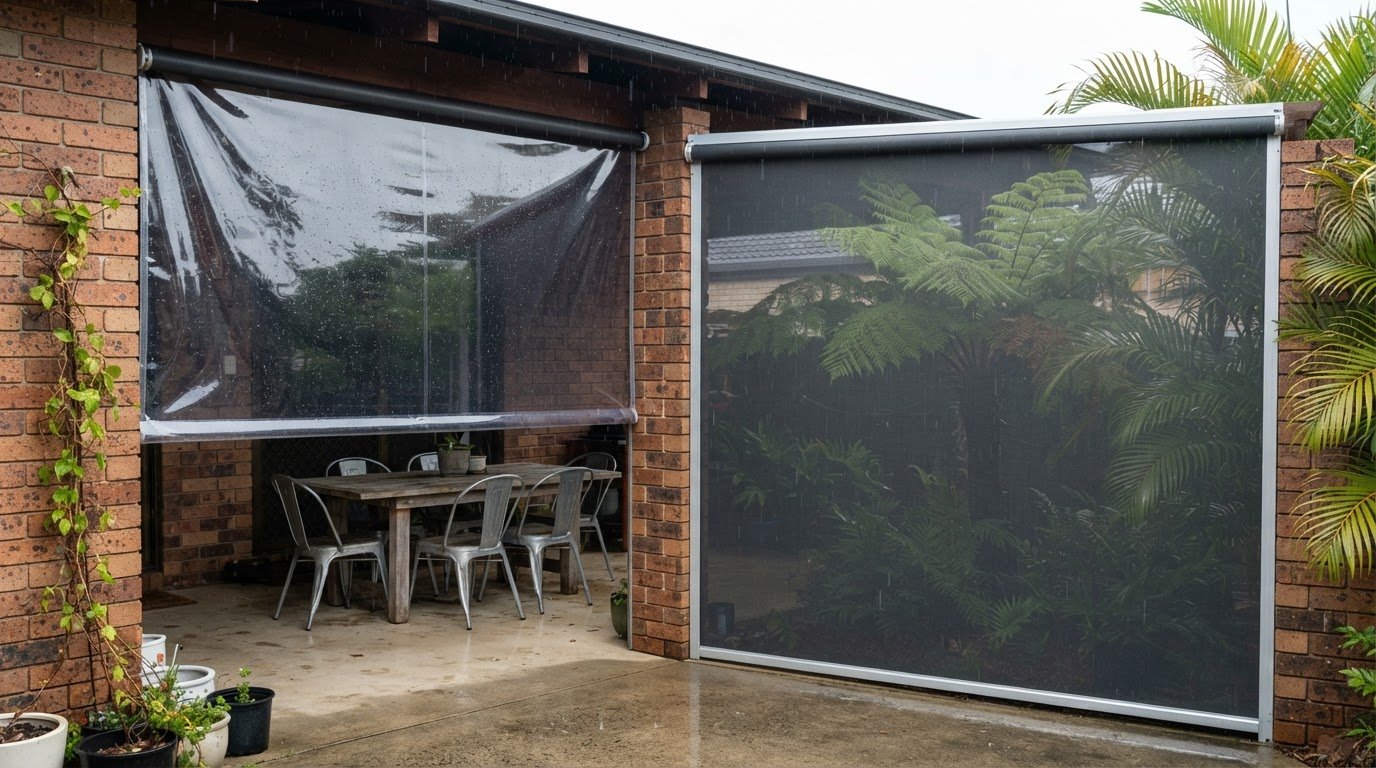
The clearest patio enclosure isn’t always the most comfortable choice. For patio sun and wind protection in Brisbane, clear or tinted PVC is suited to a fully waterproof barrier, while mesh is a better fit when airflow and an open outlook matter more. Mesh can shed light rain, but mist may pass through during heavy downpours.
It makes sense to want shade that takes the edge off harsh sun without making your patio feel closed in. External patio shades can also reduce the heat entering a Brisbane home by up to 47 per cent, helping make the choice about more than rain protection alone.
This guide compares PVC and mesh for sun, wind, rain and insects, and explains what to consider if indoor heat is a concern. Exposure, airflow and visibility all shape the right choice, helping you make a confident decision about the protection your patio needs.
Key Takeaways
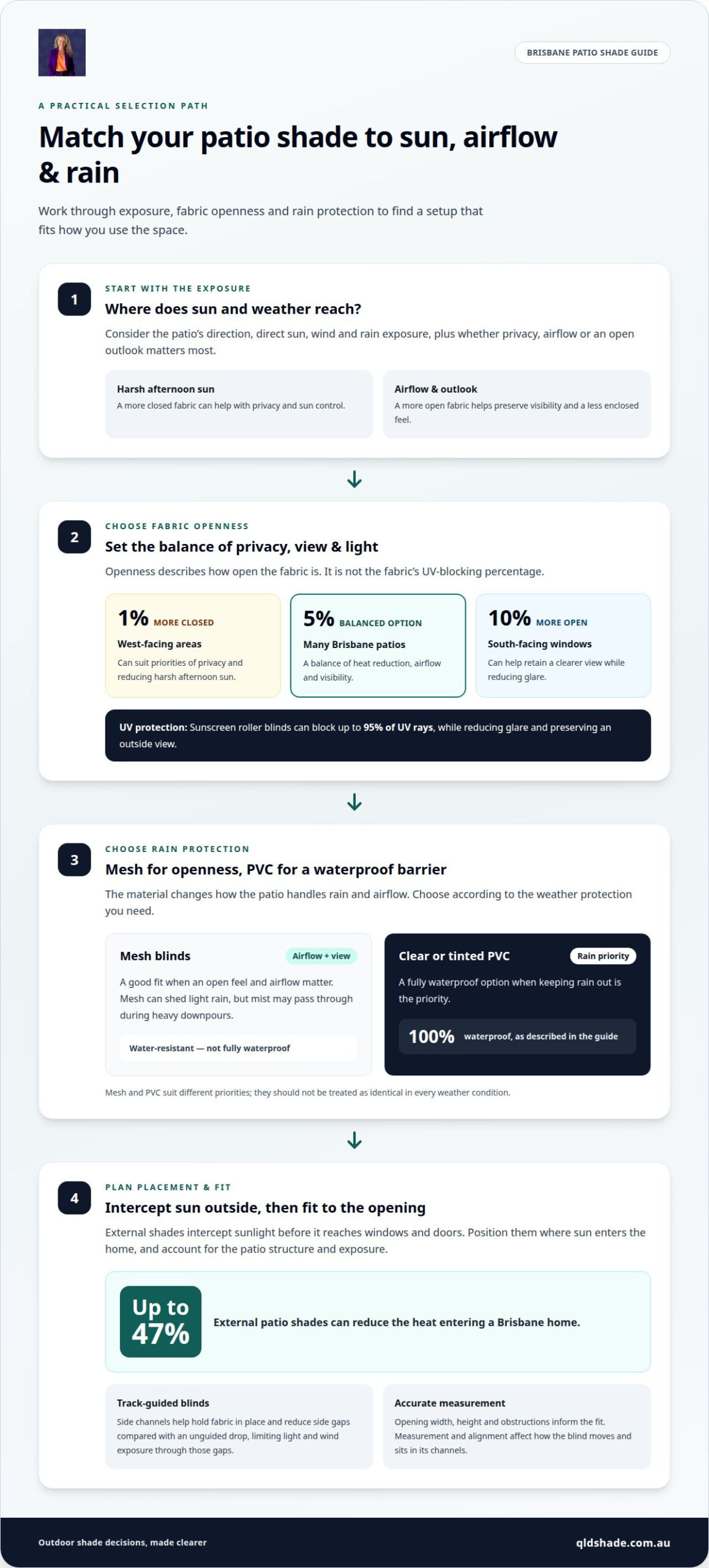
- Match fabric openness to your priorities: 5 per cent is a practical balance of airflow, visibility and heat reduction for many Brisbane patios.
- Consider the direction of harsh sun when choosing shade; a more closed fabric can offer greater privacy, while a more open one helps preserve the view.
- Plan for changing weather by weighing wind exposure, rain protection and how much airflow you want across the patio.
- Professional measurement and fitting help ensure outdoor blinds align with the space and suit its conditions.
Blinds designed for Brisbane heat, humidity and UV exposure
For patio shade materials in Australia, look for a stated UV-blocking percentage rather than judging protection by colour alone. Sunscreen roller blinds can block up to 95% of UV rays while reducing glare and preserving an outside view. The fabric’s openness also affects privacy, visibility and how much sun reaches the patio.
Match openness to the patio’s direction and use. A 1% openness fabric can suit a west-facing area where privacy and harsh afternoon sun are priorities. For a south-facing window, 10% openness can help retain a clearer view while reducing glare. A 5% option is a balance of heat reduction, airflow and visibility for many patios. These figures describe how open the fabric is, not its UV-blocking percentage.
Rain protection depends on the material. Mesh blinds are generally water-resistant: they can shed light rain, but mist may pass through during heavy downpours. Clear or tinted PVC cafe blinds provide a fully waterproof option, described as 100% waterproof. Choose mesh for airflow and an open feel during alfresco entertaining; choose PVC when keeping rain out is the priority. Neither choice should be treated as identical in every weather condition.
Room use matters, too. In a living room, sunscreen blinds can soften glare while retaining daylight and the view. In a kitchen, reducing direct sun can make the space more comfortable without enclosing it. In an office, controlling glare on a screen may matter more than preserving the widest view. Internal blinds and panel glides help manage light inside, while outdoor shades intercept sun before it reaches the room.
Track-guided blinds run along side channels, helping hold the fabric in place and reduce side gaps compared with an unguided drop. This can limit light entering around the edges and reduce wind exposure through those gaps. Accurate measurement and alignment matter during installation: even a small fitting error can affect how the blind moves and sits in its channels. The opening’s width, height and any obstructions all inform the final fit.
For Brisbane conditions, weigh UV protection, airflow, privacy and rain exposure together rather than selecting on appearance alone. A west-facing patio used for entertaining may benefit from a more closed sunscreen fabric, while a sheltered area prioritising visibility may suit a more open mesh. Where full rain exclusion is essential, PVC cafe blinds are the clearer choice. This comparison makes the trade-off practical: mesh keeps the setting more open, while PVC provides a waterproof barrier.
Brisbane subtropical climate and outdoor shade
Brisbane’s summer heat, humidity and sudden weather changes make it important to match shade to the patio’s exposure and use. Awnings and shade sails provide overhead cover, while outdoor blinds can screen the sides against sun and wind.
Awnings and pergolas provide overhead shade, shade sails offer a fixed canopy, and outdoor blinds screen the sides; their wind protection depends on design and exposure. Approval requirements aren’t the same for every project: structure, location and planning controls affect whether Brisbane City Council or Queensland requirements apply.
Outdoor Shade Durability
Fabric choice and exposure influence how outdoor shade holds up over time. Professional-grade mesh fabrics such as Soltis and Dickson Sunworker can last up to 10 years in Brisbane conditions. That figure offers a useful durability reference, but it isn’t a lifespan for every fabric or installation.
Consider how much direct sun, wind and rain the patio receives, and how often you’ll operate the shade. A broad, exposed pergola awning faces different demands from a sheltered screen beside a living room. Colour also affects the look and feel of the area, while fabric openness influences visibility and airflow.
Shade and Indoor Heat
Outdoor shade can intercept sunlight before it reaches windows and doors. External patio window shades can reduce the heat entering a Brisbane home by up to 47 per cent, which can help keep connected living spaces more comfortable.
Placement matters. A screen beside a sun-exposed window can reduce direct sun, while overhead cover shades the adjoining patio. For Brisbane homes with an open alfresco area, combining overhead shade with side screening can address exposure from more than one direction. The best arrangement depends on where sunlight reaches the home and whether airflow or enclosure matters more.
Large pergola areas need a shade solution suited to their width, support and intended operation. Awnings provide overhead cover, while outdoor blinds screen exposed edges. Together, they can make the area more comfortable for dining or entertaining. Account for the structure and prevailing exposure rather than treating every pergola as sheltered.
Privacy screens and outdoor shutters address different needs. A screen can limit views while preserving a more open feel, whereas shutters create a more solid boundary and can be adjusted to manage light and privacy. Either can also help screen insects when openings are covered, though the result depends on how the installation meets the surrounding structure.
Planning approval is a project-specific consideration, not a detail to assume away. The type and scale of an awning, pergola or shade sail, plus the property’s location and applicable controls, can affect the assessment. For a tailored outdoor shade layout, explore outdoor blind options suited to the patio’s exposure and how you use the space.
External patio shades and indoor heat reduction
External shade helps manage indoor heat by intercepting sunlight before it reaches the glass. For example, a patio blind beside a west-facing living-room window can shade both the outdoor area and the window. This reduces direct sun on interior surfaces, while raising the blind can restore daylight and views. Position the shade according to where sun enters the home, not simply where the patio is largest.
Start by identifying which rooms become uncomfortable and when they receive direct sun. A kitchen affected by afternoon glare may need shade along its exposed side, while a bedroom may benefit from coverage during morning sun. Measurements should account for the full opening, nearby walls and the blind’s travel path. Correct coverage helps avoid exposed edges where sunlight can still reach the glass.
Fabric openness affects the balance between shade, view and airflow. More open fabric maintains a clearer outlook, while a denser screen reduces the light passing through. These choices also affect the brightness of an adjoining room. Compare fabric in the context of the window’s direction, the room’s use and the season, rather than choosing by colour alone.
Operation matters as weather and daily routines change. Raising a blind when the sky is overcast preserves natural light; lowering it during direct sun adds shade when the room needs it. Remote operation can make adjustments easier for a wide or hard-to-reach opening. For a connected indoor space, Indoor PVC Shutters offer another way to manage light at the window alongside outdoor screening.
Outdoor shading can make an alfresco area more comfortable and reduce the contrast between a shaded patio and a sunlit room. Consider how the patio connects to living areas, whether doors are often open, and whether airflow matters in humid weather. A screen chosen only for the indoor view may not address rain or wind at the patio edge, so assess those needs separately.
External fabrics and opening dimensions should be considered together. A professional measure accounts for the width, height and position of the opening, helping the shade cover the area intended. For a tailored discussion of outdoor shade options, consider how your rooms are used throughout the day and across the season.
QLD Shade offers outdoor blinds for decks, balconies and patios, including automated and remote sensor-operated options. Choose according to how often you use the outdoor area and whether convenient adjustment is a priority. Consider how the blind fits your routine, including when you want daylight or need to respond to changing sun. Discussing operation alongside coverage and fabric keeps both the outdoor setting and adjoining room in view.
Blocking wind, rain, insects and sun
For patio sun and wind protection in Brisbane, match the screen to your patio’s exposure and airflow needs. The right setup also depends on the opening and how you use the outdoor living area.
Wind Ratings and Standards
There isn’t one wind rating that suits every patio blind or structure. Suitability depends on the complete installation, including the blind, support and fixings, as well as the site’s exposure. Australian standards may apply differently to a blind and its supporting structure, so assess them as separate components. A professional recommendation should consider the product’s documented limits and the patio’s conditions.
Wind-Rated Blinds and Screens
For a Brisbane patio exposed to gusts, consider how the blind is guided and secured, not just the fabric. Heavy duty commercial channel blinds use side channels to guide the blind and reduce gaps. This design can help limit movement at the edges, but does not establish a wind rating by itself. The installed system’s documented limits remain central to choosing a suitable screen.
Storm Use and Retraction
Don’t assume any outdoor blind can withstand every Brisbane storm. Mesh can shed light rain, but mist may pass through during heavy downpours. PVC provides a waterproof barrier, not a guarantee against storm damage. Retract blinds when strong winds or severe weather approach, following the operating instructions for the specific product. This helps avoid leaving the blind exposed as conditions worsen.
Wind Protection and Airflow
To reduce wind without closing off the patio, screen the side that receives the prevailing gusts and leave another opening for airflow. Mesh can preserve more openness than a solid barrier, while its fabric and track arrangement affect visibility and air movement. For example, screening part of an entertaining area can shelter seating while leaving the opposite side open.
Rain and insects call for different considerations. A close-fitting screen can help limit gaps around an opening, while mesh allows more airflow than a fully enclosed PVC blind. For a kitchen window beside the patio, an indoor roller blind can reduce glare; exposed outdoor seating calls for attention to wind direction and secure installation. A practical patio sun and wind protection plan in Brisbane considers the opening, supports and exposure together, guiding product choice and when to retract the blind.
What patio shade options provide sun protection in Brisbane?
Brisbane patios can use overhead cover, side screening or a combination, depending on where sunlight lands. Awnings shade from above, while outdoor blinds screen exposed sides. Start by tracing the sun’s path across the patio: morning exposure, afternoon glare and the connection to indoor rooms all affect the best layout.
Fabric awnings come in folding-arm, side-track, motorised and spring roll-up styles, with fabric choices for different settings. Folding-arm designs extend overhead cover when needed, while side-track styles guide fabric along the sides. Motorised operation can make adjusting shade more convenient. Choose a configuration according to the area to cover, how often you use the patio and whether you want a clear view when the shade is raised.
Aluminium awnings offer another overhead option, in different styles and colours. Their solid surface provides shade without a fabric canopy, and they’re described as long-lasting and easy to maintain. Consider how a fixed overhead structure will affect daylight indoors, particularly beside a living room or kitchen. The patio’s roofline and the direction of direct sun also help determine where overhead cover will be most effective.
Shade sails provide overhead shade across an outdoor area, but they don’t screen the sides like outdoor blinds. This matters if low afternoon sun reaches seating from the west. A blind on the exposed edge can address side glare, while an awning or sail provides cover above. Combining options can create a more usable entertaining space without relying on one product to address every exposure.
To compare options, consider these practical factors:
- Sun direction: identify whether direct light comes from above or enters from the side.
- Daily use: choose operation that suits how often you adjust the shade.
- View and airflow: decide how open the patio should feel when covered.
- Indoor comfort: consider which windows and adjoining rooms receive direct sun.
Accurate measurement helps size the coverage to the patio, including its edges and connection to the house. A professional assessment can also account for the structure and intended operation before installation. For Brisbane sun exposure and a layout suited to your patio, discuss outdoor shade options with a specialist.
Compare aluminium awnings with fabric cover in the context of your patio’s roofline and the direction of direct sun. QLD Shade offers aluminium awnings in a variety of styles and colours, described as long-lasting and easy to maintain. Before choosing a fixed overhead option, consider how its solid surface could affect daylight in adjoining rooms and how much of the outdoor area it would cover. This keeps the decision connected to patio use and indoor comfort.
Where exposure also comes from the side, consider an overhead awning alongside outdoor blinds rather than as a substitute for screening. Decide whether you want cover above, along an exposed edge or both, and whether the view should remain open when a shade is raised. Measurements and an assessment of the structure help align the arrangement with its intended operation.
QLD Shade
QLD Shade can help turn your patio’s sun, wind and rain exposure into a practical shade plan. A free in-home measure and quote assesses the space’s layout and the protection you want, whether that means preserving airflow, reducing glare or creating a more sheltered outdoor area.
Options include Zipscreen and Heavy duty commercial channel blinds for outdoor screening, alongside Motorised Blinds and Indoor PVC Shutters for managing light indoors. The right choice depends on how you use the patio and which elements affect comfort most. If you’re weighing up mesh and PVC or planning coverage across an exposed opening, contact QLD Shade to discuss a tailored solution.
Plan your next step for a more comfortable patio
Start with the part of your home that needs the most attention. Is afternoon sun affecting an adjoining room, or is wind making outdoor meals less comfortable? That priority guides the balance between an open outlook, extra screening and a more sheltered space. For patio sun and wind protection in Brisbane, a tailored assessment can turn your preferences into a plan for your patio and its connection to the home.
QLD Shade offers Zipscreen, Heavy duty commercial channel blinds and Indoor PVC Shutters for different areas and needs. The next step is to discuss how you use the space, what you want to manage and which openings matter most. A solution shaped around those details can help make your patio more enjoyable through changing conditions.
Contact QLD Shade about patio blinds to talk through your space and the protection you’re looking for. Take the next step towards a more comfortable outdoor area.
Frequently Asked Questions
How can a professional help me choose between PVC and mesh patio blinds?
A professional can match the blind type to your priorities for airflow, visibility, rain and privacy. Mesh keeps the patio more open and can shed light rain, though mist may pass through during heavy downpours. PVC creates a more enclosed screen. An assessment can also consider the opening’s dimensions and exposure, helping you decide whether a breezier entertaining area or greater shelter matters most.
How does a professional design patio shade for Brisbane’s sun direction and seasonal weather?
A professional considers where sunlight reaches the patio and adjoining rooms, then plans coverage around exposed areas. For example, afternoon sun entering a west-facing living space may call for side screening as well as overhead shade. Brisbane afternoon storms can occur from November to March, so the design should also account for changing weather and how the blind will be operated.
What maintenance and professional installation help patio screens and shade structures last in Brisbane?
Clean outdoor blinds with a soft cloth or sponge, warm water and mild soap; avoid harsh chemicals and abrasive brushes that may damage the material. Professional installation supports accurate measurement, secure fitting and alignment. Even a 5 mm measurement error can cause wind whistling or light leaks, so precise fitting matters for smooth operation and a close fit around the opening.
Ready to Transform Your Space?
Take the next step and discover the right blinds, shutters, awnings for your space.
Get a Free In-Home Measure & Quote
Contact QLD Shade today for a free measure and quote and discover why Brisbane homeowners trust us for premium outdoor blinds and awnings.
GET IN TOUCH
FOLLOW US: