

10/349-351 MacDonnell Rd,
Clontarf, Qld 4019
Outdoor roller shades for patios and balconies: pricing
Angie Neal | November 21, 2026
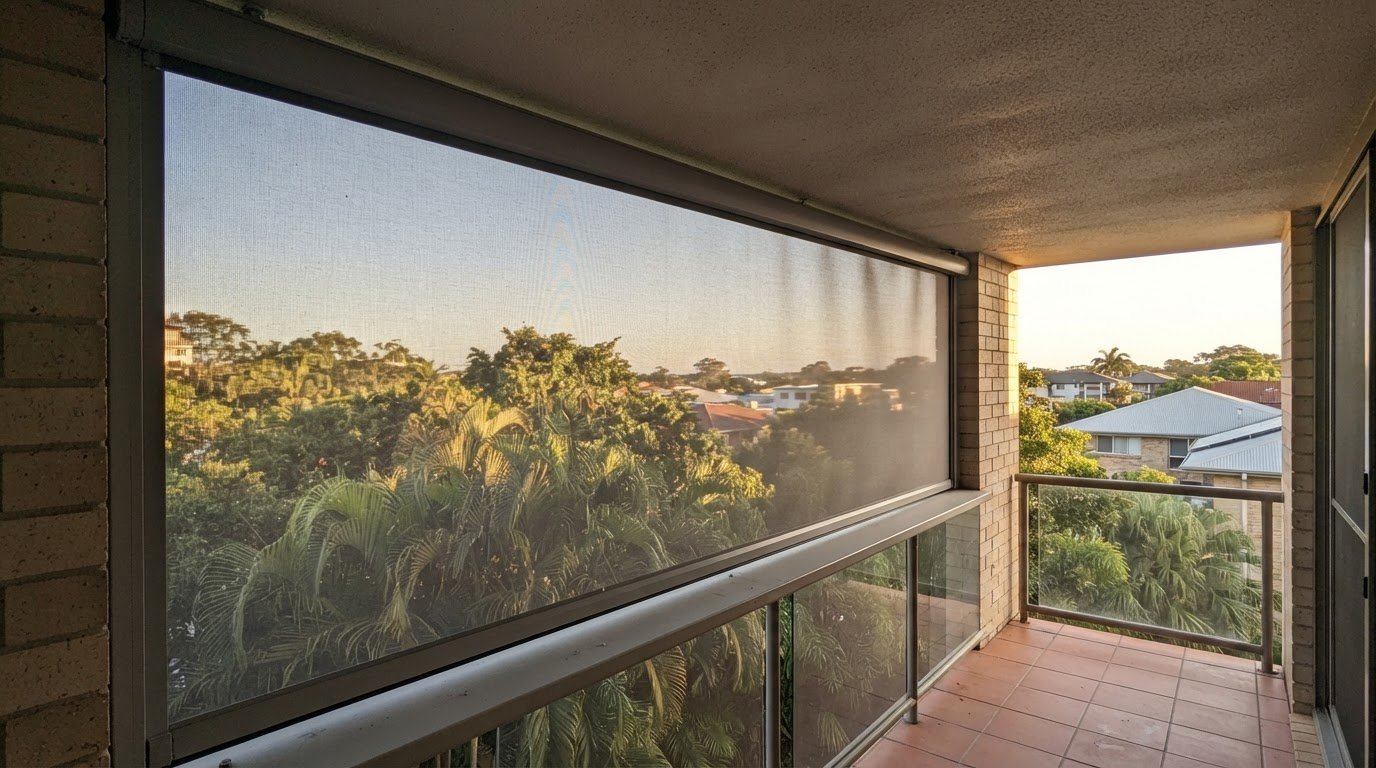
The price of outdoor roller shades depends on more than the opening size. Fabric, privacy and glare-control needs, side-channel design and installation conditions all affect the quote. There is no single set price for every patio or balcony.
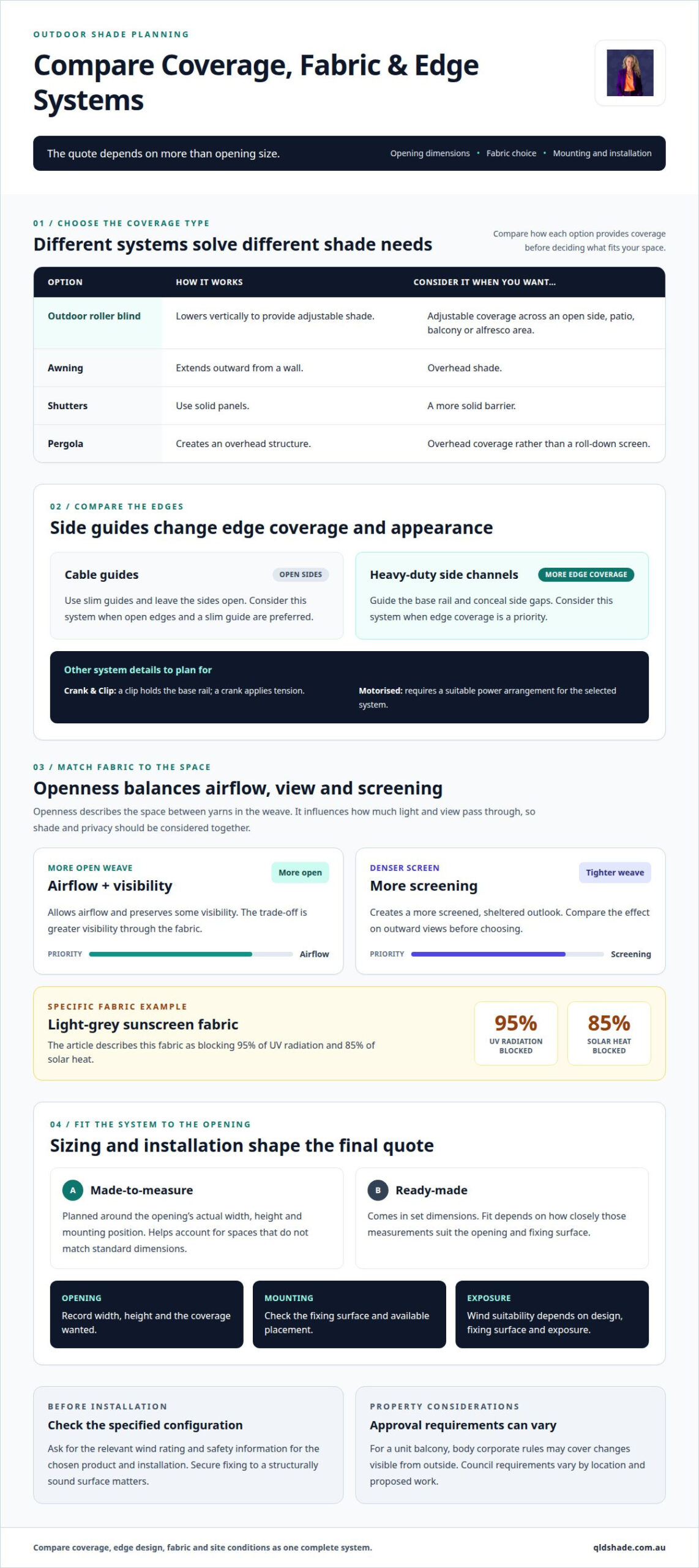
Fabric is an important choice, but the way a blind is guided at the sides matters too. Deep side channels guide the base rail and conceal side gaps, while cable guides leave the sides open. Each option suits different priorities for edge coverage and appearance.
This guide explains what affects the quote and how to compare fabric, privacy, glare control and side channels for your outdoor area. You’ll also see what a professional considers when measuring and planning an installation, so you can make sense of the choices behind a tailored quote.
Key Takeaways
- Understand why the final quote depends on the opening, fabric selection and installation requirements rather than one standard price.
- Learn how sunscreen fabric can balance filtered light with solar heat and UV protection.
- Match fabric openness and blind placement to the privacy and glare control you want in your outdoor area.
- Compare outdoor blind systems by how they guide the fabric and suit the edges of your patio or balcony.
- See how a professional measure and tailored solution can help match the blind to your space and Brisbane conditions.
Outdoor roller blinds for patios, balconies and alfresco areas
Outdoor roller blinds provide adjustable shade for patios, balconies, alfresco areas and decks. Their dimensions, fabric and mounting surface all affect how they work in everyday use.
Patio, Deck and Window Applications
On a patio or deck, a vertical blind can cover an open side and reduce direct sun. On a balcony, the opening’s width and available fixing surface affect placement. For an outdoor window, consider where the sun enters and whether a lowered blind will obstruct access. In each setting, measurements should match the opening and the coverage you want.
Made-to-Measure Sizing and Ready-Made Options
Made-to-measure blinds are planned around the opening’s actual width, height and mounting position. This helps account for spaces that don’t match standard dimensions, such as a wide alfresco area beside a narrower return. Ready-made blinds come in set dimensions, so their fit depends on how closely those measurements suit the space. A professional measure records the opening and fixing surface before selecting a configuration.
Outdoor Blind Types and Alternatives
Outdoor roller blinds lower vertically, while awnings extend from a wall to provide overhead shade. Shutters use solid panels, and pergolas create an overhead structure rather than a roll-down screen. The right comparison depends on whether you want adjustable side coverage, overhead shade or a more solid barrier.
Systems also differ at the edges. Cable-guided blinds use slim guides and leave the sides open; heavy duty channels guide the base rail and conceal side gaps. A Crank & Clip system uses a clip to hold the base rail and a crank to apply tension. Motorised blinds need a suitable power arrangement for the selected system. Consider the power option as part of planning the installation.
For routine care, lower the blind and brush off loose dirt with a soft brush. Gently clean the fabric with water and a soft cloth, then let it dry before rolling it up. After dusty weather in Brisbane, for example, clear grit from the fabric and accessible guides. Follow the care instructions for the specific fabric and mechanism.
Wind Ratings, Safety and Permissions
Wind suitability depends on the blind’s design, fixing surface and exposure. Any rating should apply to the chosen product and installation, not just the fabric. Ask for the relevant rating and safety information for the specified configuration. The blind also needs secure fixing to a structurally sound surface, as a weak fixing point can undermine the installation.
Approval requirements depend on the property and proposed work. For a unit balcony, body corporate rules may cover changes visible from outside. Council requirements can also vary according to the location and work. Confirm the relevant approval pathway before installation, particularly if the blind changes the building’s exterior appearance.
Sunscreen fabric shade and protection
Fabric affects shade, airflow, outward views and comfort in Australian outdoor living areas. Compare its openness and UV performance with the way you use the space.
Fabric Composition and Ventilation
Check the fabric’s composition and construction before choosing outdoor roller blinds. These details help explain how it filters light and performs across an exposed opening. More open fabric allows airflow and preserves some visibility, while denser fabric provides a more screened outlook. For a Brisbane alfresco area, weigh afternoon sun against the benefits of a breeze and an open view.
Ask how to clean and care for the selected fabric. A soft, breathable screen serves a different purpose from a heavier, more enclosed material. Match the fabric to the exposure, desired airflow and everyday use, rather than choosing by colour alone.
UV Protection and Fabric Openness
Openness describes how much space the weave leaves between its yarns. It influences how much light and view pass through the fabric, so it affects shade and privacy together. The light-grey sunscreen fabric described here blocks 95% of UV radiation and 85% of solar heat. Those figures provide a practical comparison for people prioritising sun protection.
Openness is only one factor. A lighter weave can preserve more outward visibility, while a tighter screen can create a more sheltered feel. Consider the sun’s direction, when you use the area and which views you want to keep. Holding a fabric sample against the opening can help you judge these trade-offs.
HeatShield Fabric and Water Resistance
For HeatShield® fabric, compare its stated composition, openness, UV performance and care guidance with other options. The fabric name alone doesn’t show whether it suits your patio. Ask how its documented characteristics align with the sun exposure and ventilation needs of your outdoor area.
Outdoor sunscreen blinds are generally designed to provide shade, not act as waterproof roofing. Water resistance varies with fabric construction and the overall blind design. Treat the screen as a sun-control layer, not a sealed barrier against rain. This matters if you want to keep furniture dry during showers.
Roll direction affects how the fabric sits around its roller. Depending on the setup, it can descend in front of or behind the roller, changing clearance around nearby fittings. A valance can cover the roller mechanism for a neater finish. Consider both details where the blind meets a beam, light or window frame.
Use this simple comparison when selecting fabric for outdoor living:
- More airflow: consider a more open weave and accept greater visibility through it.
- More screening: compare denser fabrics and their effect on outward views.
- Sun protection: weigh the stated UV and solar-heat performance against your exposure.
- Rain concerns: choose a separate weather-protection solution rather than relying on sunscreen fabric.
Glare reduction and privacy
Glare changes as the sun moves across an outdoor area. A blind can make a bright balcony or alfresco space more comfortable by filtering direct light while preserving some view. The right setup depends on where the sun enters, where people sit and how much screening they want.
Start by noting when the space becomes uncomfortable. A west-facing seating area, for example, may need shade in the late afternoon, while a table near a bright window may need coverage earlier. Position matters as much as fabric: lowering the blind across the sun’s path can reduce glare at the table without darkening the whole area.
Fabric openness affects the balance between filtered light and visibility. A more open weave preserves more of the outside view, while a tighter weave screens more of the opening. Neither guarantees complete privacy in every condition. During daylight, sunscreen fabric can make it harder for people outside to see in, but interior lighting may make the room more visible at night.
Consider the view from both sides before choosing a custom solution. For a balcony facing neighbouring windows, prioritise screening at seated eye level. For a patio overlooking a garden, preserve outward visibility where possible. Hold a fabric sample against the opening to see how daylight, nearby buildings and interior furnishings affect the view.
Glare control also depends on how people use the space. A television, laptop or glossy dining table can show reflected light even when direct sun doesn’t fall on it. Note the usual seating position and the direction of the screen or table. Then choose coverage and fabric for that specific reflection, rather than simply covering every opening.
Privacy needs can change between day and evening. If the outdoor area connects to a living room, consider how a lowered blind will affect the view from indoors. A lighter fabric may preserve a more open feel, while a denser screen can create stronger visual separation, with less outward visibility.
Use these decisions to narrow the options:
- For screen glare: identify the screen’s position and the direction of incoming light.
- For neighbouring sightlines: focus coverage where people can see into the space.
- For garden views: compare fabric samples from the seated position.
- For evening privacy: assess the space with interior lights on.
These practical checks help match the blind to everyday use. They also clarify whether glare reduction, outward visibility or privacy should guide your fabric choice.
Side channels and edge sealing
Side channels affect how outdoor blinds sit within an opening. Their design influences fabric guidance, visible edge gaps and coverage across alfresco areas.
A heavy duty channel system uses deep side channels to guide the base rail and conceal side gaps. This creates a more contained appearance than an open-sided arrangement. It may suit spaces where reducing light at the edges matters, such as a patio used for afternoon entertaining. The channels guide the blind, but don’t fully seal the opening.
Channel dimensions and the opening’s shape matter during planning. A straight, even fixing surface allows the channels to sit alongside the fabric path. A projecting frame, nearby handle or uneven wall can affect their position. For example, a window latch that projects from the frame may need to be considered before finalising the channel placement.
For outdoor roller shades longer than 2.3 m, the side channel is supplied in two equal halves. That affects how the channel arrives and is handled during installation. The join between halves needs to align so the base rail can travel through the guide. The opening’s full height and available fixing surface therefore matter, not just its width.
Channel-guided coverage can help where side gaps are a concern, but it isn’t the only option. Cable-guided systems use slim guides and leave the sides open. This can suit a space where a lighter visual profile matters more than concealing gaps. Choose according to the intended coverage, exposure and appearance.
Before specifying a system, a professional assesses the opening and the blind’s path. This includes checking where channels can sit, whether fittings interrupt that line and how the base rail will move. For a wide alfresco area, the measure also needs to account for the full opening and the channel placement at both edges.
Side channels can affect the quote because system configuration and installation conditions vary. The quote depends on the opening, selected system, dimensions and work required. A measured assessment helps clarify these factors before a tailored quote is prepared.
- Choose deeper channels when hiding side gaps is a priority.
- Consider open cable guides when a slim edge profile suits the space.
- Plan the channel path around frames, handles and other obstructions.
- Allow for the supplied join on channels longer than 2.3 m.
For commercial settings, heavy duty commercial channel blinds provide an option for projects that need a channel-guided arrangement. The opening, fixing surface and desired edge coverage remain central to selecting a suitable system.
What types of outdoor roller shades are available in Australia?
Outdoor roller blinds differ in how they’re guided, tensioned and operated. In Australia, the right type depends on the opening, desired edge coverage and how you use the space.
A straight-drop blind lowers vertically from its roller. It can cover an open side of a patio or alfresco area when you want shade, then roll away when you want to restore the view. This simple format suits openings where the fabric can hang freely. The support surface and blind dimensions still determine the installation layout.
Guiding systems change how a blind behaves at the edges. A cable-guided system uses slim cables and leaves the sides open, suiting openings where you prefer a light, minimal appearance. A heavy duty channel system uses deep side channels to guide the base rail and conceal side gaps. Choose between them based on the edge coverage and appearance you want.
For a longer outdoor shade, side-channel details matter. Above 2.3 m, the side channel is supplied in two equal halves. The installation needs a continuous guide path so the base rail can travel smoothly. The opening’s height, fixing surface and position of nearby fittings all help determine whether channels can be placed appropriately.
The Crank & Clip system offers another manual arrangement. A clip holds the base rail in place, while a crank applies tension. The blind fabric rolls on a 78 mm aluminium roller, and each order includes one hand crank. This setup may suit an opening where the user wants to tension and secure the lowered blind manually.
These types aren’t interchangeable in every space. A balcony where you want a clean, open edge may suit cable guides, while a patio where side gaps matter may favour channels. A freely hanging blind can work where guided edges aren’t needed. A professional assesses the opening and fixing surface before recommending a configuration.
Compare options by looking at:
- Edge treatment: open cable guides or channels that conceal gaps.
- Operation: the manual tensioning and securing method.
- Opening layout: available fixing surfaces and nearby obstructions.
- Use of the area: when shade, view or privacy matters most.
System choice affects the components and installation involved, so it also influences the tailored quote. To discuss a suitable setup for your opening, request an outdoor blind assessment.
Spotlight lists outdoor blind products in Australia in black. The maximum end-to-end width available for freight for these custom-made outdoor blinds is 3500 mm. The premium outdoor roller shade is available in widths up to 229 cm and heights up to 305 cm, so check product limits against the opening.
QLD Shade: Roller Shutters
QLD Shade supplies and installs Australian Made outdoor blinds for patios, balconies and alfresco areas across greater Brisbane. Once you’ve considered fabric, operation and edge coverage, the next step is matching those choices to your opening and local conditions. QLD Shade offers a free in-home measure and quote to help tailor a solution.
For adjustable outdoor screening, Zipscreen and heavy duty commercial channel blinds are options to consider. Roller Shutters serve a different purpose from fabric shades, while Indoor PVC Shutters are designed for indoor windows. The right choice depends on whether you prioritise sun control, screening or a shutter solution for your home.
Contact QLD Shade to discuss your outdoor area and arrange a measure and quote.
Plan the right shade for your outdoor area
Turn your priorities into a clear brief: where you want shade, how much privacy matters and how you want the space to feel when the blind is raised. The right outdoor roller shades should support the way you use the area, not just cover an opening.
QLD Shade can help match the project to a suitable option, whether you’re considering Zipscreen, heavy duty commercial channel blinds or another solution. Indoor PVC Shutters may suit a separate indoor window need. The price depends on the opening, selected configuration, materials and installation requirements, and is provided after a quote request.
A measured assessment turns those decisions into a tailored recommendation for your home. Discuss the areas you want to improve and the outcome that matters most; you don’t need to settle every product detail in advance.
Contact QLD Shade for a price and take the next step towards a more comfortable outdoor space.
Frequently Asked Questions
How much do outdoor roller blinds cost in Australia, including installation?
There’s no single set price for outdoor blinds with installation. The quote depends on the opening dimensions, fabric, operating system, edge guides, fixing surface and installation requirements. QLD Shade provides a tailored quote after an in-home measure. For a useful assessment, describe the openings you want covered and how you use the space, such as for dining, relaxing or reducing afternoon sun.
Which outdoor roller shade fabrics provide the best UV protection and heat reduction?
Choose fabric with stated UV and solar-heat performance suited to your exposure. The light-grey sunscreen fabric discussed in this guide is one option for sun control. Compare fabric samples in the light conditions of your outdoor area, as colour and openness affect the look and feel. Your preferred balance of filtered light, airflow and outward visibility also matters.
What happens during professional measuring and installation?
Before installation, a professional measures the opening, checks the fixing surface and plans the blind’s position and operation. Share which openings you want covered, the main issue to address, and any nearby fittings or access considerations. For example, note if a light, handle or door sits close to the proposed blind. QLD Shade offers an in-home measure and quote, followed by professional installation. Express installation is available.
How do I choose shades for a balcony, patio or verandah?
The best option depends on the opening and the coverage you want. Outdoor roller shades can use a straight-drop format, cable guides that leave the sides open, or side channels that guide the base rail and conceal gaps. For a Brisbane balcony, consider whether an open edge or reduced side gaps matter more. A professional can match the configuration to the fixing surface and how you use the area.
Ready to Transform Your Space?
Take the next step and discover the right blinds, shutters, awnings for your space.
Get a Free In-Home Measure & Quote
Contact QLD Shade today for a free measure and quote and discover why Brisbane homeowners trust us for premium outdoor blinds and awnings.
GET IN TOUCH
FOLLOW US: