

10/349-351 MacDonnell Rd,
Clontarf, Qld 4019
How to Clean Zipscreen Blinds: The Ultimate Guide for Brisbane Homeowners
Angie Neal | June 22, 2026

You step onto your patio after a heavy Brisbane downpour only to find unsightly mould spots blooming on your mesh or hear a worrying screech as your blinds struggle to retract. It’s a frustrating moment for any homeowner who values their outdoor lifestyle, and it often leads to the fear that using the wrong chemical might bleach the fabric or ruin the motor. Learning how to clean Zipscreen blinds correctly isn’t just about aesthetics; it’s about protecting a significant investment and maintaining the comfort of your alfresco space.
We understand that you want a home that feels like a retreat, not a source of maintenance stress. This guide gives you the exact, professional steps to keep your Zipscreen system in peak condition while protecting your 10 year warranty. You’ll discover which lubricants are actually safe for your tracks, why your distance from the coast dictates your cleaning schedule, and how to ensure your blinds stay pristine through every Southeast Queensland season.
Key Takeaways
- Protect your long-term investment and ensure your 10-year warranty remains valid by following a professional maintenance routine.
- Discover the safest method for how to clean Zipscreen blinds using mild detergent and a soft brush to avoid bleaching or damaging the fabric.
- Learn why silicone-based lubricants are the only safe option for keeping your side tracks running smoothly and quietly in the salt air.
- Tackle stubborn mould spots and stains caused by Brisbane’s storm seasons with targeted, fabric-safe cleaning techniques.
- Establish a customized cleaning schedule based on whether you live in a coastal or inland Brisbane suburb to maximize your blinds’ lifespan.
Why Regular Zipscreen Maintenance Matters in Brisbane
Choosing Zipscreen blinds is a significant commitment to high quality outdoor living. These systems provide a sleek, taut finish that defines modern Queensland design, but their position on the frontline of your home means they face constant environmental pressure. Understanding how to clean Zipscreen blinds is the first step in protecting that investment. While many types of window blinds are designed for indoor use, Zipscreens must withstand the grit of urban dust and the corrosive nature of salt air. These particles don’t just look messy; they act as abrasives within the side tracks. If left to accumulate, this debris creates friction that strains the motor and wears down the fabric edges, eventually compromising the smooth operation you expect from a premium product.
The Impact of the Queensland Climate
Brisbane’s high humidity is a primary concern for homeowners. When dust clogs the mesh, it traps moisture, creating a perfect breeding ground for mildew and mould. In coastal suburbs like Wynnum or Manly, salt spray adds another layer of complexity. This salt can crystallize on the fabric and within the channels, leading to “sticky” operation and noisy movement. Additionally, the intense QLD sun can “bake” organic matter, such as bird droppings or tree sap, into the fibres. If these aren’t rinsed away promptly, they can cause permanent staining or even structural damage to the mesh. Regular cleaning ensures these environmental stressors don’t turn into permanent problems.
Protecting Your 10-Year Fabric Warranty
Your Zipscreens likely came with a robust 10 year fabric warranty, but this protection isn’t unconditional. Most manufacturers require homeowners to demonstrate “reasonable care” for the warranty to remain valid over the decade. Using harsh household cleaners or prohibited chemicals can cause fabric delamination or unsightly discolouration, which is typically excluded from coverage. We recommend keeping a simple maintenance log. Recording when you rinse the fabric and lubricate the tracks provides clear evidence of care if you ever need to make a claim. This proactive approach ensures your outdoor area stays pristine and your investment remains fully protected. It’s about maintaining that “like-new” appearance while securing your peace of mind.
Step-by-Step Guide: How to Clean Zipscreen Blinds Safely
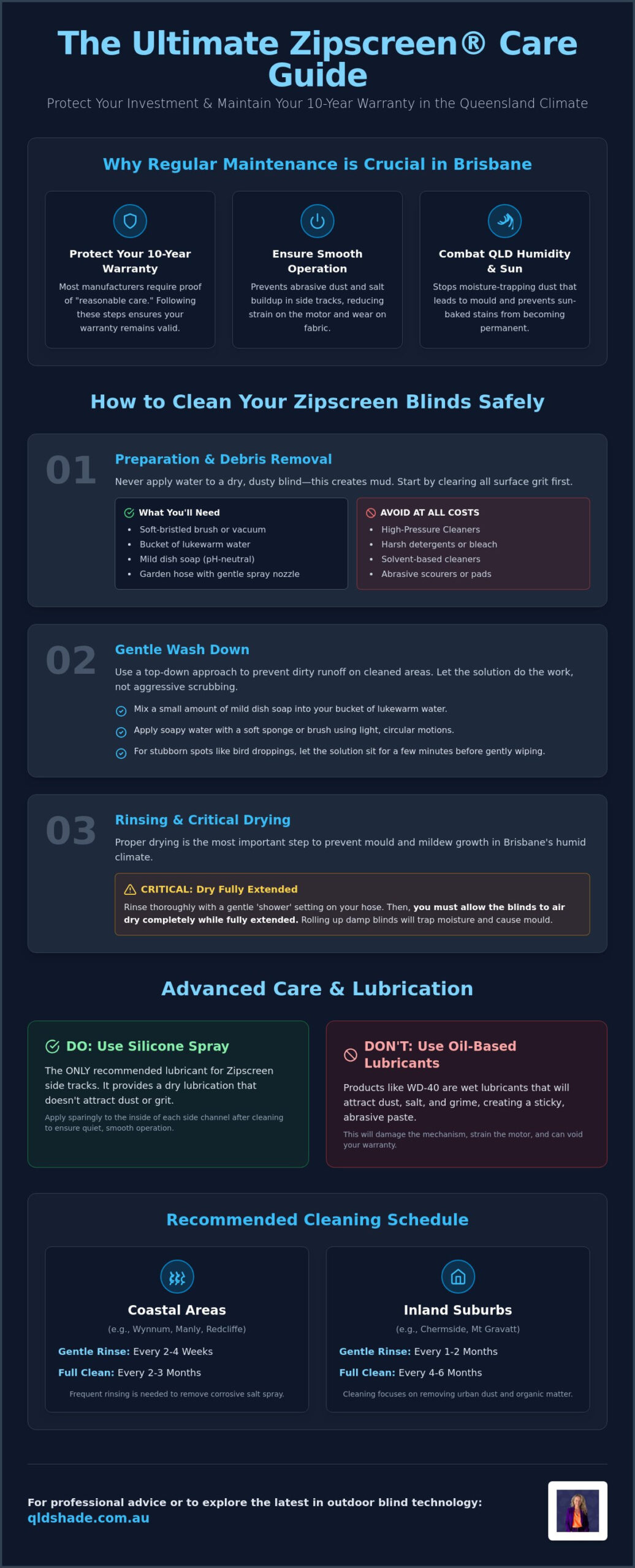
Timing your maintenance is just as important as the technique itself. In Brisbane, we recommend choosing a dry, overcast day. Cleaning in the middle of a scorching 35-degree afternoon causes soapy water to evaporate almost instantly, leaving behind unsightly streaks and residue. Before you begin, gather a bucket of lukewarm water, a soft-bristled brush, a sponge, and a standard garden hose. Avoid the temptation to grab a high-pressure cleaner; the intense force can strip the zip from the side track or tear the mesh. Knowing how to clean Zipscreen blinds correctly starts with a gentle touch and a top-down approach to ensure dirty runoff doesn’t ruin areas you’ve already scrubbed.
Step 1: Dusting and Debris Removal
Never apply water to a dry, dusty blind. This simply turns dust into mud, which can get trapped deep within the mesh weave. Start by using a soft brush or a vacuum with a brush attachment to clear away cobwebs and surface grit. Pay close attention to the top pelmet where dust tends to settle. If you have Motorised Blinds, be particularly careful around the top cassette. Use a dry cloth to wipe the exterior and ensure the side channels are free from leaves, twigs, or insect nests. This prevents debris from being dragged into the mechanism when the blind is operated.
Step 2: The Gentle Wash Down
Mix a small amount of mild dish soap into your bucket. Avoid harsh detergents, bleach, or solvent-based cleaners, as these can damage the fabric’s protective coating. Submerge your sponge and apply the solution to the mesh using light, circular motions. For stubborn spots, let the soapy water sit for a minute to break down the grime rather than scrubbing aggressively. If you find your blinds are becoming difficult to operate even after a wash, it might be time for a professional check-up or an upgrade to a newer system. You can explore our range of outdoor blinds in Brisbane to see the latest in durable, easy-clean technology.
Step 3: Rinsing and Drying
Rinse the fabric thoroughly using a garden hose on a gentle “shower” or “mist” setting. Ensure all soap suds are gone, as dried soap can attract more dirt later. The most critical part of this process is the drying phase. You must allow the blinds to dry completely while they are fully extended. Rolling up wet Zipscreens in the humid Brisbane heat can lead to “mottling,” where the fabric develops permanent cloudy patches, or even worse, rapid mould growth. Give them a few hours in the breeze to ensure every centimetre is bone-dry before you retract them for the evening.
Advanced Care: Motorised Blinds and Track Lubrication
While the fabric mesh is the most visible part of your system, the mechanical components are what keep your outdoor area functional. Motorised Zipscreens require a higher level of care than manual versions. If you’re learning how to clean Zipscreen blinds to ensure longevity, you must treat the motor with respect. Water and electricity are a dangerous mix; even a small amount of moisture in the wrong place can lead to costly repairs. Proper maintenance involves a balance between keeping the mesh clear and ensuring the internal tracks remain friction-free without damaging the sensitive electronics.
Cleaning Near the Motor and Electronics
The motor is safely tucked away within the top pelmet or cassette, but it isn’t waterproof. When you’re rinsing your blinds as described in the previous section, always direct the hose spray away from the motor head. Instead of using a running stream of water on the top housing, use a damp, well-wrung microfiber cloth to wipe down the exterior casing. If you’re performing deep maintenance that requires opening the pelmet to clear out debris, turn the power off at the circuit breaker first. This simple safety precaution provides peace of mind and ensures that no accidental splashes cause a short circuit in your Motorised Blinds.
The Golden Rule of Track Lubrication
How do you identify when your tracks need lubrication versus just a standard clean? If your blind moves in a jerky, “stuttering” motion or emits a high-pitched squeak during operation, it’s a clear sign the tracks are dry. If the movement is smooth but you see visible grit or salt crusting, a simple wash is usually enough. For high-performing lubrication, the absolute ‘golden rule’ for Brisbane homeowners is to use silicone-based lubricants only.
- Never use oil-based products: Lubricants like WD-40 or CRC are excellent for many jobs, but they are disastrous for Zipscreens. In our dusty QLD climate, oil-based sprays act as a magnet for grit and urban grime. This creates a thick, abrasive paste that will eventually jam the zip and strain the motor.
- Apply sparingly: You don’t need much. Spray a high-quality silicone lubricant into the internal side tracks while the blind is retracted.
- Cycle the blind: Once applied, run the blind up and down three or four times. This distributes the silicone evenly along the entire length of the track.
To keep the fabric pristine during this process, avoid spraying the mesh directly. If you accidentally get silicone on the fabric, wipe it away immediately with a clean, dry cloth. By following these technical steps, you’ll ensure your blinds continue to glide silently, even when the Brisbane summer is at its most humid. Mastering how to clean Zipscreen blinds means looking after the parts you can’t see just as much as the ones you can.
Removing Mould and Stubborn Stains from Outdoor Blinds
Brisbane’s humid storm season often leaves homeowners battling more than just wind and rain. High moisture levels combined with organic dust create the perfect conditions for mould to take root on your mesh. If you see dark, blooming spots appearing after a week of wet weather, it’s time to act. Understanding how to clean Zipscreen blinds when they’re stained involves more than a quick rinse; you need to identify whether you’re dealing with fungal growth, acidic bird droppings, or sticky tree sap. Each requires a specific touch to ensure you don’t accidentally damage the PVC-coated polyester fibres while trying to restore their appearance.
Before applying any cleaning agent, always follow the “Spot Test” rule. Apply your chosen solution to a hidden edge of the fabric, such as the small section that remains inside the side track when the blind is down. Wait 10 minutes and rinse it off. This simple step ensures that the cleaner won’t cause discolouration or weaken the mesh of your outdoor blinds in Brisbane. It’s a small precaution that protects the long-term aesthetic of your alfresco area.
Safe Mould Removal Solutions
Mould thrives on the organic matter trapped in the mesh weave. For a natural, antifungal approach, mix one part white vinegar with four parts lukewarm water. This solution is gentle enough for regular use but effective at killing fungal spores. If you’re dealing with a heavy infestation that has been left for several months, we recommend a specialist pH-neutral product like 303 Fabric Cleaner. This is specifically formulated for high-end outdoor fabrics and won’t strip away protective coatings. You must avoid bleach at all costs; it will weaken the synthetic fibres and void your QLD Shade warranty, leading to premature tearing or brittle fabric.
Dealing with Bird Droppings and Tree Sap
In leafy Brisbane suburbs, bird droppings and tree sap are constant challenges. Never attempt to scrape dry droppings off the mesh with a hard tool. This can abrade the mesh coating and create a permanent bald spot in the weave. Instead, soak the area with a wet cloth for at least 10 minutes to soften the matter before gently wiping it away. For stubborn tree sap, a small amount of eucalyptus oil on a cotton bud can help dissolve the resin. Follow this immediately with mild soapy water to remove any oil residue. If your blinds are beyond a simple DIY clean or the fabric shows signs of permanent damage, contact our team for a professional assessment to see if a fabric replacement or upgrade is your best path forward.
How Often Should You Clean Your Zipscreens?
Maintenance schedules in Southeast Queensland aren’t one-size-fits-all. The environmental stressors facing a home in Wynnum are vastly different from those in Ipswich or the CBD. Because of these regional variations, a fixed calendar date for cleaning doesn’t work for every homeowner. We recommend establishing a simple “Maintenance Log” to track your care. This record proves you’ve taken reasonable steps to preserve the material, which is vital for protecting your 10 year warranty. While the physical steps of how to clean Zipscreen blinds are consistent, your location dictates whether you need to reach for the bucket monthly or seasonally.
Adopting a “rinse early, scrub less” philosophy is the most efficient way to manage your outdoor area. A quick five-minute rinse with a low-pressure hose once a month removes surface salt and dust before they have a chance to bond with the mesh fibres. This proactive habit prevents the buildup of organic matter, saving you from hours of intensive scrubbing and the need for specialized chemical cleaners later in the year.
Coastal vs. Inland Maintenance Schedules
When to Call the Professionals
Even with a dedicated DIY routine, there are moments when professional intervention is the safest choice. PVC and mesh materials can expand and contract by up to 5% in normal temperature conditions, which can occasionally lead to tension issues. If your blind continues to jam or move unevenly despite proper cleaning and track lubrication, it likely needs a professional tension adjustment rather than more cleaning. We also suggest a professional check-up every two years for high-traffic installations or if you have multiple systems like Motorised Blinds or roller shutters. If you notice any fraying on the zip edges or if the motor sounds strained, contact QLD Shade for a technical assessment. Addressing these minor mechanical shifts early ensures your outdoor sanctuary remains functional and beautiful for its entire intended lifespan.
Protect Your Outdoor Investment for the Long Term
Maintaining a beautiful Brisbane patio shouldn’t be a chore that fills you with dread. By mastering how to clean Zipscreen blinds with the right techniques, you ensure your outdoor space remains a sanctuary for years to come. Remember that a simple monthly rinse and the occasional application of silicone lubricant are the best ways to avoid mechanical strain and unsightly mould. These small habits protect the sleek appearance of your home and keep your 10-year fabric warranty fully intact.
As a family-owned Brisbane business, we understand the unique demands our climate puts on your property. We’ve provided expert local installation since 2026, focusing on durability and customer peace of mind. If you’re looking to upgrade your alfresco area with premium protection, book your free in-home measure and quote with QLD Shade today. We are here to help you create a comfortable, stylish, and low-maintenance living space that you’ll enjoy through every Queensland season.
Frequently Asked Questions
Can I use a pressure washer to clean my Zipscreen blinds?
No, you should never use a pressure washer on your outdoor blinds. The concentrated force can easily strip the zip from the side channel or cause permanent tears in the mesh fabric. Instead, use a standard garden hose on a gentle shower or mist setting to rinse away soap and debris safely without compromising the structural integrity of the system.
What is the best lubricant for Zipscreen side tracks?
High quality silicone spray is the only recommended lubricant for Zipscreen tracks. Unlike oil-based products, silicone doesn’t attract the dust and urban grit common in Brisbane, which can create a thick paste that jams the mechanism. Apply it sparingly to the internal tracks while the blind is retracted and then cycle the blind up and down to distribute it evenly.
How do I remove mould from my outdoor blind mesh?
A natural solution of one part white vinegar to four parts water is highly effective for killing fungal spores without damaging the fabric. For deeper stains, use a pH-neutral specialist cleaner. When researching how to clean Zipscreen blinds for mould, remember to always perform a spot test on a hidden edge of the fabric first to ensure no discolouration occurs before treating the entire surface.
Is it safe to roll up my Zipscreens while they are still wet?
No, rolling up wet blinds is the fastest way to encourage mould growth and “mottling,” which are cloudy patches on the mesh. This is especially true in the humid Brisbane heat where moisture gets trapped within the tight roll. Always leave your blinds fully extended until they are completely bone-dry to protect the fabric’s appearance and lifespan.
What household cleaners should I avoid when cleaning my blinds?
Avoid bleach, ammonia, and any solvent-based cleaners at all costs. These chemicals are far too aggressive for the PVC coating and can lead to delamination, where the layers of the fabric begin to separate. Stick to mild dish soap or specific pH-neutral outdoor fabric cleaners to ensure you don’t accidentally void your 10 year fabric warranty.
How do I clean the pelmet of a motorised Zipscreen without damaging the motor?
The safest approach is to turn off the power at the circuit breaker and use a damp microfiber cloth to wipe the casing. Never direct a hose stream or high-pressure spray toward the top cassette where the motor is housed. This prevents moisture from entering the electronics and causing a short circuit in your motorised system.
Why are my Zipscreen blinds making a squeaking noise when moving?
A squeaking or screeching sound usually indicates that the side tracks are dry or clogged with salt and grit. This friction puts unnecessary strain on the motor or manual mechanism. A thorough cleaning of the channels followed by a light application of silicone spray typically resolves the noise and restores the silent, smooth operation the system is known for.
How often should I clean my blinds if I live near the coast in Brisbane?
Homeowners within 5km of the coast should perform a full clean every 1 to 2 months. Salt air can lead to pitting on the tracks and crystallization on the mesh if left too long. Understanding how to clean Zipscreen blinds frequently is the best way to prevent the corrosive effects of the Moreton Bay environment from damaging your outdoor investment.
Ready to Transform Your Space?
Take the next step and discover the right blinds, shutters, awnings for your space.
Get a Free In-Home Measure & Quote
Contact QLD Shade today for a free measure and quote and discover why Brisbane homeowners trust us for premium outdoor blinds and awnings.
GET IN TOUCH
FOLLOW US: