

10/349-351 MacDonnell Rd,
Clontarf, Qld 4019
Outdoor Blinds for Insects: Choosing the Best Patio Shade Solutions in Brisbane
Angie Neal | June 20, 2026
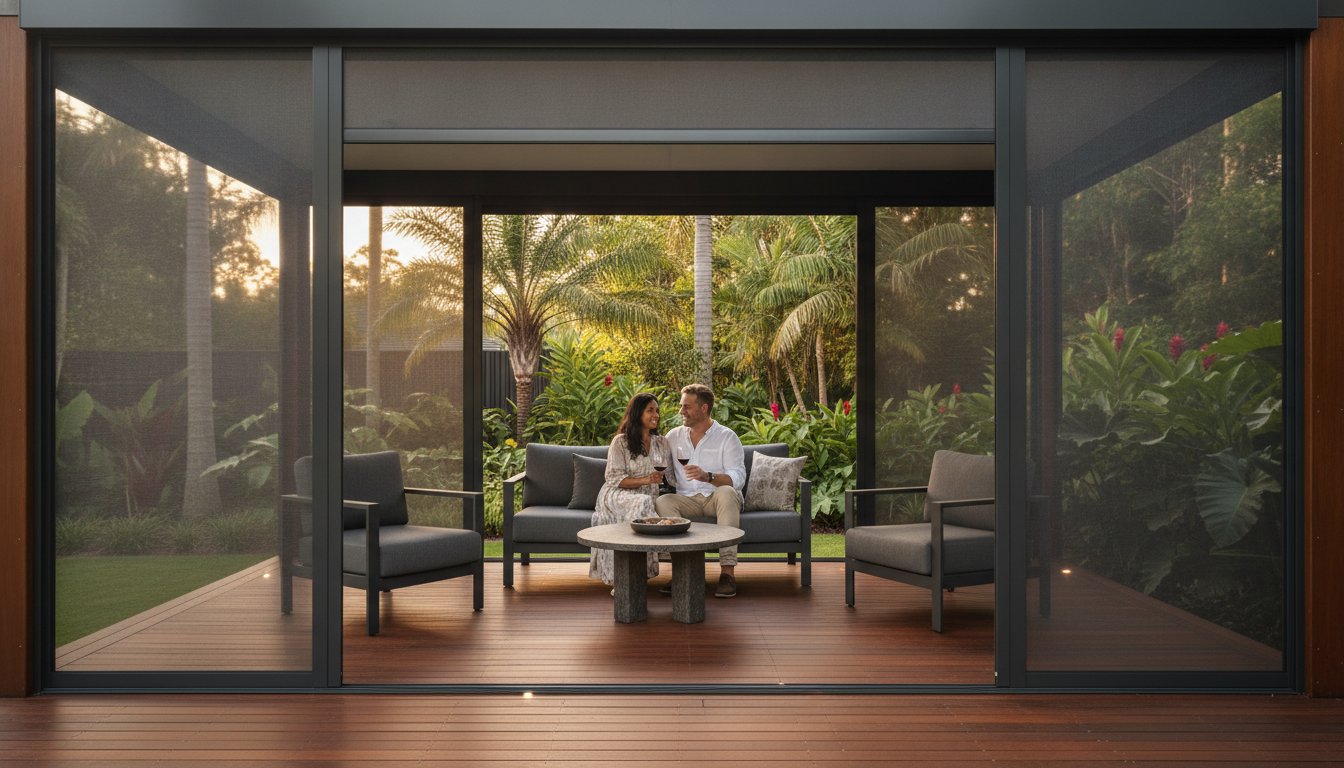
A single millimetre of space is all a Brisbane midge needs to turn your evening BBQ into a battleground. While many homeowners invest in shade, they often discover that standard shades don’t actually stop the local wildlife from joining dinner. You likely already know the frustration of watching mosquitoes bypass cheap fabric through the gaps at the sides. Finding effective outdoor blinds for insects isn’t just about the mesh; it’s about engineering a complete, edge-to-edge seal that stands up to the Queensland climate.
We understand that a patio should be a sanctuary, not a source of stress. This guide will show you how to transform your deck into a bug-free retreat using advanced track-guided systems like Zipscreen and durable, Australian-made hardware. You’ll learn how the right mesh technology can maintain your airflow and visibility while providing a total barrier against pests. We’ll also explore how to choose hardware that survives the intense Brisbane sun and complies with current safety standards, ensuring your outdoor room remains comfortable and protected for years to come.
Key Takeaways
- Understand why the “gap problem” in traditional shades makes them ineffective and how side-track technology solves the midge and mosquito issue.
- Learn how to choose a mesh “openness factor” that prioritizes a cool breeze and clear views without compromising your bug-free sanctuary.
- Compare the technical benefits of Zipscreen and heavy-duty commercial channel blinds to find the right fit for your specific outdoor layout.
- Discover how to achieve a seamless seal for your outdoor blinds for insects by identifying and closing entry points around bulkheads and floor levels.
- Gain insights into why locally manufactured hardware is the most reliable choice for enduring the intense UV and humidity of the Queensland sun.
The Brisbane Bug Problem: Why Standard Outdoor Blinds Often Fail
Living in Brisbane means embracing a subtropical lifestyle, but our climate invites a persistent guest list of mosquitoes and biting midges. While many homeowners invest heavily in beautiful deck renovations, they often find their new space unusable once the sun begins to set. There is a significant technical difference between “insect-resistant” and “insect-proof.” A standard shade might block the sun, but if it doesn’t provide a complete perimeter seal, it isn’t a functional solution for pest control. It’s a heartbreaking reality to spend $50,000 on a premium outdoor kitchen only to be driven back inside by swarms of insects every evening.
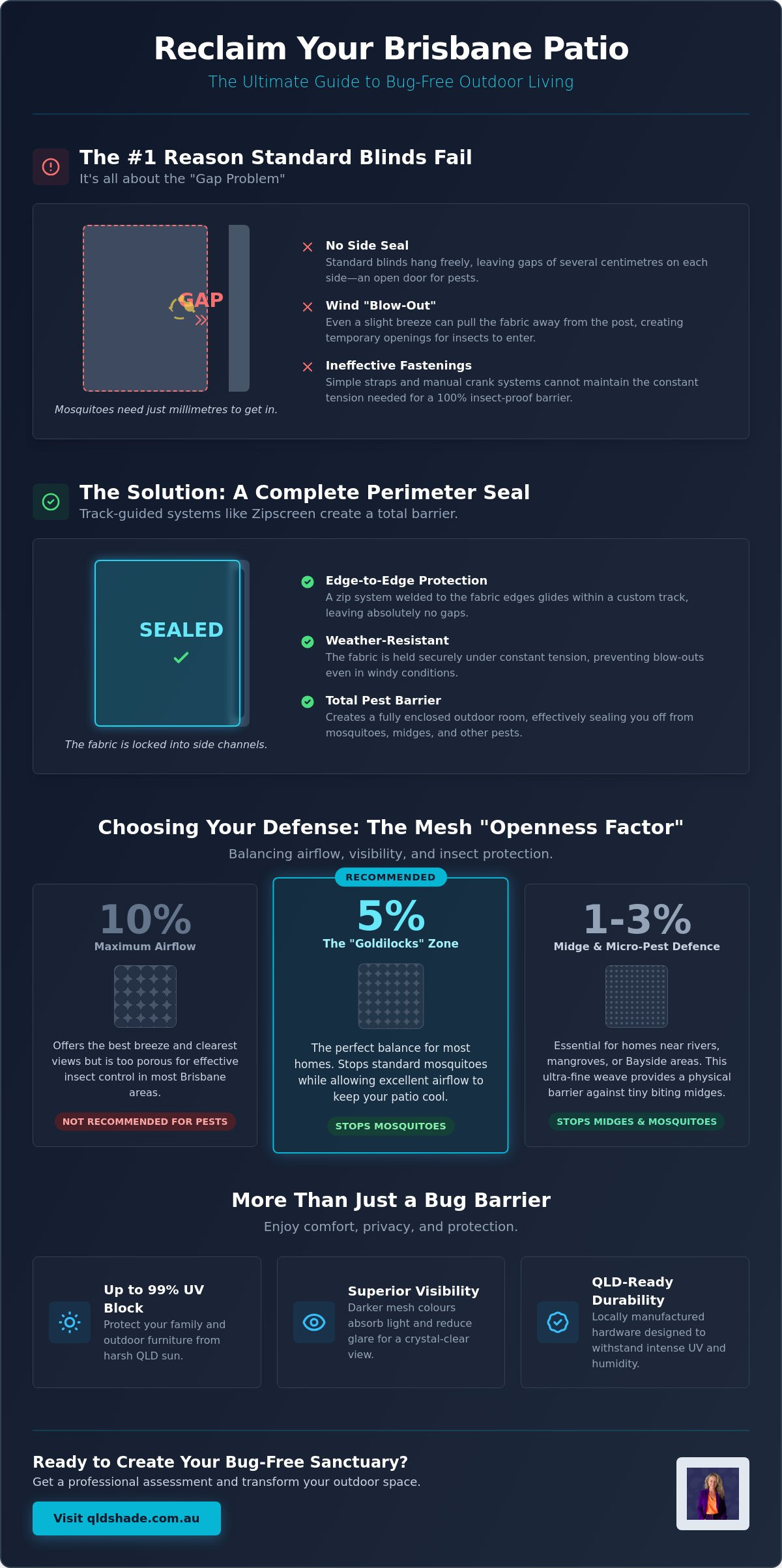
The primary culprit is the “Gap Problem” found in traditional straight-drop blinds. These systems usually hang freely or are secured by simple straps at the bottom corners. This leaves a gap of several centimetres between the fabric and the house pillars. For a mosquito, that gap is an open door. When you choose outdoor blinds for insects, you’re looking for an engineering solution that closes these gaps entirely. Without a side-track system, your patio remains an open invitation for local pests to join your dinner.
The Midge vs. Mosquito Challenge
Depending on your specific Brisbane suburb, your “bug profile” changes significantly. If you’re situated near the Brisbane River or the wetlands of the Bayside, you aren’t just fighting mosquitoes; you’re dealing with midges. These tiny pests are small enough to fit through some standard types of screen mesh designed for larger flies. To truly protect a home in these areas, your outdoor blinds for insects must feature a specific, high-density weave that creates a physical barrier against even the smallest biting insects. A midge-proof requirement for Brisbane Bayside homes necessitates a precision-fit track system combined with ultra-fine mesh technology.
Limitations of Straps and Crank Systems
Manual crank blinds and strap-down systems are popular for sun protection, but they fail as consistent insect barriers. Because they lack a continuous side track, the fabric moves with the breeze. This “blow-out” effect creates temporary openings where pests can crawl through. Even a slight gust of wind pulls the blind away from the post, breaking the seal instantly. Achieving a true 100% perimeter seal requires professional installation of track-guided hardware. This ensures the fabric stays under constant tension within a dedicated channel, leaving no room for entry points regardless of the weather conditions.
Choosing the Right Mesh: Airflow, Visibility, and Protection
Selecting the perfect fabric for your outdoor blinds for insects is a technical balancing act. You need to block pests and UV rays while maintaining a clear view and allowing a cooling breeze to circulate. In Brisbane’s humid climate, airflow is non-negotiable. If you choose a material that’s too dense, your patio will feel like a greenhouse. Conversely, if the weave is too loose, you might as well leave the blinds up. The secret to success lies in the “openness factor,” which refers to the percentage of holes in the fabric weave.
While many focus solely on shade, the mesh also serves as your primary line of defence against UV radiation. Premium fabrics can block up to 99% of harmful UV rays while simultaneously acting as a physical barrier against mosquitoes. Colour choice also plays a practical role in your comfort. Darker meshes, such as charcoal or black, provide superior visibility looking out because they absorb light and reduce glare. Lighter colours reflect more heat but can create a “veiling” effect that makes it harder to see your garden clearly. If you’re unsure which combination suits your home’s orientation, you can request a professional assessment to see fabric samples in your own light.
Mesh Openness: 1% vs. 5% vs. 10%
For most Brisbane homes, a 5% openness factor is the “Goldilocks” zone. It provides a perfect middle ground, stopping standard mosquitoes while allowing enough air to keep the space comfortable. However, if your property is near the mangroves or the river, you’ll likely need a 1% or 3% weave. These tighter weaves are specifically designed for midge protection, ensuring even the smallest biting insects can’t penetrate the barrier. While a 10% openness offers the best airflow, it’s generally too porous to be considered an effective solution for total insect control.
Durability in the QLD Sun
The Queensland sun is notorious for degrading inferior plastics and fabrics. This is why we prioritise Australian-made materials specifically engineered for our high-UV environment. High-quality mesh is typically constructed from PVC-coated polyester, which is inherently resistant to the mould and mildew that thrive in our humid summers. Look for products that carry a 10-year fabric warranty; this is the industry benchmark for a material that won’t become brittle or fade after a few seasons of intense exposure. Investing in professional-grade fabric ensures your sanctuary remains intact and effective for the long haul.
Zipscreen vs. Channel Blinds: The Gold Standard for Insect Control
While choosing the right mesh density is vital, the hardware system you select is what actually creates the physical barrier. For outdoor blinds for insects to be effective, the fabric must be integrated into the frame without any openings. Standard blinds often rely on gravity to stay down, which allows the fabric to flap or pull away from the side posts. To achieve a true insect-proof sanctuary, we look to track-guided technology that locks the fabric in place from top to bottom.
The “hidden secret” to a bug-free patio isn’t just the mesh; it’s the side-zip mechanism. Unlike traditional shades that sit loosely inside a channel, a side-tensioned system uses a welded zip on the edge of the fabric. This zip is fed into a dedicated track, creating a continuous seal that pests cannot penetrate. Whether you choose a manual or motorised operation, this tension ensures the blind remains a solid wall against the elements. Motorised blinds offer a slight advantage for insect control, as they ensure the bottom rail is perfectly seated every time with the touch of a button, removing the risk of human error in securing the seal.
The Zipscreen Advantage
The patented zip-lock technology found in a Zipscreen system is specifically designed to prevent fabric blow-out. In a typical Brisbane storm, wind pressure can easily pull standard blinds out of their tracks, leaving your patio vulnerable to swarms. A track-guided system keeps the fabric under constant tension, which also results in a much sleeker aesthetic. You won’t have to deal with unsightly straps, buckles, or swaying fabric. For a deeper look at how these systems integrate into modern homes, check out our Zipscreen Blinds Brisbane guide.
Heavy Duty Channel Blinds for Commercial Spaces
For larger residential decks or commercial environments like Brisbane cafes, heavy duty commercial channel blinds are often the preferred choice. These systems are engineered to handle much larger spans and higher wind loads than standard domestic products. While they offer incredible durability, they still prioritise that essential perimeter seal. The continuous side-tensioning of the Zipscreen system is the single most important factor for bug protection because it eliminates the physical gaps where insects typically bypass standard shades. By choosing a commercial-grade channel, you ensure that even the largest outdoor dining areas remain comfortable and fly-free during the busiest lunch rushes.
Planning Your Installation for a 100% Insect-Proof Seal
Even the most advanced hardware can’t protect your home if the installation leaves structural gaps. When planning for outdoor blinds for insects, we look beyond the fabric to the specific architecture of your patio. Modern Brisbane homes often feature complex alfresco areas with bulkheads, decorative corner posts, and varying floor levels. Each of these elements represents a potential leak where mosquitoes can bypass your barrier. To achieve a 100% insect-proof seal, every point of contact between the blind and your home must be precision-engineered to eliminate voids.
The Importance of a Level Surface
Gaps at the base of a blind are effectively a highway for crawling insects and spiders. Brisbane pavers and timber decks aren’t always perfectly level, which creates uneven voids when a straight blind is lowered. To solve this, we utilise high-density pile brushes and flexible rubber seals that contour to the surface. Our technicians are trained to handle difficult architectural corners, often installing custom U-channels or build-out sections to ensure the track has a perfectly flat mounting surface. This level of detail is what makes outdoor blinds for insects truly effective in a real-world setting.
Motorisation for Convenience and Consistency
Choosing motorised blinds isn’t just about luxury; it’s about ensuring a consistent insect seal. A motor ensures the blind is always driven to its exact limit, seating the bottom rail firmly against the floor every time. This removes the risk of human error where a manual blind might be left slightly ajar. Advanced motors include obstacle detection, which stops the blind if it hits a stray chair or toy, preventing damage to the tensioned mesh. With smart home integration, you can schedule your blinds to close automatically at “mozzie o’clock,” ensuring your sanctuary is sealed before the first midge arrives. To ensure your installation is handled with this level of precision, book a free onsite measure and quote with our local experts.
Why QLD Shade is Brisbane’s Trusted Choice for Insect Blinds
Choosing the right outdoor blinds for insects is a significant investment in your home’s long-term comfort and value. At QLD Shade, we bring a level of local expertise that only comes from being a family-owned and operated business deeply rooted in the community. With over 35,000 local installations across South East Queensland, we’ve encountered every architectural challenge and pest problem imaginable. We don’t just sell off-the-shelf products; we provide engineered solutions that are Australian-made and specifically designed to thrive in our unique, high-UV climate.
Our commitment to your peace of mind is backed by a 10-year warranty on all fabric-based products. This ensures your investment is protected against the harsh sun and high humidity that define our local summers. We believe in a helpful, “no-nonsense” approach to home improvement. That’s why we offer a completely free, no-pressure in-home measure and quote process. We act as your consultants, helping you navigate the technical choices of mesh density and track systems without the stress of a high-pressure sales pitch. Our goal is to ensure you feel confident and secure in your decision before any work begins.
Local Expertise in Brisbane & Ipswich
Every suburb in our region presents its own environmental stressors. Whether you’re dealing with the specific wind loads near the river in Ascot or the heavy midge populations found out toward Ipswich, our 8-person specialist team knows how to calibrate your installation for maximum performance. We don’t use subcontractors. Our own trained experts handle every part of the process to ensure the perimeter seal is perfect and the hardware is mounted with precision. For more inspiration on how to upgrade your backyard into a bug-free sanctuary, explore our guide on Outdoor Living Brisbane.
Bespoke Solutions for Every Home
We believe that high-performance functionality shouldn’t come at the cost of your home’s aesthetic. Our outdoor blinds for insects can be customised with professional powder-coating to match your existing colour palette, ensuring the tracks and headboxes blend seamlessly with your architecture. We pride ourselves on tailoring every solution to your specific budget and lifestyle needs. Whether you need a single motorised blind for a small balcony or a full commercial-grade setup for a sprawling alfresco area, we provide the same level of technical precision and neighborly care. Book your free in-home measure and quote with QLD Shade today and take the first step toward reclaiming your outdoor space.
Reclaim Your Backyard Sanctuary Today
Transforming your patio into a bug-free retreat requires more than just a simple sunshade. It demands a technical solution that addresses the specific “gap problem” found in traditional blinds. By combining high-density mesh with track-guided engineering, you can finally enjoy a meal outdoors without the constant nuisance of mosquitoes or midges. Choosing outdoor blinds for insects that feature Australian-made hardware ensures your investment withstands the harsh Queensland sun while providing a total perimeter seal.
With over 35,000 Brisbane installations and a 10-year fabric warranty, we take the guesswork out of your home improvement project. Our team is here to help you navigate the technical details of mesh openness and motorised options to create a space that perfectly fits your lifestyle. We invite you to Book Your Free In-Home Measure & Quote to see how our bespoke solutions can enhance your home. You deserve a tranquil outdoor space where you can relax in total comfort, no matter the season.
Frequently Asked Questions
Do outdoor blinds really keep 100% of insects out?
Track-guided systems achieve a total seal by locking the fabric into side channels from top to bottom. This engineering eliminates the gaps found in standard blinds that insects use as entry points. While no system is absolute if house doors are left open, a professionally installed Zipscreen creates a physical barrier that stops mosquitoes and flies from entering your patio area.
Can I still feel the breeze through insect-proof outdoor blinds?
You’ll still enjoy a cooling breeze because the mesh is designed with thousands of microscopic holes. These openings facilitate natural ventilation while the fabric reflects solar heat and blocks UV rays. Choosing a 5% openness factor provides the ideal balance between air circulation and pest protection for most Brisbane homes.
Will Zipscreen blinds stop midges?
Zipscreen blinds are highly effective against midges when paired with a high-density mesh. The patented zip-lock technology ensures there are no side gaps for these tiny pests to crawl through. This makes them a superior choice for Bayside properties where standard flyscreens often fail to stop smaller biting insects.
What is the best mesh openness for insect protection in Brisbane?
A 5% openness factor is generally the best choice for outdoor blinds for insects in our local climate. It stops standard mosquitoes and flies without blocking your backyard view or stifling the air. If you live near mangroves or the river, a tighter 1% or 3% weave is recommended to block smaller biting midges.
Are motorised outdoor blinds better for keeping bugs out?
Motorised systems offer better consistency because they ensure the blind is perfectly seated against the floor every time. Manual blinds might be left slightly uneven, which creates small entry points at the bottom rail. Motorised Blinds also feature obstacle detection to protect the tensioned mesh and maintain the integrity of the insect seal.
How do I clean my outdoor blinds to keep them bug-free?
Cleaning your blinds requires only a soft brush and a bucket of mild, soapy water. Gently wipe the mesh to remove dust, spider webs, and salt spray that can attract pests over time. Avoid using harsh chemicals or high-pressure hoses, as these can damage the PVC coating and compromise the durability of the Australian-made fabric.
Can outdoor blinds be installed on an existing timber pergola?
We can definitely install outdoor blinds for insects on existing timber pergolas or alfresco roofs. Our technicians use custom U-channels and build-out sections to create a level mounting surface on uneven timber. This ensures the tracks sit flush against the structure to prevent bugs from bypassing the system through gaps in the woodwork. For homeowners currently in the design phase of a new space, you can explore Project-based design and installation fees to see how custom structures are typically priced and implemented.
What happens if the wind blows hard while the blinds are down?
Track-guided blinds are designed to remain under tension even during typical Brisbane wind gusts. The fabric is locked into the side channels, so it won’t flap or blow out like traditional straight-drop blinds. We recommend retracting your blinds during severe weather alerts or cyclonic conditions to protect the hardware from extreme structural loads.
Ready to Transform Your Space?
Take the next step and discover the right blinds, shutters, awnings for your space.
Get a Free In-Home Measure & Quote
Contact QLD Shade today for a free measure and quote and discover why Brisbane homeowners trust us for premium outdoor blinds and awnings.
GET IN TOUCH
FOLLOW US: