

10/349-351 MacDonnell Rd,
Clontarf, Qld 4019
Low Maintenance Outdoor Blinds for Brisbane Pergolas
Angie Neal | November 7, 2026
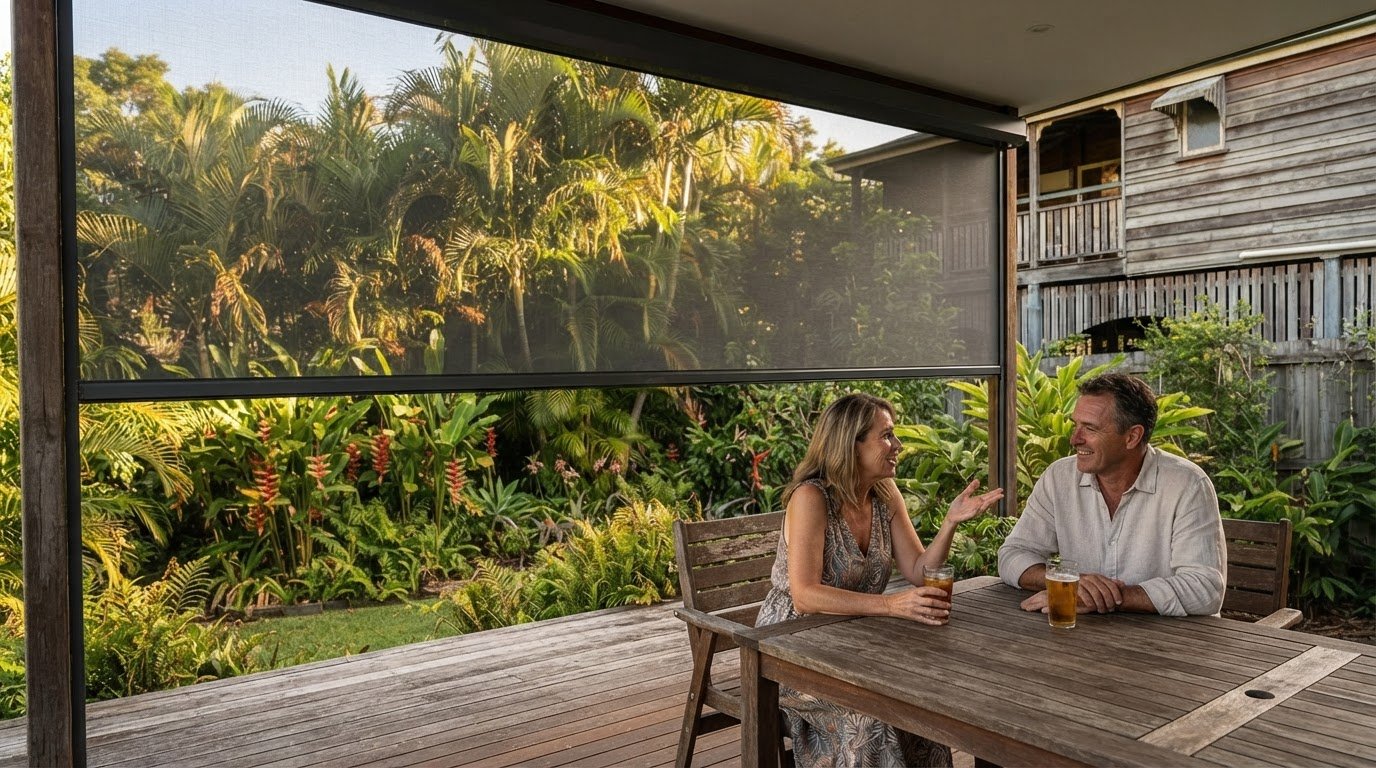
Low-maintenance outdoor blinds in Brisbane start with a well-fitted design and simple, gentle care. Brush away dust with a soft-bristled brush, clean marks when you notice them, and let the blinds dry before rolling them up. These practical habits help keep them looking their best without making upkeep a chore.
Brisbane’s outdoor areas face sun, wind, insects and everyday dirt, so it makes sense to choose blinds that are easy to live with. The right fit depends on your pergola’s layout and how you use the space, rather than a one-size-fits-all option.
This guide explains what to consider when choosing low maintenance outdoor blinds in Brisbane, how custom-made blinds and awnings suit different pergolas, and which cleaning habits help prevent unnecessary wear. You’ll also learn how retractable designs work and what affects installation pricing, so you can make a practical choice for your home.
Key Takeaways
- Match the blind style to your pergola’s layout and how you use the space to create a practical, tailored fit.
- Consider whether a retractable design or a more enclosed blind better suits your needs for shade and shelter.
- Use cleaning products designed for the blind fabric; solvents and detergents can damage it and cause colour loss.
- Choose among outdoor blind options by weighing your priorities, including ease of operation and the level of exposure around your pergola.
- For a tailored solution, explore options such as Zipscreen and heavy duty commercial channel blinds with QLD Shade.
Custom-made outdoor blinds and awnings
Custom sizing helps outdoor blinds suit a pergola’s openings, frame and intended use. In Brisbane, start by matching the design to sun exposure, airflow and the shelter you want.
Blind Types and Materials
Outdoor blinds and awnings can use fabric screens or PVC, with the right choice depending on exposure and how enclosed you want the space to be. Consider which way each opening faces, whether you want to retain airflow, and how often you’ll operate the blind. A custom measure also accounts for the pergola frame, helping the finished blind fit its specific opening.
Which Brisbane outdoor blind companies offer low-maintenance products and warranties? Look for local suppliers that provide custom-made options and clear, written warranty terms. Compare what each warranty covers, its exclusions and any stated care conditions before choosing.
For Brisbane approval questions, consider the property and installation separately. Ask the local council about requirements for your site, and review any applicable building or planning controls before work begins.
For a rental, include landlord approval in the installation plan. In an apartment, check the body corporate’s rules before selecting a blind, as the building’s appearance and shared structures may affect your decision.
Maintenance and Weather Protection
Ziptrak, PVC café blinds and roller blinds differ in construction, so compare their cleaning needs and intended exposure rather than assuming they perform alike. PVC café blinds create a clearer enclosed barrier, while screen-style blinds can preserve more airflow. For any type, use a soft-bristled brush for dust, avoid rough scrubbing, and let a damp blind dry before rolling it up.
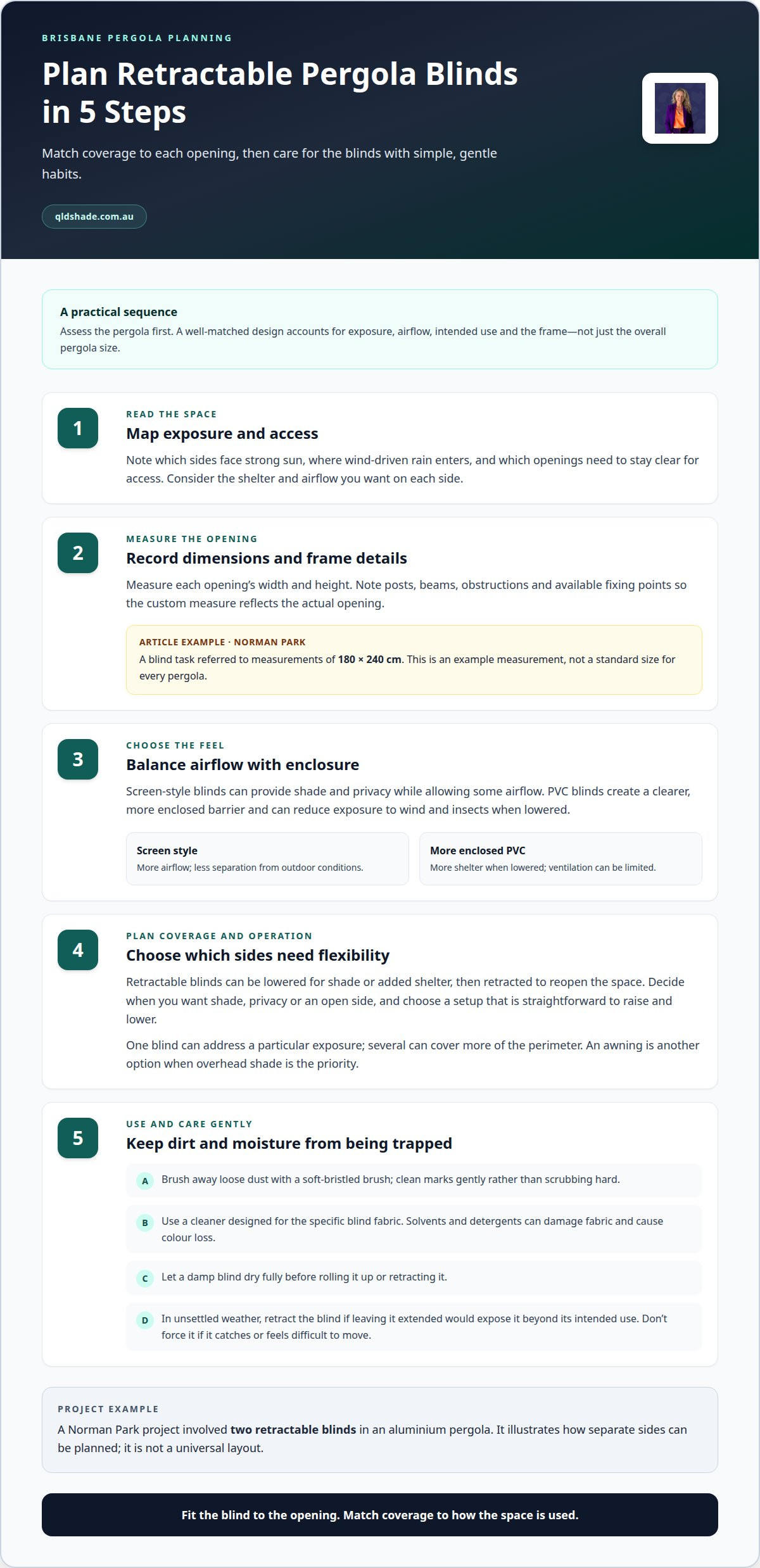
A custom measure is a practical first step: record each opening’s width and height, then note the frame and any obstructions. A Norman Park outdoor blind task referred to blinds measuring 180 x 240 cm, illustrating why measurements should describe the actual opening rather than a general pergola size. Accurate dimensions help match the blind to its location.
Comfort and Insect Protection
Choose a screen or blind according to the comfort you want from each pergola side. A screen can provide shade and privacy while allowing some airflow; a more enclosed PVC blind can reduce exposure to wind and insects when lowered. Consider the trade-off: more enclosure can limit ventilation, while a more open screen may offer less separation from outdoor conditions.
Retractable blinds for pergolas
Retractable blinds let you adjust a pergola’s side openings as conditions change. Lower them for shade or added shelter, then retract them to reopen the space. Their usefulness depends on the opening size, fixing points and how you use the area. A Norman Park project involved installing two retractable blinds in an aluminium pergola, showing how the design can suit separate sides.
Start with the pergola layout. Note which sides face strong sun, where wind-driven rain commonly enters, and which openings need to remain clear for access. A blind fitted to one side can address a particular exposure, while several blinds can cover more of the perimeter. The frame and available fixing points influence how each blind can be installed and operated.
Retractable doesn’t mean maintenance-free. Dust and outdoor marks still collect on exposed surfaces, especially when the blind stays lowered. Use a soft-bristled brush for loose dirt, and clean marks gently rather than scrubbing hard. If the fabric gets wet, allow it to dry fully before retracting it. These steps help prevent moisture and dirt from being trapped inside the rolled blind.
- Check the opening: measure the space and note posts, beams and obstructions.
- Decide how it will be used: identify when you want shade, privacy or an open side.
- Consider the operation: choose a setup that’s straightforward to raise and lower.
These decisions also clarify whether a retractable blind or fixed shelter better suits the pergola. A retractable option offers flexibility; an awning can provide overhead shade instead. The right choice depends on which opening needs coverage and whether you want to change the space throughout the day. For example, a dining area may need adjustable side shelter, while an exposed seating area may benefit from shade above.
In Brisbane, consider exposure before operating a blind. During unsettled weather, retract it if leaving it extended would expose it to conditions beyond its intended use. Follow the care guidance for the chosen material, and avoid forcing the blind if it catches or feels difficult to move. Smooth operation matters: a snag can point to an obstruction or alignment issue that needs attention.
For a pergola with several openings, plan each blind as part of the overall layout. Decide which sides need coverage first, then consider how the positions work together for airflow, access and privacy. This avoids treating every opening the same when one side may need more shelter than another. Careful planning makes retractable blinds easier to use as your outdoor space changes.
That figure applies to the listed project; it is not a universal price for every pergola or blind arrangement. The work involved two blinds and an aluminium frame, so compare any proposed setup with the coverage and structure you need. Treat the stated amount as a reference point, and base your choice on the openings, fixing points and operation required.
Avoiding harsh chemicals and detergents
Outdoor blind fabric needs careful cleaning to preserve its colour and condition. Solvents and detergents can damage the fabric and cause colour loss. Choose a cleaner designed for the specific fabric instead. For Brisbane pergolas, this matters when dust, bird droppings, mud or mildew appear on exposed blinds.
How often should outdoor blinds be cleaned, and what cleaning methods are recommended? Brush away dust and debris when it builds up, using gentle strokes and a soft-bristled brush. Clean bird droppings, mildew and mud as soon as you notice them, using a fabric-appropriate cleaner.
Start with loose dirt before treating a mark. A soft-bristled brush lifts stubborn dust without high-pressure water. Brush gently, as rough scrubbing can contribute to early wear. If marks remain, use a cleaner made for the blind’s fabric, following its care directions instead of applying a general detergent.
- Remove loose debris: sweep gently with a soft-bristled brush.
- Spot-clean promptly: treat bird droppings, mildew and mud when noticed.
- Choose carefully: use a cleaner designed for the fabric.
- Let the blind dry: wait before rolling it up.
Bird droppings and mud can leave visible stains if they sit on the surface. Mildew can also affect appearance, especially when moisture remains. Cleaning these marks promptly helps prevent lasting damage to the fabric and its appearance. Avoid hard brushing, which can wear the surface instead of lifting the dirt.
Drying is part of cleaning, not an optional finishing step. A damp blind rolled away can hold moisture in its folds, creating conditions for mould growth. Leave it extended until dry before retracting it. This simple sequence helps prevent moisture from being trapped inside the rolled fabric.
What are common outdoor blind problems in Brisbane, and how can they be prevented? Dust, bird droppings, mildew and mud can mark outdoor fabric; trapped moisture can encourage mould. Brush gently, clean stains promptly with a fabric-suitable product, and let the blind dry before rolling it up.
Make a brief visual check as part of regular outdoor-area upkeep. Look along the fabric for dust, new stains and damp patches before retracting the blind. This gives you a clear prompt for light cleaning, rather than letting dirt build up. If a mark needs attention, use a cleaner suitable for the fabric, not solvents or detergents.
Match the cleaning approach to the material. Fabric-specific care matters because harsh products may affect colour as well as condition. Avoid replacing gentle brushing with high-pressure water for stubborn dust. Prompt, careful cleaning and complete drying are practical habits for keeping outdoor blinds looking tidy.
What types of low-maintenance outdoor blinds are available in Brisbane?
Brisbane pergolas can suit several blind styles, depending on their openings and use. Side screens, roller-style blinds and café-style enclosures each create a different balance between shelter, visibility and airflow. Start with the specific side you want to cover, not simply the product label.
A straight-drop design suits an opening where the blind lowers from above. For example, it can cover the exposed side of a pergola while leaving other sides open. Consider where the blind sits when raised, how it will be operated, and whether posts or beams affect its path.
Channel-guided designs keep the blind edges within side tracks. This style can be useful when a more contained fit is the priority. Look closely at the pergola frame and the position of each post, because those details determine where tracks can sit. The layout also affects access through the opening.
Pivot-arm blinds extend outwards from a fixing point, making them suited to a different kind of coverage. They can be considered for a patio or window where side projection is useful. An awning offers overhead shade instead of enclosing a pergola side, so it addresses a different exposure.
Motorised operation changes how a blind is raised or lowered, rather than defining its fabric or layout. It may suit an opening that’s used often or is awkward to reach. Manual operation can be straightforward for an easily accessible opening. Match the operating method to the pergola’s everyday use.
- Side screen: consider it where you want a screen across an opening.
- Roller-style blind: assess how it raises and stores above the covered area.
- Café-style enclosure: consider it when enclosing a seating area is the priority.
- Awning: look at overhead coverage for a sunny patio or pergola.
Maintenance depends on both the material and how the blind is used. A pergola beside a garden may collect different debris than a sheltered courtyard. Choose a design with a surface you can access for gentle cleaning, and follow the care instructions for that material. Easy access can make routine upkeep simpler.
Before choosing, list the openings you want covered and note their exposure, access and purpose. A dining area may need a different arrangement from a side used mainly for airflow. This practical comparison helps narrow the options without treating every pergola side alike. The best fit addresses how you use the space and can be cared for properly.
Which outdoor blind materials best withstand Brisbane’s heat, UV, humidity and storms?
Choose outdoor blind materials for the exposure they’ll face, not appearance alone. Brisbane pergolas may need shade from strong sun, screening from wind, or protection from insects. A material name alone does not show how a finished blind will perform. Check the product’s intended outdoor use, care instructions and suitability for your pergola’s conditions.
Start with the side of the pergola that receives the most sun. A material selected for outdoor exposure should suit that position and your preferred balance of shade and visibility. For example, a more open screen may preserve a view, while a more enclosing surface changes how sheltered the space feels. Compare samples in the actual setting where possible.
Humidity and rain make moisture management important. Harsh cleaning products can affect fabric, while damp blinds rolled away can create conditions for mould growth. Consider whether you can easily reach the surface for cleaning, and allow the blind to dry fully before retracting it. This practical care step matters regardless of the material.
- For sun exposure: select a product intended for outdoor use in exposed positions.
- For wind: consider the pergola opening and how the blind is fitted.
- For humidity: plan to dry the blind before rolling it away.
- For routine care: choose a surface you can clean gently and access easily.
Storm performance depends on more than the fabric. The opening, mounting points, blind design and installation all influence how the system suits a particular space. Consider where wind enters your pergola and how you’ll operate the blind as weather changes. Follow the product’s operating and care instructions rather than assuming any blind should stay extended in every condition.
Material care also affects long-term appearance. Solvents and detergents can damage outdoor-blind fabric and cause colour loss. Use a cleaner designed for that fabric, and remove bird droppings, mud or mildew when noticed. A soft-bristled brush helps lift dust; avoid aggressive scrubbing and high-pressure water. These choices help protect the material without harsh chemicals.
Australian-made outdoor products designed for local climate conditions are one consideration for Brisbane homes. Match the material and construction to the pergola’s exposure, desired privacy, airflow and cleaning access. A clear comparison of those factors is more useful than choosing by colour alone. For a tailored assessment of outdoor blind options, request an in-home measure and quote.
Get guidance on matching the blind to the pergola’s exposure, preferred shade and visibility, and available cleaning access. Keep the care routine gentle and follow the product’s instructions. Brush outdoor blinds gently to remove ingrained dirt and debris; brushing too roughly can cause early wear and tear.
After cleaning, allow the surface to dry fully before retracting it, particularly where humidity or rain may leave it damp. Check that you can reach the blind easily for routine care, and do not assume a material’s name alone indicates storm performance. Suitability still depends on the opening, mounting points, blind design and installation.
QLD Shade
QLD Shade helps Brisbane homeowners match outdoor blinds to pergola openings, exposure and everyday use. Its range includes Australian Made Zipscreen, Heavy Duty Commercial Channel Blinds and Motorised Blinds, with options selected to suit the space and local conditions.
For a pergola exposed to sun, wind or insects, an in-home measure helps shape a practical fit around its structure. QLD Shade supplies and installs Australian-made products designed for local climate conditions, and provides a free in-home measure and quote. This is a useful next step when you’ve narrowed down the coverage and operation you want but need a solution sized for your home.
Contact QLD Shade to discuss outdoor blind options for your pergola.
Plan a more comfortable pergola
Your pergola should work for the way you use it, whether that means enjoying a quieter lunch outdoors or making the area more comfortable in changing conditions. Choosing low-maintenance outdoor blinds in Brisbane starts with deciding which openings need coverage and how you want the space to feel. That gives your next step a clear purpose: finding a design that suits your home, rather than choosing by appearance alone.
A tailored measure can connect those priorities with the pergola’s structure. It gives you the opportunity to discuss the space, how you use it and the coverage you’re considering. QLD Shade can help you explore a suitable option for your home and arrange a free in-home measure and quote.
Contact QLD Shade to arrange your free measure and take the next step towards a pergola that’s ready for more comfortable outdoor living.
Frequently Asked Questions
How much do outdoor blinds cost in Brisbane, including supply and installation?
Outdoor blind pricing in Brisbane depends on your pergola’s dimensions, chosen blind style, material, operating method and installation requirements. QLD Shade provides pricing on request through a free in-home measure and quote, so the estimate reflects your space and selected solution. For example, covering one exposed opening differs from fitting blinds across several sides. Share which areas you want covered to help shape a suitable quote.
Which Brisbane outdoor blind companies offer low-maintenance products and warranties?
Look for local Brisbane suppliers offering custom-made options and clear, written warranty terms. Compare each warranty’s coverage, exclusions and care conditions.
Ready to Transform Your Space?
Take the next step and discover the right blinds, shutters, awnings for your space.
Get a Free In-Home Measure & Quote
Contact QLD Shade today for a free measure and quote and discover why Brisbane homeowners trust us for premium outdoor blinds and awnings.
GET IN TOUCH
FOLLOW US: