

10/349-351 MacDonnell Rd,
Clontarf, Qld 4019
Outdoor Blinds You Can See Through: A Brisbane Guide to Light, Views and Privacy
Angie Neal | October 10, 2026
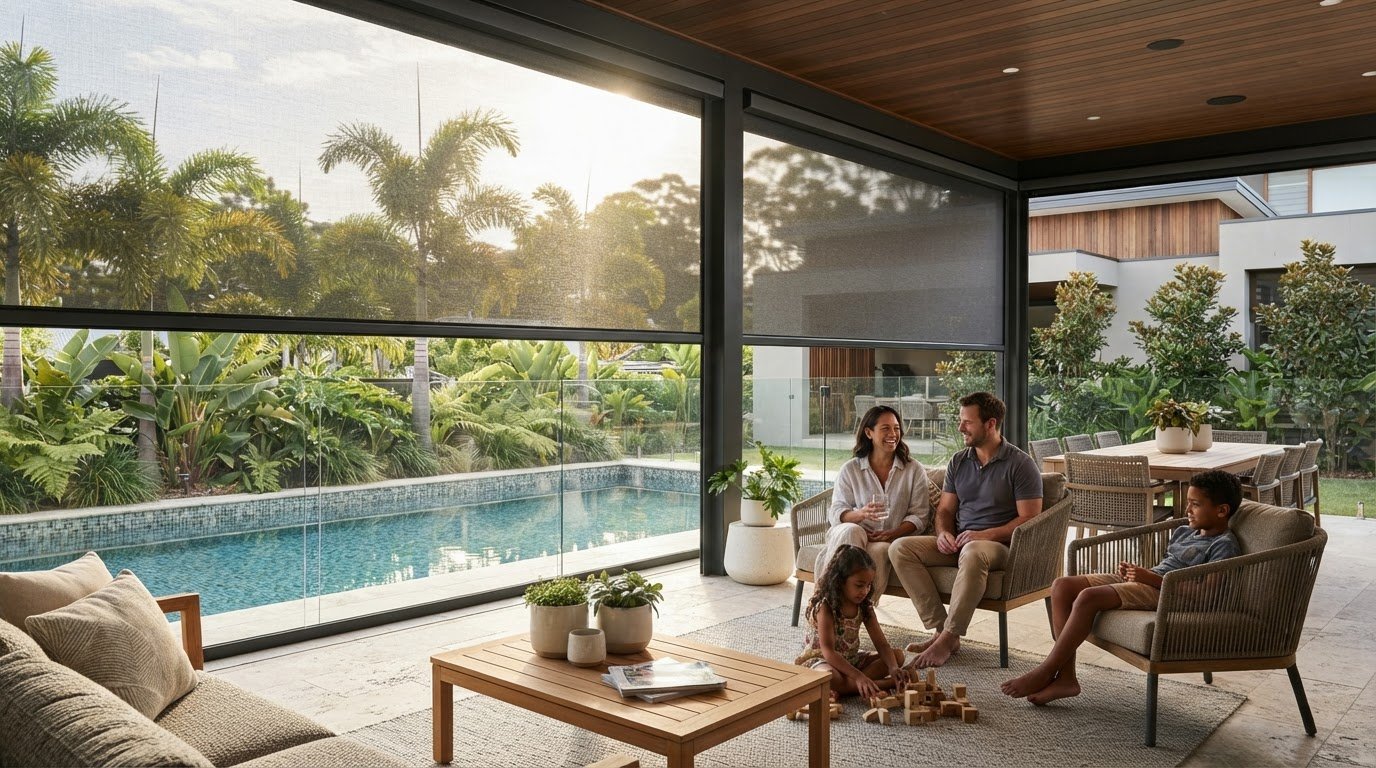
Want to keep the garden or pool in view without letting Brisbane’s sun make your patio uncomfortable? It’s a common reason homeowners search for outdoor blinds see through, but clear views, shade and privacy don’t always come as a package. The right choice depends on the fabric, the opening and how you use the space.
See-through mesh can soften sunlight while preserving an outward view, but daytime privacy changes after dark. When your outdoor area is brighter than outside, people may be able to see in. Clear PVC offers a different balance, helping shelter an area from the weather while keeping the view open. Neither option guarantees nighttime privacy.
This guide explains how fabric openness and blind styles affect views, shade and privacy, with Brisbane’s sun, glare, insects and changing weather in mind. You’ll learn what to consider when comparing options, including Zipscreen, and how an in-home measure can help tailor a blind to your opening and intended use.
Key Takeaways
- With outdoor blinds see through, the view you retain depends on fabric construction, lighting and viewing angle. Consider how the screen looks from both sides.
- Don’t rely on see-through screening for nighttime privacy. Brighter light on one side can make it easier to see through from that side.
- Compare your priorities for view, glare control, airflow, insect screening and privacy before deciding which features matter most on your patio.
- Before choosing a blind, note the opening dimensions, mounting surfaces and nearby obstructions to help plan a suitable fit.
- QLD Shade’s in-home consultation can help assess your opening and intended use, with Zipscreen among the outdoor blind options to consider.
What does ‘see-through’ mean for outdoor blinds?
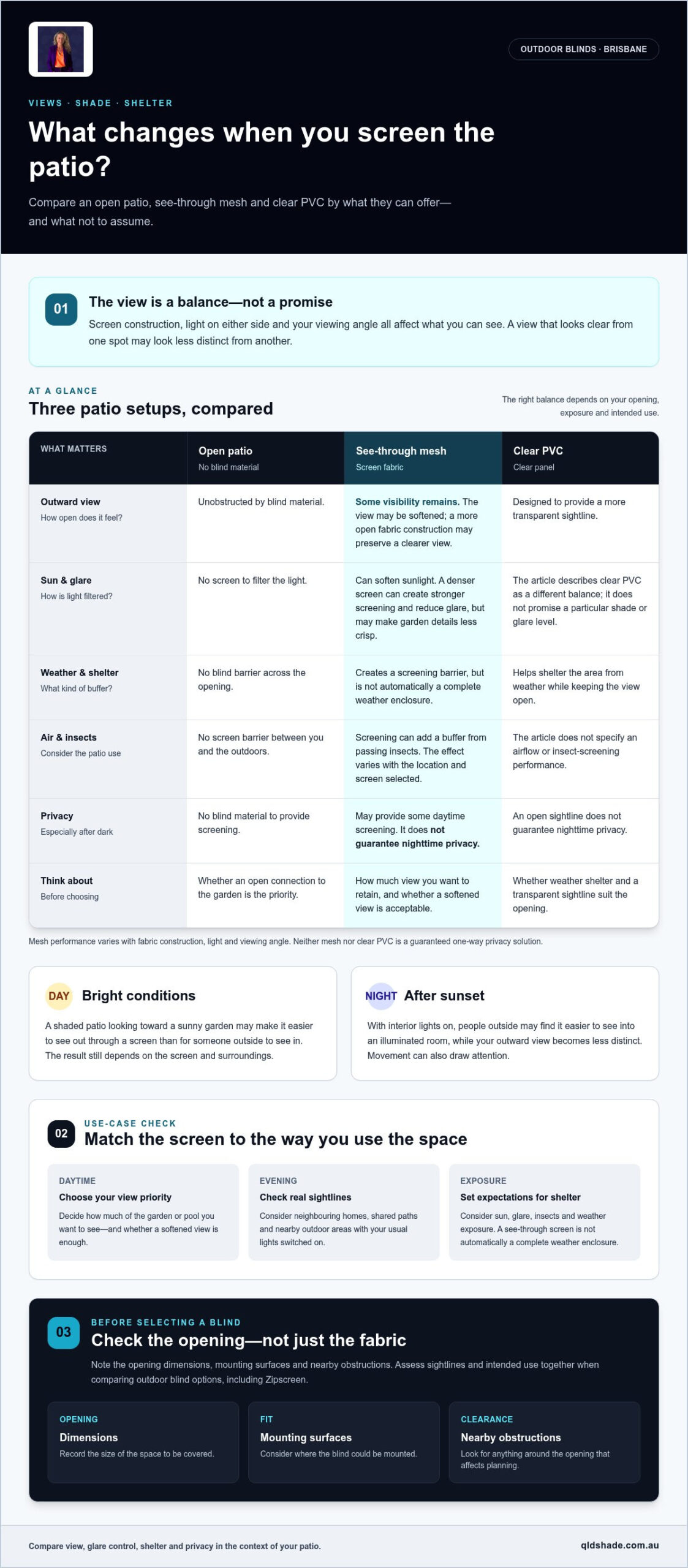
See-through outdoor blinds use screening that can preserve some visibility outside while filtering light. “Some” matters: the view isn’t the same as looking through an open space. It depends on the screen’s construction, the light on either side and your viewing angle. A view that looks clear from one position may appear less distinct from another.
That makes “see-through” a description of a balance, not a promise of a particular view or privacy level. Screen fabric has openings that let light and some visibility pass through while forming a barrier across the space. A clear panel is designed to provide a more transparent sightline, while an open patio has no blind material between you and the garden. These options can feel quite different in daily use.
Blinds are one kind of window covering, and their role can include managing sunlight and privacy. For outdoor screening, consider those functions together rather than judging a fabric only by how much you can see through it.
How screen fabric balances views and shade
Fabric openness describes how open or tightly woven the screen appears. A more open construction may preserve a clearer outward view, while a denser screen may soften the view and create a stronger sense of screening. The trade-off is practical: additional screening can reduce glare, but may also make garden details less crisp. The effect depends on the fabric, light and angle, so don’t assume one screen will look the same on every patio.
Think about the view you want to keep. If you mainly want to make out the garden or pool, a softened view may be enough. If you want finer details to remain clear, view clarity may matter more. Neither description establishes a guaranteed level of shade, UV protection or privacy.
Where see-through outdoor blinds can work well
On a patio, verandah or alfresco area, screening can help the space feel more sheltered without closing it off completely. You may still enjoy a connection to the garden while creating a buffer from bright conditions, passing insects or the feeling of an exposed opening. The balance varies with the location and screen selected.
In Brisbane, sun and glare can shift across an outdoor area through the day. Consider whether you want screening mainly for a sunny afternoon, to make an exposed seating area feel more settled, or to retain a view while adding a boundary. Also think about how you use the opening and the weather exposure it faces. A see-through screen isn’t automatically a complete weather enclosure, so match your expectations to the blind’s intended use.
When weighing options, start with the view you want to retain, then compare it with the level of screening that feels comfortable for your space. Consider the opening’s exposure and how you use the patio through Brisbane’s changing conditions.
Can you see out through outdoor blinds and still have privacy?
Yes, it’s possible to retain an outward view while gaining some daytime screening, but a see-through blind can’t guarantee privacy in every condition. Visibility depends on the screen fabric, the light on each side and what sits behind the blind. A bright outdoor area and a shaded interior may create a different effect from a lit room facing a dark yard. The phrase “outdoor blinds see through” describes a useful balance, not a promise that neighbours won’t be able to see in.
What’s behind the screen matters too. A garden or fence close to the blind may partly block sightlines, while an open view towards a neighbour’s windows or a nearby path can leave less separation. Consider what someone could see from those viewpoints, rather than judging privacy only from your seat on the patio.
Why visibility changes between day and night
On a bright afternoon, it may be easier to look from a shaded patio through a screen towards the sunny garden than to see into the darker space from outside. After sunset, turn on interior lights and the balance can shift: people outside may find it easier to see into the illuminated room, while your outward view becomes less distinct. This effect depends on the screen, surroundings and relative light, so it isn’t a dependable one-way privacy feature.
Movement near the opening may also draw attention, even when details aren’t sharply visible through the fabric. Consider how the area looks from outside at night, with the lights you normally use switched on.
Choosing the right balance for privacy and views
Start by separating two needs: daytime screening while you enjoy a view, and privacy after dark. A screen may suit the first aim, but don’t rely on it alone for the second. Check sightlines from neighbouring homes, shared paths and nearby outdoor areas at the times you’re most likely to use the patio.
- For daytime use: Decide how much of the garden or pool you want to see, and whether a softer view is acceptable.
- For evening use: Consider how lighting inside and outside changes visibility, then decide whether a separate covering is needed.
- For added separation: Layering an outdoor screen with an internal blind or another complementary covering is a design option, though the result depends on the products and setup.
Brisbane’s conditions also shape how and when you use an outdoor area. The Bureau of Meteorology’s Brisbane climate statistics offer local context for planning around sun and weather exposure, alongside your privacy needs.
QLD Shade provides an in-home measure and consultation to assess the opening, sightlines and intended use together. The Brisbane outdoor blind consultation can help you consider how a screen fits your space without treating daytime visibility as guaranteed nighttime privacy.
Which see-through outdoor blind features suit a Brisbane patio?
The most suitable features depend on what you want the patio to do. A dining area exposed to afternoon sun may call for a different balance from a sheltered alfresco space used mainly for a garden outlook. Before comparing outdoor blinds see through, consider the opening’s sun direction, nearby sightlines and the hours you spend outside. Treat each feature as a selection question, not a promise of a particular result.
| Feature | Ask yourself |
|---|---|
| View | Which parts of the garden, pool or outlook do you want to keep in sight? Would a softened view still suit the space? |
| Glare control | At the times you use the patio, where does direct sun fall? Is bright light making dining, reading or relaxing less comfortable? |
| Airflow | Does the area feel exposed or still, and how much openness do you want to retain while screening the opening? |
| Insect screening | Do insects affect how you use the space, particularly around meals or in the evening? Consider this alongside the type of screen and the opening. |
| Privacy | Can neighbouring homes or a nearby path see into the patio? Think about daytime and evening use separately. |
Match the blind to the way you use the space
For dining, you may prioritise reducing glare at the table while keeping the area open enough to enjoy the outlook. If you mainly relax outside, think about the direction of the sun during your usual downtime and whether you want a broad garden view or a more screened feeling. For entertaining, consider how guests move through the opening and whether the blind’s position suits the way you use the area.
An exposed patio has different considerations from a sheltered alfresco area. Note where direct sun reaches the space, what nearby homes or paths can see, and whether wind or weather exposure affects when you use it. These observations help clarify which features matter most, without assuming one fabric or blind style will suit every home.
Compare blind formats without assuming one fits every patio
QLD Shade offers Zipscreen and straight-drop outdoor blinds. Zipscreen is a guided format, which gives you a different installation arrangement to consider from a straight-drop blind. Focus on the opening, mounting surfaces and how you want the blind to operate. Neither format is automatically the right fit; the practical choice depends on the space and intended use.
When considering Zipscreen, assess your patio’s layout and priorities. An in-home measure can help relate those questions to the opening and its surroundings, making the choice more tailored to your Brisbane home.
How to assess your outdoor space before choosing see-through blinds
A useful assessment starts with the opening, then looks at how Brisbane conditions and your daily routine affect it. Before choosing outdoor blinds see through, record what needs to fit, what you want to screen and what you want to keep visible. These notes give you a clearer brief for a tailored measure and help connect product choice to how you’ll use the space.
Record the opening, exposure and everyday use
Walk through the area at different times rather than judging it from one sunny afternoon. Notice where light falls, when glare becomes uncomfortable, what the weather reaches and which views matter. Consider how the patio works on a weekday, in the evening and when you’re entertaining. Those details help distinguish an occasional need for shelter from a space used every day.
- Note the opening dimensions. Record the width and height of each opening, and whether the measurements change across the top, middle or bottom. Treat your notes as a planning aid, not a substitute for a professional measure.
- Check mounting surfaces. Look at where a blind could be fixed and note the material and shape of the surfaces. Identify beams, posts or other features that may affect how the opening can be covered.
- Mark obstructions. Include handles, lights, gutters, downpipes, doors, windows and nearby plants. Note anything that could interfere with the blind’s position or everyday operation.
- Track sun and glare. Observe which side receives direct sun and at what time. Consider whether the brightest period overlaps with meals, relaxing or entertaining, and which view you still want to enjoy.
- Observe exposure. Note where wind tends to come from, whether rain reaches the opening from the side, and when insects affect your comfort. These are useful selection considerations, not proof of how a particular blind will perform.
- Map sightlines and use. Identify views to preserve and sightlines from neighbouring homes, paths or shared areas. Think about weekday routines, evening lighting and gatherings so the setup reflects real use.
Plan a tailored measure and installation
Once you’ve made these observations, an in-home assessment can connect them to the actual opening. QLD Shade provides a free in-home measure and consultation across greater Brisbane, helping assess dimensions, mounting points, exposure and intended use together. QLD Shade’s technicians professionally install purchased custom products, bringing measurement and fit into one considered process.
Your notes can make the conversation more practical: point out the glare spot at lunchtime, the garden view you want to keep, or the side where rain tends to reach the patio. If you’re exploring outdoor living in Brisbane, consider how screening could support your routine as well as the look of the area.
For a tailored assessment of your opening and outdoor blind options, request a free in-home measure and quote.
Explore see-through outdoor blinds with QLD Shade
Choosing outdoor blinds see through involves more than selecting a screen that looks right in a sample. The fit, the fabric’s appearance in your own light and the way you use the area all shape the result. QLD Shade is a family-owned supplier and installer serving greater Brisbane, with an in-home consultation to help match your priorities to the opening and its surroundings.
Bring practical questions to the assessment. Which view matters most? Where does the afternoon sun reach? Is the opening beside a walkway or a neighbouring home? These details help guide a tailored solution without assuming every fabric will look or perform the same way in every setting.
What a tailored consultation helps you decide
During a home visit, the opening can be measured and considered in place. That gives the discussion a useful starting point for dimensions, mounting surfaces and nearby features that could affect the fit. You can also describe how you use the patio, whether you want to retain a garden outlook and what kind of fabric appearance feels suitable for the space.
Looking at the actual sightlines helps make the decision more grounded. A view from the patio may differ from the view from a path or a neighbouring home, and the opening’s position can influence how the blind sits within the area. The consultation connects those conditions with your intended use, helping shape an option around your home rather than a generic example.
Fabric-based products supplied by QLD Shade include a 10-year warranty. This applies to fabric-based products, not automatically to every product category.
From measure to installed outdoor blinds
The process is straightforward: discuss the space and what you want from it, measure the opening at home, select a tailored solution, then have QLD Shade’s technicians professionally install the purchased product. A considered measure helps account for the opening and its surroundings, while professional installation brings the selected product into place.
Before the visit, it can help to have your priorities ready: the view you want to preserve, the hours you use the patio, and any concerns about sun, exposure or sightlines. You don’t need to settle every detail in advance. The in-home consultation is a practical opportunity to discuss those factors and consider suitable outdoor blind options for your Brisbane home.
Arrange a free Brisbane-area in-home measure and quote to discuss your opening, intended use and tailored outdoor blind solution with QLD Shade.
Turn your patio priorities into a practical plan
Before choosing, picture an ordinary day in your outdoor space, not just the best-case view. Where would you sit? What would you want to see, and what would make the area more comfortable? Write down your top priorities in order. That brief can keep the decision focused when comparing outdoor blinds see through and other screening options.
Be clear about the trade-offs you’re comfortable with. You might favour a stronger sense of screening over a sharper garden view, or put the outlook first and use another approach for privacy after dark. There’s no single balance that suits every home. Choose an option that fits your opening, routines and expectations.
QLD Shade can help turn those priorities into a tailored outdoor blind plan. Arrange your free in-home measure and quote with QLD Shade and take the next step towards making your Brisbane outdoor area work better for you.
Frequently Asked Questions
Can you see out through outdoor blinds during the day?
Yes, some outdoor screens let you see outside during daylight, though the view may look softened rather than sharp. For example, you might still recognise the shape of a tree or pool but notice less detail than through an open doorway. Check the view from the seated position you use most, not just standing close to the fabric. The appearance can change with the light, the screen and what’s beyond it.
Can neighbours see through outdoor blinds at night?
Yes, neighbours may be able to see in at night, particularly if your patio or adjoining room is lit and the area outside is darker. Treat a see-through screen as daytime screening, not dependable after-dark privacy. If you read, dine or relax near the opening in the evening, consider an additional covering or adjust the lighting and seating layout. The result still depends on the specific fabric and sightlines.
Do see-through outdoor blinds block the sun?
They can filter sunlight and make bright conditions feel less exposed, but the degree of shade depends on the fabric and the sun’s angle. A screen may reduce the harshness of light without making the patio dark. If a low afternoon sun shines directly into your seating area, assess that particular angle and time of day. Don’t assume a see-through fabric provides a specific UV or heat reduction without product evidence.
Do see-through outdoor blinds keep insects out?
They may help create a barrier across an opening when the blind is lowered, but insect screening depends on the fabric, fit and gaps around the edges. A screen designed to preserve visibility isn’t automatically an insect-proof barrier. Think about the insects you encounter and whether they enter through the sides, underneath or another opening. In a Brisbane alfresco area, those entry points matter as much as the fabric itself.
Are see-through outdoor blinds suitable for Brisbane weather?
They can be considered for Brisbane patios, but suitability depends on the opening’s exposure and the blind’s intended use. A sheltered alfresco area and a patio exposed to driving rain or strong wind have different demands. Note where weather reaches the opening and how often you use the space in those conditions. Choose with the actual site in mind, rather than assuming every see-through screen is a full weather enclosure.
What is the difference between Zipscreen and straight-drop outdoor blinds?
Both are outdoor blind options supplied by QLD Shade, but their formats differ. Zipscreen is a guided style, while a straight-drop blind lowers from its top fixing without the same guided arrangement. The opening, mounting points and how you want to use the blind can help determine which format to consider. An in-home measure lets those practical details be assessed at the patio, without assuming one style suits every space.
How do I choose the right see-through outdoor blind fabric?
Start with your main priority: preserving a view, softening bright light, creating a sense of screening or addressing more than one need. Consider how the fabric looks against your home and garden, then assess it from your usual seat and from outside. Ask how the view changes in daylight and after dark. A tailored consultation can help relate fabric appearance to your opening and intended use, without assuming a particular privacy level.
Ready to Transform Your Space?
Take the next step and discover the right blinds, shutters, awnings for your space.
Get a Free In-Home Measure & Quote
Contact QLD Shade today for a free measure and quote and discover why Brisbane homeowners trust us for premium outdoor blinds and awnings.
GET IN TOUCH
FOLLOW US: