

10/349-351 MacDonnell Rd,
Clontarf, Qld 4019
Outdoor entertaining ideas for arranging BBQ, seating and social zones
Angie Neal | November 14, 2026
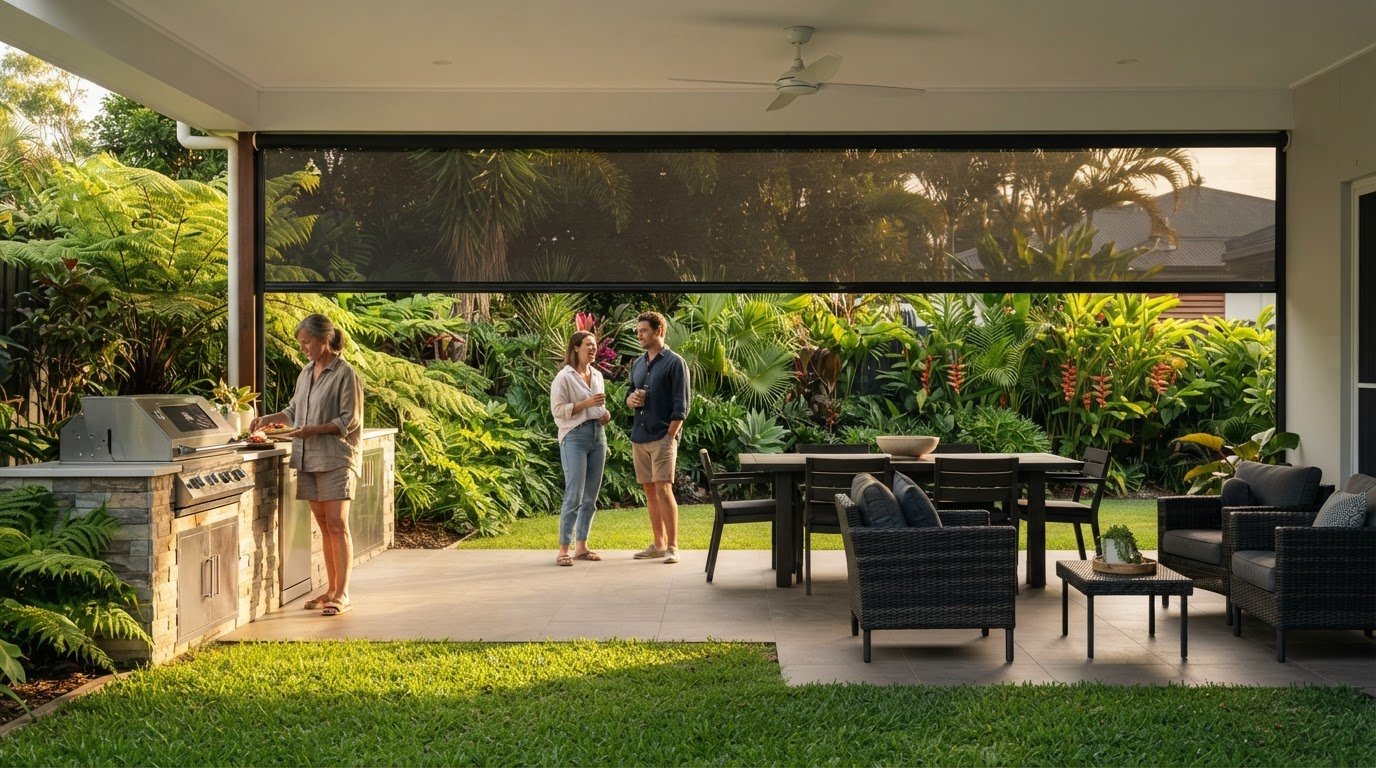
Solar lighting isn’t the best fit for every corner of an entertaining area. For outdoor entertaining ideas that work after dark, use solar lights where their panels receive plenty of sun. Choose mains-powered lighting where you need more consistent brightness and control. A licensed electrician should install mains-connected lights using fittings designed for outdoor use.
A welcoming backyard needs more than good lighting. A well-positioned BBQ, comfortable seating and clear zones for cooking, dining and relaxing help guests move around and enjoy the space. In Brisbane, plan for sun, wind and rain to make better use of your outdoor area.
This guide covers practical ways to arrange a BBQ zone, create cosy seating and extend your living space outdoors. You’ll also find ideas for choosing between solar and mains-powered lighting, defining entertaining zones without overcrowding, and making the layout comfortable for everyday use as well as gatherings.
Key Takeaways
- Place the BBQ so the cook can stay part of the conversation, and keep cooking and dining areas distinct but visually connected.
- Choose outdoor-use furniture and arrange seating in cosy groupings that make conversation easy.
- Use shade, screening and weather protection to help your outdoor space feel more comfortable in Brisbane’s changing conditions.
- Define cooking, dining and relaxing zones with furniture or planters, while leaving clear paths and avoiding overcrowding.
- Plan the layout around your home’s sun, wind and rain exposure so the space works for both everyday living and gatherings.
1. BBQ zones and outdoor kitchens
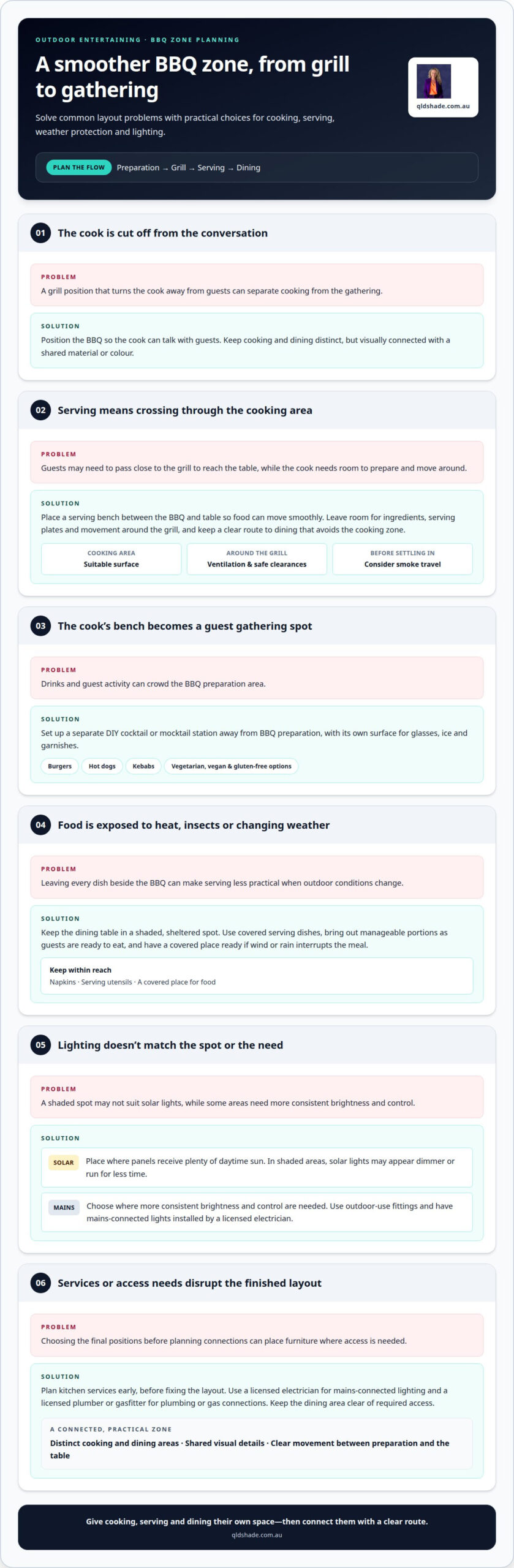
Start with the BBQ’s position, then arrange the kitchen and dining furniture around it. Place the cooking area so the person at the grill can talk with guests rather than turning away from the gathering. Keep cooking and dining distinct, but connect them with a shared material or colour. A serving bench between the BBQ and table helps food move smoothly without the cook crossing through seated guests.
Choose a suitable surface, weather protection, ventilation and safe clearances for the cooking area. Leave room to prepare ingredients, set down serving plates and move around the grill. A covered patio can bring the barbecue and dining area together for year-round use. Before settling the layout, consider where smoke will travel and how guests can reach the table without passing close to the cooking zone.
For an easy Australian outdoor menu, serve burgers, hot dogs or kebabs, with vegetarian, vegan and gluten-free options to suit different preferences. A DIY cocktail or mocktail station lets guests mix drinks to their taste. Set it away from the BBQ preparation area, with a separate surface for glasses, ice and garnishes. This keeps the cook’s bench clear and gives guests a natural place to gather.
To manage food around heat, insects and changing weather, use covered serving dishes and place the dining table in a shaded, sheltered spot. Bring out manageable portions as guests are ready to eat instead of leaving every dish exposed beside the BBQ. Keep napkins and serving utensils within reach, and have a covered place ready for food if wind or rain interrupts the meal. These steps help protect the spread from outdoor conditions and keep serving practical.
Plan the kitchen’s services before choosing its final position. Mains-powered outdoor lighting should use fittings designed for outdoor use and be installed by a licensed electrician. In Australia, use a licensed plumber or gasfitter for plumbing or gas connections. Planning these details early helps you avoid placing a dining table where access is needed for cooking, lighting or connections.
Finish the zone with details that support the way guests gather. Add a small table beside lounge seating for drinks, or arrange pots around the patio edge, away from the BBQ’s working area. String lights or lanterns create a softer feel after sunset; solar lights work best where their panels receive plenty of daytime sun. This creates a clear route from preparation to dining, with room for conversation around both.
2. Comfortable outdoor seating
For a practical setup, start with outdoor dining chairs and a table sized for regular meals, then add lounge seating for relaxed conversation. Weather-resistant cushions, a side table and flexible extras such as poufs or ottomans make the area work for different gatherings. In Australia, furniture costs depend on the materials, dimensions, quantity and style, so plan around the seating your household will use most.
Choose furniture designed for outdoor use rather than moving indoor pieces onto the patio. Sun, rain and changing conditions can affect materials, so follow each item’s care instructions. UV-resistant outdoor fabrics suit exposed seating, while removable cushions can be washed or stored during heavy rain. If furniture stays uncovered between gatherings, a heavy-duty cover can help protect it when not in use.
Arrange seats in a close grouping, with chairs angled towards each other instead of lined up along a wall. Guests should be able to talk without twisting around or raising their voices. Leave clear walking space between the seating and other parts of the patio. In a compact area, a built-in garden wall can double as a seat, while a pair of ottomans adds flexible seating without permanently taking up floor space.
Comfort also depends on the conditions around the furniture. Consider where afternoon sun reaches the seats, and use suitable shade to make exposed spots more usable. A sheltered corner can provide a quieter place to relax, while open sides help keep the setting connected to the garden. For a patio seating area exposed to sun or wind, outdoor shade options can help create a more protected setting.
Plan lighting alongside the seating arrangement, not as an afterthought. An outdoor table lamp or lanterns near a lounge grouping can make it easier to settle in after sunset. Position lights so they illuminate the area without shining directly into guests’ eyes. Solar lights suit spots where their panels receive plenty of sunlight during the day; in shaded areas, they may appear dimmer or run for less time.
Leave room for the setting to adapt. Keep a few lightweight poufs or floor cushions available for extra guests, and store them when the weather turns. A small table beside the lounge seats gives guests somewhere to place drinks, while weather-resistant upholstery and removable cushions make everyday care more straightforward. These choices help the same seating arrangement suit a quiet evening or a larger get-together.
3. Extending liveable space outdoors
Think of the patio as another room, with a clear purpose and a comfortable connection to the house. A roof can provide shelter from rain and other elements, while open sides welcome cool breezes. In Brisbane, plan for winter warmth and summer airflow. Position lounge seating to catch winter sun, then use adjustable shade or screening to manage stronger exposure.
A dry, level base makes the area easier to furnish and use. Paving creates a durable, flat surface for outdoor tables, chairs and foot traffic. A concrete floor absorbs less heat and can feel cooler underfoot in an outdoor entertaining area. Choose a base to suit the way you’ll use the space, whether for dining, relaxing or moving between the garden and house.
In a compact courtyard, make the walls work harder. A living wall adds greenery without using much floor space, while a mirror can make a narrow area appear more open. Garden walls can double as seating, leaving more room for a table or clear walkway. Depending on their placement and growth, plants can also add privacy, create a windbreak and provide shade.
Weather protection can make an open patio more useful through changing conditions. Outdoor roller blinds can help screen an entertaining area from insects, dust and unpredictable weather. A basic pergola generally offers shade but may not provide full rain protection. Shade sails need strong fixings, so plan their support points as part of the design, not as an afterthought.
Use overhead features to add function without closing in the space. A perforated architectural screen can filter daylight and become a feature after dark. Beside a pool, a cabana can create a comfortable place to rest between swims. A trellis with climbing vines and hanging lamps can give a dining corner a softer, garden-like feel.
Build the space in stages if a complete renovation isn’t practical. Start with a level base, shade and one defined activity area, then add seating or a beverage station later. A long, high table can provide extra preparation space and serve as an informal bar. A water feature or fire pit can add atmosphere, while a ceiling fan circulates air without lowering the temperature.
Before adding a pergola or other structural work, consider local requirements. Building rules and approvals vary between Australian states, territories and councils. Some pergolas may have structural requirements or need planning or building approval, so seek professional advice before work begins. This helps ground the design in the site, the weather and its intended use.
Keep the intended use in view as you combine these elements. Paving offers a durable, flat base, while a roof over an open-air space can provide protection from rain and other elements. A living wall brings greenery to a space-limited outdoor area and can support surrounding biodiversity, making vertical planting a practical option where floor space is scarce.
In an outdoor entertaining area, a garden wall can serve as seating and make better use of available space. A perforated decorative architectural screen can filter sunlight by day and act as an overhead feature at night. Beside a pool, a cabana can provide a comfortable backyard living area. Together, these choices help match the space with shelter, greenery and places to gather.
4. Planning entertaining zones and layout
Plan around the occasion first, then make the arrangement easy to adapt. For a relaxed family lunch, leave room for dining and children’s activities; for a larger gathering, create separate places to stand, sit and circulate. Flexible furniture lets you open up floor space or add seats without permanently crowding the patio.
Give each activity a clear place. Keep cooking, dining and relaxing areas distinct, while using a consistent colour or material to connect them. An outdoor rug can mark a lounge zone, and planters can softly separate it from a dining area. Leave a clear route between zones so guests don’t have to pass through the cooking space to reach a seat.
On a small patio, balcony or courtyard, make each feature earn its space. Choose compact furniture, use a garden wall as extra seating, or define a corner with a planter instead of adding a bulky screen. A mirror can make a narrow outdoor area appear more spacious. Keep the main walkway clear, and use foldable or movable pieces when you need to change the layout.
For children and older guests, make paths easy to follow and keep loose rugs and furniture out of the way. Keep the route between the house, seating and dining area clear. Place active play away from hot cooking equipment, and choose a stable spot for chairs so guests can sit and stand comfortably.
Check how Brisbane’s sun, wind and rain reach each zone before placing furniture. A sunny dining spot may be pleasant in cooler weather but uncomfortable in strong afternoon sun. Screens and plants can add privacy, and plants can help buffer party noise. Position them so they don’t narrow an entrance or block the route between the house and patio.
Use surfaces and furniture to define zones without closing off the whole space. A change in flooring can mark the transition from dining to lounging, while a row of pots creates an open-feeling boundary. Avoid adding too much furniture: crowded spaces restrict movement and make conversation harder. Keep only the pieces that support the gathering.
Before guests arrive, walk from the back door to each activity area. Carry a serving tray along the same route, then check whether chairs block access when pulled out. Move obstacles and adjust furniture before adding decorations. This walkthrough helps the space work for different occasions, guest needs and changing weather.
Treat boundaries as cues rather than barriers. Outdoor rugs, planters, flooring changes or furniture placement can define activity zones without closing off the space. Keeping the zones visually related makes the layout feel deliberate while leaving movement open. Separating outdoor cooking and dining while keeping a common theme creates a cohesive entertaining space.
As you settle the arrangement, plan outdoor shade around the sun’s direction and the backyard’s exposure to wind and rain, as these conditions affect which zones remain comfortable. Keep furniture choices restrained. Too much furniture can make an outdoor entertaining area feel tight and uninviting. Reassess the setup when activities change, shifting pieces rather than filling gaps with extra items.
5. Benefits of outdoor entertaining areas
A planned outdoor area gives everyday activities room to move beyond the house. In Brisbane, a shaded patio can host breakfast, afternoon tea or a weekend lunch instead of sitting unused between gatherings. The benefit isn’t just extra room for guests. It’s a comfortable place that fits ordinary routines as well as special occasions.
Outdoor entertaining can also make hosting feel less formal. Guests can move between the garden, dining area and lounge instead of gathering around one indoor table. A drinks station near the patio entrance, for example, gives visitors something to do while the host finishes preparing food. Clear routes between these areas help people mingle without crowding the house.
A well-planned space can suit different occasions without a full redesign. Use the same area for a family lunch, an evening catch-up or a children’s birthday gathering. A portable speaker and lawn games can create an activity zone, while a projector and screen can turn a sheltered corner into an outdoor movie setting. Choose additions that can be packed away when the space returns to everyday use.
Affordable DIY improvements can start with items you already own. Rearrange existing outdoor furniture, group sturdy pots to add greenery, or use a simple outdoor rug to distinguish a lounge area. A table setting in shared colours and seasonal flowers can make a meal feel considered without rebuilding the patio. Add one feature at a time, then see how it changes the way you use the space.
Plants and thoughtful screening can make an entertaining area feel more private and settled. A row of containers can soften a boundary, while suitable plants can provide a windbreak or shade. In a smaller Brisbane courtyard, vertical greenery uses wall space instead of taking over the floor. Place pots where they won’t obstruct entrances or make paths harder to use.
Comfort through changing weather is another practical benefit. A sheltered zone can give guests somewhere to sit when light rain arrives, and adjustable screening can help manage sun, wind or insects. Warm-toned lighting can create a relaxed atmosphere after sunset, while dimmable fittings let the setting shift from dinner to conversation. For ideas on improving protection from Brisbane conditions, plan a more weather-ready outdoor area.
The clearest benefit is a space that supports the way your household lives. Start with one useful change, such as defining a dining spot or adding a place to relax. Notice where people naturally gather, then adjust the layout to suit. Practical outdoor entertaining ideas make the patio more than a backdrop: they help turn it into a comfortable extension of home life.
QLD Shade
QLD Shade helps make outdoor entertaining areas more comfortable in Brisbane’s sun, wind and changeable weather. If insects or dust affect how you use the space, Zipscreen offers an outdoor screening option. The right approach depends on your patio’s layout and the conditions you want to manage, not on adding a feature that doesn’t suit the area.
For a practical next step, QLD Shade offers a free in-home measure and quote to tailor a solution to your space. Consider where you’d like more shelter and how you want to use the area, whether for dining, relaxing or hosting guests. Contact QLD Shade to discuss your outdoor space.
Make your outdoor space work for you
The most useful outdoor entertaining ideas suit your home, habits and local conditions. Start by deciding how you want the space to feel on an ordinary afternoon, not just during a party. That purpose can guide choices about shelter, privacy and how your indoor and outdoor areas connect.
For a more comfortable transition between spaces, consider how shade and screening can support the way you use your home. QLD Shade offers options including Heavy duty commercial channel blinds and Indoor PVC Shutters for indoor areas, alongside outdoor solutions for entertaining spaces. The right choice depends on the setting and the comfort you want to create.
Take the next step with a plan shaped around your home and Brisbane’s climate. Plan your outdoor space with QLD Shade and explore a tailored approach to making the area more inviting. A thoughtful plan can help you enjoy your outdoor space in ways that feel natural every day.
Frequently Asked Questions
What are easy outdoor entertaining ideas for an Australian backyard?
Keep the setup simple with afternoon tea, a casual brunch or a relaxed bring-a-plate gathering. Set out a self-serve water jug, cups and a small rubbish or recycling station so guests can help themselves. Use portable furniture to create flexible seating, and keep a clear route back inside if the weather changes. A simple playlist can set the mood without adding much preparation.
Ready to Transform Your Space?
Take the next step and discover the right blinds, shutters, awnings for your space.
Get a Free In-Home Measure & Quote
Contact QLD Shade today for a free measure and quote and discover why Brisbane homeowners trust us for premium outdoor blinds and awnings.
GET IN TOUCH
FOLLOW US: