

10/349-351 MacDonnell Rd,
Clontarf, Qld 4019
Patio Rain Protection: Practical Brisbane Home Options
Angie Neal | October 3, 2026
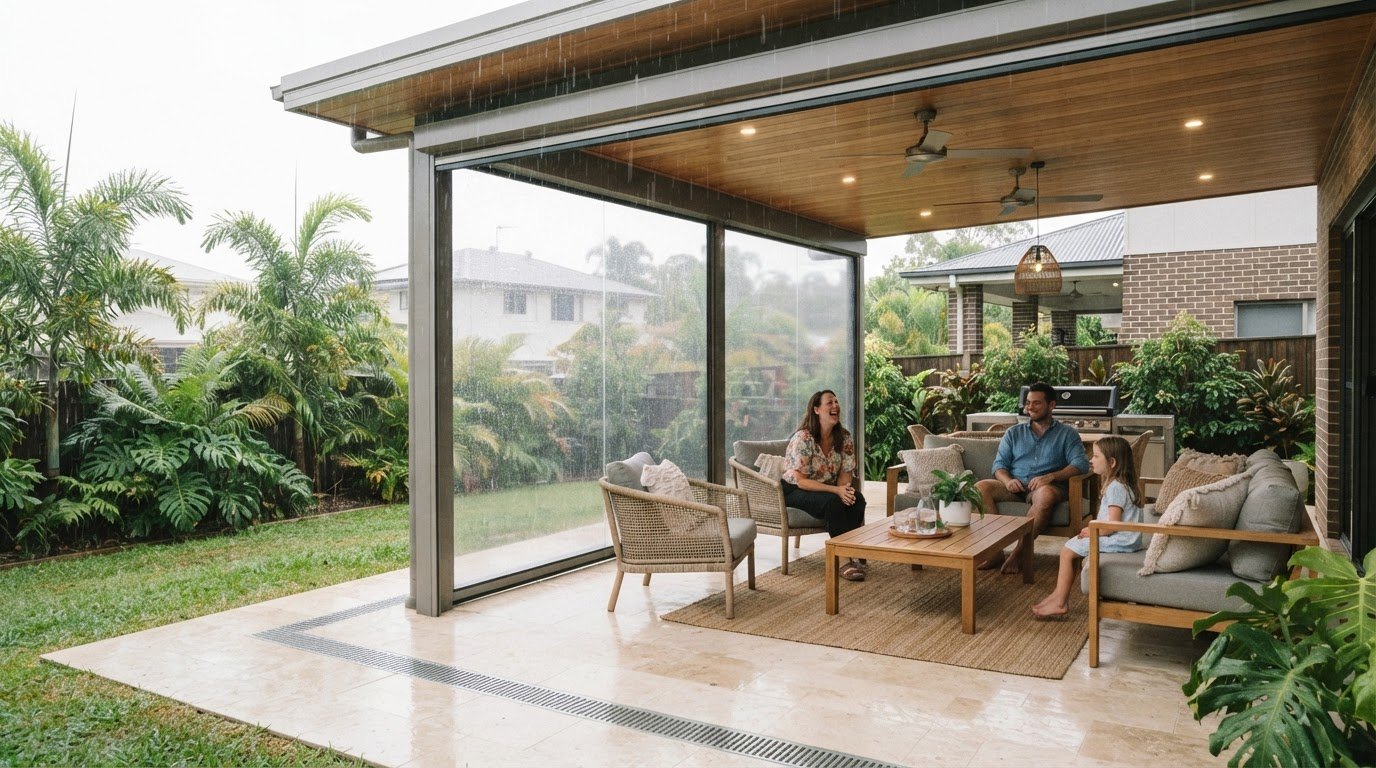
What if the best rain protection patio solution isn’t another layer overhead, but a way to manage rain blowing in from the sides? A roof can keep direct rainfall off your outdoor area, yet wind-driven showers can still soak furniture and interrupt a meal. In Brisbane’s changeable weather, effective planning starts with noticing where rain enters and how exposed each side is.
It’s reasonable to want better shelter without turning your patio into a dark, closed-in room. Outdoor blinds and awnings can help in different ways, but their suitability depends on your layout, the direction of the rain and the space’s drainage. No setup should be treated as fully waterproof or as protection during severe weather.
This guide explains how to assess rain exposure, compare practical options and consider drainage before choosing a solution. You’ll also learn how custom-fitted options such as Zipscreens can help reduce side exposure while keeping your patio comfortable and usable. The right approach is tailored to your home, not just the forecast.
Key Takeaways
- Identify which sides let rain in during ordinary showers before deciding what kind of cover to add.
- Match your rain protection patio setup to the direction of exposure, desired airflow and how you use the space.
- Compare outdoor blinds, awnings and enclosed spaces by the areas they cover and how open you want the patio to feel.
- Include drainage in your assessment so runoff doesn’t create a separate problem around the patio or home.
- Consider tailored outdoor blinds such as Zipscreens to help manage exposed sides while keeping the patio usable.
Why rain reaches covered patios in Brisbane
A roof overhead can keep much of the rain off, but it can’t stop every shower from reaching an open patio. Rain may blow in through exposed sides, dampening furniture or making the floor slippery even when the roof itself is doing its job. In Australia, patio can also describe roofed structures such as verandas, but overhead cover doesn’t necessarily enclose the space.
Wind-driven rain is rain carried sideways or at an angle by the wind, allowing it to enter a covered patio through open sides. This differs from vertical rainfall, which falls more directly onto the roof and is usually blocked by it. The distinction matters: adding more overhead cover may not solve a problem caused by rain entering from the side.
How wind-driven rain enters an outdoor living area
During a shower, moving air can push raindrops beneath the edge of a roof and across an open patio. Which side gets wet depends on the relationship between the patio’s orientation and the wind direction at the time. A patio open on two sides may be exposed differently from one with a wall or neighbouring building beside it.
Nearby structures can also change how air moves around a home. They may shelter one side, leave another more exposed, or redirect airflow into the outdoor area. There’s no single exposure pattern that applies to every Brisbane property, so notice where water reaches the patio during ordinary showers. Don’t go outside to assess conditions during a storm.
Outdoor blinds can help manage exposure along selected sides while preserving an outdoor feel. They can reduce rain entry, but shouldn’t be treated as making every patio waterproof or suitable for severe weather. A sound rain protection patio plan starts by identifying the route water takes, rather than assuming one covering will stop it all.
Why roof cover and drainage both matter
Overhead shelter and side protection address different routes for rain. A roof limits direct rainfall from above; a blind may help reduce exposure through an open side. Neither replaces a drainage assessment. Consider roof runoff separately from water that blows onto the patio, along with the floor’s fall and where existing drains direct water.
If water gathers near the house or remains on the patio, adding side protection alone may not resolve the issue. Look at the roof edge, floor surface and drainage together before choosing what to change. For a wider view of designing a comfortable outdoor space, explore this Brisbane outdoor living guide.
How patio rain protection works in Brisbane conditions
Each protection type addresses a different way rain can reach an outdoor area. A roof or awning provides overhead cover, a side blind helps manage rain entering through an exposed opening, and an enclosed structure creates a more contained environment. The best combination depends on where your patio is vulnerable and how open you want it to feel.
Brisbane’s weather varies across the year, so broader climate patterns can inform outdoor planning. The Bureau of Meteorology’s Brisbane’s official rainfall data provides long-term local climate information to consider alongside the specific exposure of your home.
What outdoor blinds can do for a patio
A fitted outdoor blind can help reduce rain entering through a selected open side. This can make a dining or seating area more comfortable in showers while keeping the patio connected to the garden. The result depends on which opening is covered, the weather and the setup; a blind is not a guarantee that the whole space will stay dry.
Consider the balance you want between shelter, airflow, visibility and an open outlook. A blind can be lowered when side exposure is a concern and raised when you want the patio to feel more open. QLD Shade supplies and installs Zipscreens, with measurements and recommendations tailored to your space.
When overhead cover or enclosure may be relevant
An awning or patio roof is designed to address exposure from above. It may provide little help with rain blowing through an open side, so adding overhead cover alone may not solve that problem. A fully enclosed area is a different design choice from a partially open patio, with a more contained feel. Think about how you use the space, including whether you value open views and cross-breezes.
A roof covers from above, an outdoor blind helps screen an exposed side, and an enclosure creates a more contained space. That’s the basic distinction to keep in mind when comparing options. For a closer look at outdoor blinds and how they can suit Brisbane homes, explore the Brisbane Zipscreen guide. If a tailored blind could suit your patio, consider outdoor blind options from QLD Shade as part of your wider rain-protection plan.
Patio rain protection options compared: blinds, awnings, and enclosures
Choose protection by looking at the direction rain enters and how you want to use the patio. A roof can shelter the area from above, but it won’t necessarily stop rain blowing through an open side. A blind, awning or enclosed space addresses a different part of the problem, and each changes the feel of the area in its own way.
| Option | Coverage direction | Openness and airflow | Suitability for an existing patio |
|---|---|---|---|
| Outdoor blinds | Selected exposed sides | Can be adjusted to balance shelter with views and openness | Can suit an existing patio where rain enters through an open side |
| Awnings | Overhead exposure | Keep the sides open unless paired with side protection | May add overhead cover; suitability depends on the patio design |
| Enclosed space | Multiple sides, depending on its design | Creates a more contained area; airflow and views depend on the enclosure | A broader design approach than adding a covering to an existing opening |
Outdoor blinds versus awnings for side and overhead rain
An outdoor blind and an awning do different jobs. A fitted blind can help reduce rain entering through a particular side, while an awning provides cover from above. If rain reaches a patio from more than one direction, a combination may be worth considering. The right balance depends on the layout and everyday use, such as whether you want to screen a dining area but keep other sides open.
Openness matters too. A blind may be raised when you want an unobstructed outlook, while overhead cover can leave the sides clear. Actual rain performance depends on the design, installation, exposure and weather conditions. Neither option should be assumed to keep every patio completely dry.
Blinds versus enclosed patio spaces
Outdoor blinds offer a way to manage selected openings while retaining a connection to the garden. An enclosed space takes a more contained approach, which may suit homeowners seeking a different style of outdoor room. Consider how much airflow and visibility you value, as well as whether you want a flexible patio or a more enclosed setting.
The right rain protection patio option depends on where rain enters, not just whether the patio has a roof. QLD Shade’s outdoor blinds, including Zipscreens, can be tailored to exposed sides as part of a broader plan. Explore an outdoor blinds weatherproofing guide for more on covering options.
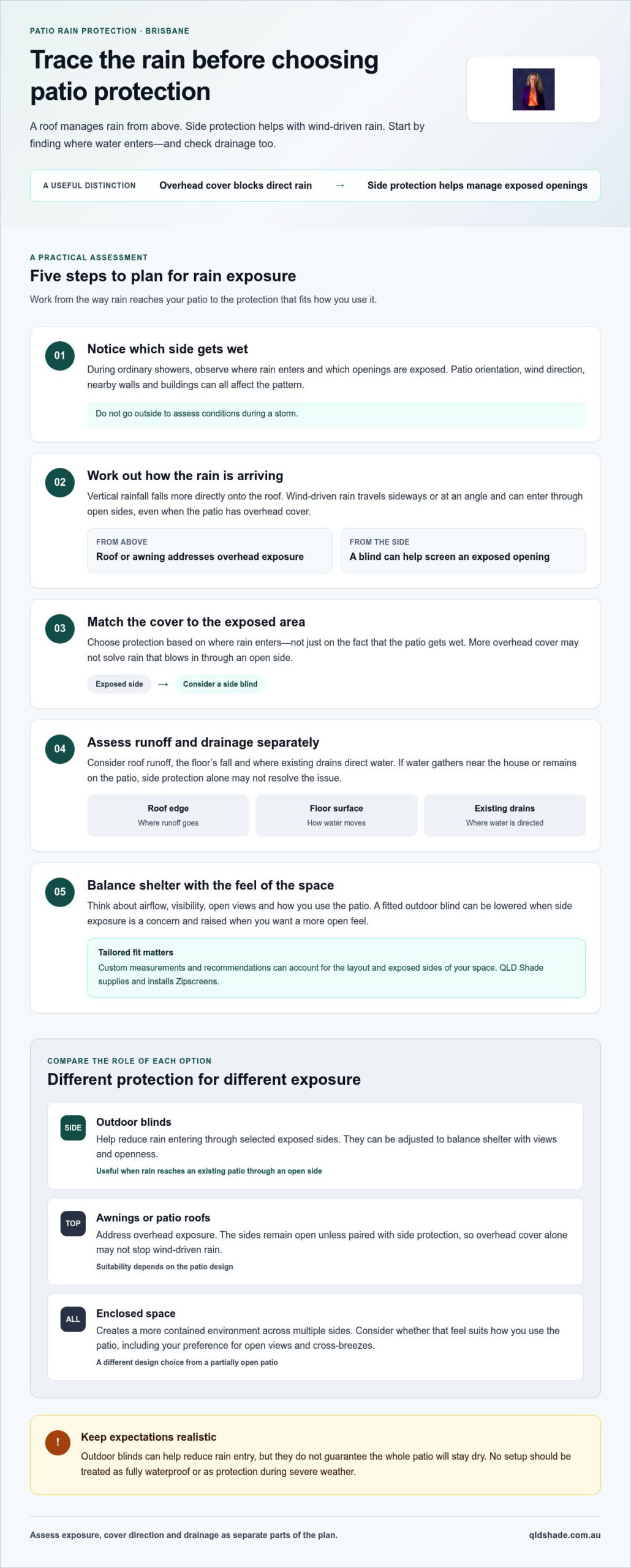
How to assess rain protection for your patio before choosing
A little observation can make it easier to choose rain protection that suits your patio rather than simply adding another covering. Use this checklist during ordinary showers and in dry conditions. Don’t go outside to inspect the patio during a storm.
Five observations to make about your patio
- Identify the open sides. Note which side gets wet during an ordinary shower and whether rain reaches one opening or several.
- Review the roof coverage. Look at which parts of the patio sit beneath the roof and where rain may pass its edges.
- Trace runoff and drainage. Consider where water from the roof goes, whether the floor appears to drain away, and whether you can see areas where water tends to collect.
- Map furniture and daily use. Notice which seating, dining or other frequently used areas need more shelter, and whether furniture placement affects access or movement.
- Decide what should stay open. Think about the views, airflow and privacy you want to retain. A solution for one exposed side may feel different from screening several sides.
Together, these observations help distinguish side exposure from roof runoff or drainage concerns. A blind may help manage rain entering through an opening, but it won’t address water pooling on the floor. Likewise, changing furniture placement won’t resolve rain blowing in from an exposed side. A useful rain protection patio plan considers each issue separately.
How a tailored measure helps match the solution
Patio dimensions, openings and exposure all affect how a fitted outdoor blind will sit within the space. An in-home assessment allows measurements and recommendations to account for the actual layout, including which side needs screening and what you want to preserve for airflow, views or privacy. QLD Shade provides a free in-home measurement and consultation, with professional installation by its technicians.
With your observations in hand, learn more about a free in-home measure and quote for a tailored option for your patio.
Choose a tailored patio rain solution with QLD Shade
A practical rain protection patio plan starts with three things: where rain enters, how exposed the space is, and how water drains away. A blind may help screen an open side, while roof cover addresses rain from above. If runoff or floor drainage is also a concern, consider it as part of the wider patio plan rather than relying on a blind alone.
For exposed sides, QLD Shade’s Zipscreens and other outdoor blinds offer tailored options for managing side exposure while keeping the patio comfortable to use. The aim is to suit the space, not to close off every opening by default. Your preferred balance of shelter, airflow, privacy and outlook helps shape the recommendation.
What to expect from a tailored outdoor-blind solution
Every patio has its own dimensions and exposure. During a free in-home measurement and consultation, QLD Shade considers the layout, the openings you want to screen and how you use the area. Accurate measurements support a fitted solution, while professional installation by QLD Shade’s technicians brings the selected blind into place.
Outdoor blinds can help reduce rain entering through exposed sides, but they don’t make a patio completely dry in every condition or provide safety in severe weather. The recommendation should reflect both the protection you want and the open feel you’d like to keep. Fabric-based products come with a 10-year warranty.
Take the next step toward a more usable patio
Assessing the patio before choosing a covering helps focus the decision on the source of the problem. Note which opening gets wet, how the roof sheds water, and what you want to preserve for everyday use. Those details help QLD Shade tailor measurements and recommendations to your home and Brisbane conditions.
Explore a fitted option for your patio through QLD Shade’s free in-home measure and quote. It’s a practical way to discuss a solution shaped around your space.
Make your patio more comfortable in changing weather
Effective rain protection patio planning starts by identifying where rain enters, then matching the solution to that exposure. A roof or awning helps with rain from above, while a fitted outdoor blind can help manage an exposed side. Drainage matters too, and no covering should be expected to keep every patio completely dry in all conditions.
QLD Shade is a family-owned business serving the greater Brisbane area, with tailored recommendations based on your patio’s layout and how you want to use it. Free in-home measurement and consultation, followed by professional installation, make it easier to plan a fitted option. Fabric-based products come with a 10-year warranty.
Ready to explore a practical solution for your outdoor space? Arrange your free in-home measure and quote and take the next step towards enjoying your patio with greater comfort and confidence.
Frequently Asked Questions
Is an outdoor blind enough to keep rain off a patio?
An outdoor blind can reduce rain entering through an exposed side, but it won’t necessarily keep the whole patio dry. The result depends on the patio layout, rain direction, installation and weather conditions. Consider whether the roof provides adequate overhead cover and whether runoff drains away properly. A blind may suit a patio that gets wet from one opening, while other layouts may need a broader approach to feel comfortable in Brisbane’s changeable weather.
Can patio blinds protect against wind-driven rain in Brisbane?
A fitted outdoor blind may help reduce wind-driven rain entering through an open side. How well it suits your patio depends on the direction of exposure, the design and the specific product. It shouldn’t be treated as guaranteed protection in strong winds or severe weather. A tailored assessment can relate the patio’s openings and dimensions to a suitable option, helping set realistic expectations while preserving the airflow and outlook you want.
What is the best way to stop rain blowing into a covered patio?
Start by identifying which open side lets rain in, then consider the roof and drainage separately. A side blind may help reduce rain entering through an opening, while a roof or awning addresses overhead exposure. The best rain protection patio setup depends on the layout, rain direction and how much airflow you want to retain. No single product suits every home, so assess where water enters before choosing a covering.
Are patio awnings effective in heavy rain?
An awning provides overhead cover, but its suitability in wet weather depends on its design, installation and the conditions. It may not stop rain from blowing in through exposed sides, and it shouldn’t be assumed to keep the entire patio dry in heavy rain. Consider where roof runoff goes, whether the patio drains properly and if side exposure is also an issue. These factors help clarify whether overhead shelter addresses your main concern.
How do I choose between patio blinds and an awning for rain protection?
Choose by first identifying the direction of exposure. An awning provides overhead cover, while an outdoor blind can help manage rain entering through an open side. Then consider how you use the patio, including airflow, views and privacy, as well as drainage. Some layouts may call for more than one element. QLD Shade’s in-home measure relates the patio’s dimensions and openings to a tailored option for your Brisbane home.
What happens if rain still gets into my patio after installing blinds?
Rain may still enter through an uncovered side or from above, or reach the area through roof runoff or drainage issues. The amount can also vary with wind direction and weather conditions. Notice where water is getting in during ordinary showers, then consider whether the blind covers that particular opening. Outdoor blinds can reduce side exposure, but they aren’t a promise that every patio will remain completely dry in all conditions.
Can I use my patio during rain after adding outdoor blinds?
Outdoor blinds may make a patio more comfortable in some showers by reducing exposure through an open side, but whether you can use the space depends on rain direction, wind, layout and conditions. A blind doesn’t guarantee a dry area or make a patio suitable in severe weather. A tailored design can help balance shelter with airflow and visibility, so the patio remains practical for the way your household uses it.
Ready to Transform Your Space?
Take the next step and discover the right blinds, shutters, awnings for your space.
Get a Free In-Home Measure & Quote
Contact QLD Shade today for a free measure and quote and discover why Brisbane homeowners trust us for premium outdoor blinds and awnings.
GET IN TOUCH
FOLLOW US: