

10/349-351 MacDonnell Rd,
Clontarf, Qld 4019
Outdoor Blinds vs. Outdoor Screens: Which is Best for Your Brisbane Home?
Angie Neal | August 22, 2026
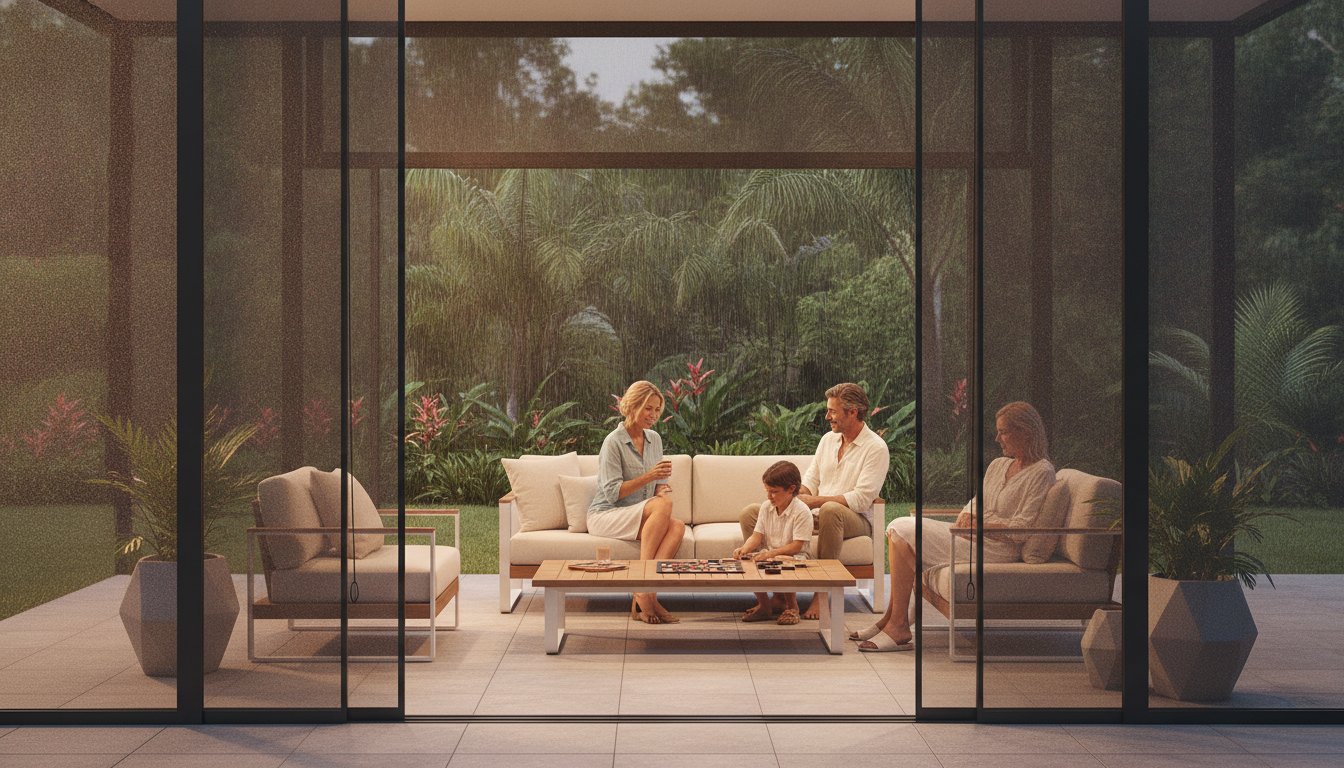
You’ve just finished setting the table for a Sunday lunch when a sudden Brisbane summer storm rolls in, drenching your outdoor furniture and sending your guests scurrying inside. It’s a frustratingly common scenario for Queenslanders who want to enjoy the fresh air without being at the mercy of the elements. Whether you’re battling the blistering afternoon glare or persistent evening mosquitoes, finding the right balance between protection and airflow is essential. Deciding between outdoor blinds vs outdoor screens is the first step toward reclaiming your patio and turning it into a functional, year-round living space.
We understand that every home has different needs, from managing heat during a humid February to blocking rain during a January downpour. In this guide, we’ll explain the critical differences between these two popular options so you can choose the perfect weather protection for your lifestyle. We’ll explore how each solution handles Brisbane’s unique climate, the benefits of premium materials like Zipscreen, and which choice provides the best long-term value for your property. By the end, you’ll have the expert clarity needed to invest in a durable solution that keeps your family comfortable in every season.
Key Takeaways
- Learn the fundamental differences between solid weather barriers and high-tech breathable mesh to determine which best suits your patio’s layout.
- Understand the performance trade-offs of outdoor blinds vs outdoor screens when balancing total rain protection against the need for summer airflow.
- Discover why Australian-made materials and a 10-year fabric warranty are essential for enduring Brisbane’s intense UV levels and unpredictable storm seasons.
- Identify how track-guided systems like Zipscreen provide a total seal against local insects while offering the sleek look of a premium, retractable installation.
- Gain a clear framework for choosing your shade solution based on your home’s orientation and whether your primary goal is blocking heat, bugs, or driving rain.
Defining Outdoor Blinds and Outdoor Screens
Many Brisbane homeowners find themselves frustrated by industry jargon. Retailers often treat these products as identical, but the choice between outdoor blinds vs outdoor screens actually hinges on how you intend to use your space. If you choose the wrong one, you might solve a rain problem only to create a heat problem. Understanding the fundamental difference is the first step toward creating a patio that works for you, rather than against you.
At its simplest, think of a blind as a solid barrier and a screen as a high-performance filter. While both provide privacy and protection, they interact with the Queensland climate in very different ways. Choosing between them requires you to identify your primary “enemy.” Is it the driving rain from a summer storm, or is it the blistering afternoon sun and the humidity that follows?
What are Traditional Outdoor Blinds?
Traditional outdoor blinds are designed to act as a solid wall. These usually consist of clear or tinted PVC, often called “cafe blinds,” or heavy-duty canvas. Their primary goal is to create a waterproof seal. They’re excellent for keeping a patio bone-dry during a winter drizzle or blocking a cold southerly wind. However, they come with a distinct set of challenges in our local environment.
- The Greenhouse Effect: Because PVC and canvas don’t breathe, they trap heat. On a humid 30-degree Brisbane day, a fully enclosed PVC patio can quickly become a sauna.
- Maintenance: PVC is prone to scratching and clouding over time if not meticulously cleaned.
- Total Closure: While they block the rain, they also block 100% of the breeze.
What are Modern Outdoor Screens?
Modern outdoor screens represent a shift toward intelligent climate control. These systems use woven solar mesh, such as Vistaweave, which features varying “openness factors” to balance visibility and protection. Retractable solar shade screens are designed to breathe. They filter out the majority of UV rays and significantly reduce glare while allowing the afternoon breeze to pass through the fabric.
For most local homes, this airflow is the difference between a usable deck and an abandoned one. High-quality mesh provides “view-through” technology, meaning you can see out to your garden or pool while neighbors can’t see in. This keeps your space feeling open and connected to the outdoors. Because these materials are Australian-made for local conditions, they often come with a 10-year warranty, offering far greater longevity than cheap PVC alternatives. When comparing outdoor blinds vs outdoor screens, the screen is often the superior choice for those prioritising heat reduction and insect protection without sacrificing the breeze.
Comparing Performance: Weather Protection vs. Airflow
Choosing between outdoor blinds vs outdoor screens means balancing complete weather isolation against daily comfort. In Brisbane, where humidity often lingers long after the rain stops, this decision impacts more than just your furniture’s dryness. It dictates whether your outdoor room is a usable sanctuary or a stifling enclosure during the height of summer.
Heat management is a primary concern for North-facing Queenslander decks that bake in the afternoon sun. According to the Australian Government’s guide to shading, effective external shading is one of the most efficient ways to reduce indoor temperatures and solar heat gain. Mesh screens excel here by filtering UV rays while maintaining a one-way view. In contrast, solid blinds offer total privacy and block-out capabilities, making them better suited for areas where you need a complete visual and weather seal.
Handling Brisbane’s Summer Storms
Brisbane recorded 1497.6 mm of rainfall in 2025, with much of that volume arriving in intense, fast-moving summer storms. Solid PVC blinds provide a 100% waterproof barrier, keeping your cushions completely dry. However, they act like massive sails in high wind. Without a heavy-duty channel system, the wind pressure can stretch the fabric or even rip the blind from its mountings.
Mesh screens are designed to shed the majority of water. While extreme sideways rain might cause a very fine mist to pass through the weave, the material allows wind to diffuse through the fabric. This significantly reduces the load on the installation. For those in storm-prone suburbs, track-guided systems like Zipscreen are essential. They lock the fabric into side channels, preventing blow-outs and ensuring the system remains stable when the weather turns nasty.
The Airflow Factor
Airflow is your best defense against mould and mildew in Queensland’s humid climate. High-quality mesh screens allow hot air to escape and fresh air to circulate, even when the screens are fully lowered. This prevents the “stuffy” environment common with solid plastic sheets. Sitting behind a screen feels like being in a cool, shaded room; sitting behind a PVC blind often feels like being trapped in a greenhouse.
The comfort difference is immediate. A mesh screen lowers the ambient temperature of your patio without cutting you off from the breeze. If you’re struggling to decide which material handles your specific wind and sun exposure best, we offer a free in-home measure and quote in Brisbane to provide expert, on-site advice. This ensures your final choice provides the perfect balance of protection and breathability for your home.
Material Matters: Mesh, PVC, and Canvas Durability
The material you choose is the engine of your shade system. In Brisbane, where the UV index frequently hits extreme levels, material durability isn’t just a luxury; it’s a requirement for survival. When weighing up outdoor blinds vs outdoor screens, the chemical composition and weave of the fabric will determine whether your installation remains a functional asset or becomes a weathered eyesore within a few seasons.
Local manufacturing is the most reliable indicator of longevity in the 2026 climate. We focus on Australian-made fabrics because they are engineered specifically for the intense solar radiation found in Queensland. This specialized engineering allows us to offer a 10-year warranty on our fabric products, providing the peace of mind that your investment is protected against the rapid degradation common with cheap, imported alternatives. While a screen might look identical to a blind in a showroom, the difference in UV stabilizers becomes apparent after just one summer of Brisbane heat.
High-Tech Solar Mesh vs. Traditional Canvas
Traditional canvas was once the standard for Australian patios, but its popularity is fading in modern alfresco design. Canvas is heavy, opaque, and requires significant effort to maintain. Modern homeowners are shifting toward high-tech solar mesh, such as Vistaweave, which offers a sophisticated balance between protection and visibility. The openness factor of a mesh screen refers to the percentage of the fabric that is “open” weave, which directly determines the level of UV filtration and the clarity of your outward view.
Most Brisbane installations utilize a 5% openness factor. This provides a clear view of the pool or backyard while blocking 95% of solar heat and glare. Unlike canvas, which can feel claustrophobic, these mesh screens maintain a sense of space. They are also significantly easier to clean; a simple hose-down usually removes the dust and salt spray that can accumulate in coastal or suburban areas.
The Reality of PVC Blinds in QLD
Clear or tinted PVC blinds are often seen in commercial “Cafe” settings because they provide a crystal-clear view and total wind blockage. However, they present significant challenges for residential use in Queensland. PVC is highly sensitive to temperature fluctuations. In the peak of a Brisbane summer, the material expands, and in the cooler winter months, it contracts. This constant movement can lead to “waviness” in the fabric over time.
The sun also takes a toll on the clarity of plastic. Without constant polishing and specialized cleaners, PVC is prone to clouding and scratching. For a “no-nonsense” solution that adds long-term value to your home, mesh screens are typically the superior choice. They complement modern architecture with a wide range of contemporary colors and don’t suffer from the maintenance headaches associated with clear plastic sheets. Choosing the right material ensures your outdoor room remains a tranquil, improved living space for years to come.
Choosing the Right Solution for Your Brisbane Space
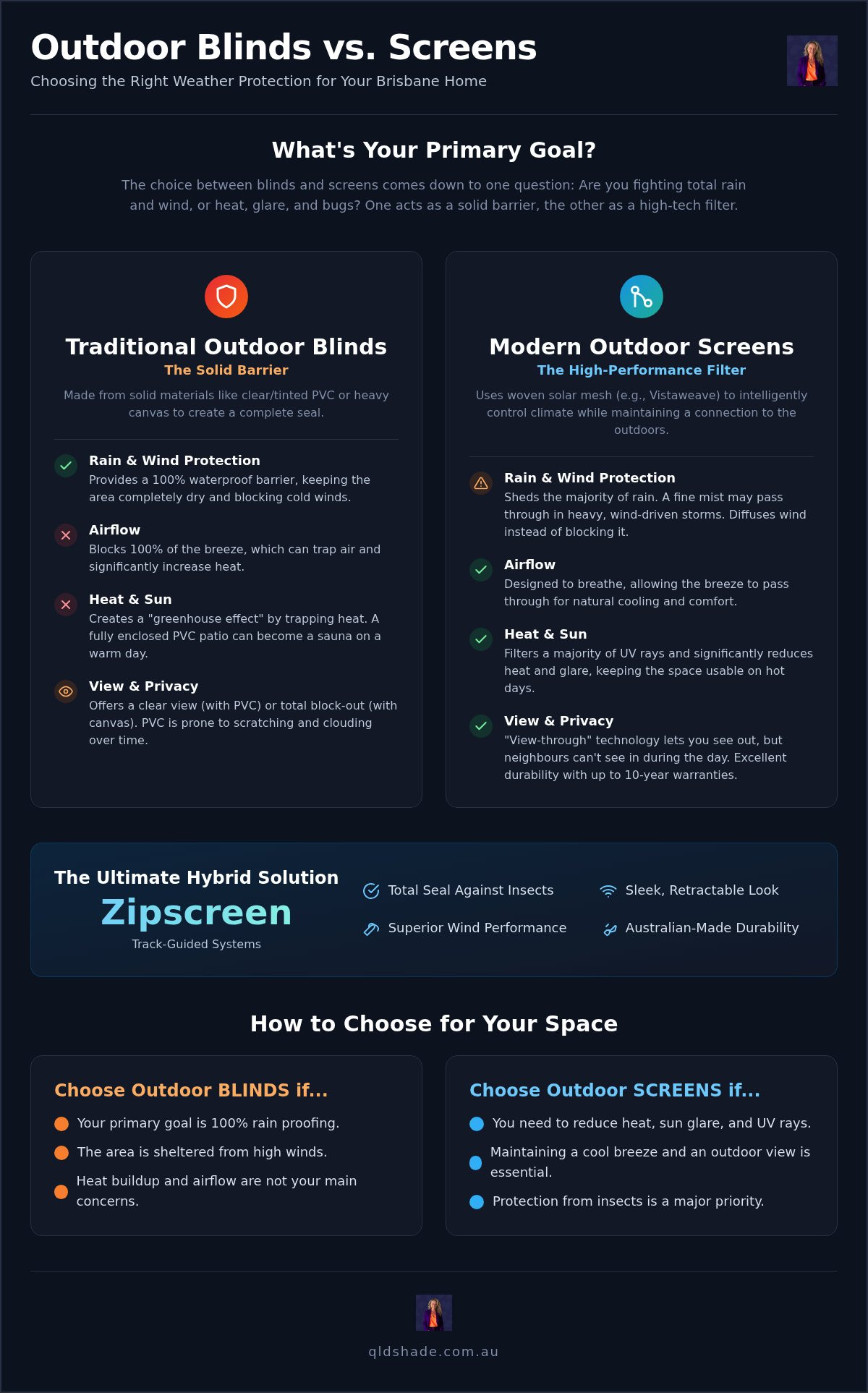
Selecting between outdoor blinds vs outdoor screens requires a clear assessment of your patio’s specific challenges. While both products improve your home, they serve different masters. To make the right choice, you must first identify your primary “environmental enemy.” For many Brisbane families, this is the blistering Western sun that turns a beautiful deck into an oven by 3 PM. For others, it’s the swarm of midges and mosquitoes that ruins an evening dinner. Defining your goal-whether it’s total weather isolation or a breathable insect barrier-is the foundation of a successful installation.
Orientation plays a decisive role in this selection. A North-facing space benefits most from the heat-reflective properties of mesh screens, which manage glare without sacrificing the view. However, if your balcony is high up and exposed to the full force of Moreton Bay winds, you may require the structural rigidity of heavy-duty commercial channel blinds. While DIY kits might seem tempting for the budget-conscious, professional installation ensures the system is tensioned correctly to survive a Queensland storm season. Investing in a bespoke solution adds genuine value to your property and provides the peace of mind that comes with Australian-made durability.
The Best Choice for Decks and Patios
For the classic Brisbane lifestyle, mesh screens are often the default choice. They allow you to enclose your space while maintaining that vital connection to the outdoors. Modern systems can be integrated with motorised blinds technology, allowing you to react instantly to a sudden change in weather with the touch of a button. This level of convenience transforms a simple patio into a high-performance room extension. If you’re looking for inspiration on how to layout your space, our guide on Outdoor Living Brisbane: Creating Your Year-Round Backyard Sanctuary offers practical design tips for local homes.
When to Choose Heavy-Duty Blinds
There are specific scenarios where solid, heavy-duty options are the superior path. Commercial settings, such as cafes or restaurants, often prefer clear PVC to maintain a “shop front” feel while providing a 100% windbreak for patrons. For residential homes, these are best utilized on high-exposure balconies where rain protection is the absolute priority. Some homeowners even choose a hybrid approach, using solid elements on one side to block a neighbor’s view and mesh on the others for airflow. You can explore these technical configurations in our Outdoor Blinds Brisbane: The Ultimate Guide to Weatherproofing Your Home.
Ultimately, the best way to determine the ideal balance of outdoor blinds vs outdoor screens for your specific floor plan is to see the materials in situ. We invite you to book a free in-home measure and quote in Brisbane to discuss your project with a specialist who understands local wind ratings and UV stressors.
Why Zipscreen Offers the Ultimate Hybrid Protection
The debate between outdoor blinds vs outdoor screens often ends when homeowners discover the Zipscreen system. Rather than forcing you to choose between a solid barrier and a breathable mesh, Zipscreen acts as a high-performance hybrid. Its patented zip-lock technology secures the fabric into side channels, creating a total seal that standard straight drop blinds cannot match. For Brisbane residents living near the river or coastal areas, this seal is the only effective way to keep out persistent midges and mosquitoes while you enjoy an evening meal.
This system allows for unparalleled customization. Depending on the fabric you select, you can tailor the installation to behave more like a traditional blind for total privacy or a solar screen for maximum airflow. Because we prioritize Australian-made quality, every Zipscreen we install is built to withstand the specific stressors of our local environment, from salt spray to intense UV radiation. It’s a “no-nonsense” investment that provides the security of a permanent room with the flexibility of a retractable shade. It solves the performance gap by offering the best of both worlds in a single, durable installation.
Sleek Design and Motorisation
Modern Brisbane architecture demands a minimalist aesthetic. Zipscreen features hidden hardware and a slimline headbox that integrates seamlessly with your home’s facade. For those looking toward 2026 living, we offer advanced motorisation that connects to your smart home ecosystem. You can control your shade via voice commands with Alexa or Google Home, or set automated schedules that lower the screens as the afternoon sun hits its peak. You can learn more about these technical features in our Zipscreen Blinds Brisbane: The 2026 Guide to Perfect Outdoor Living.
Get Expert Advice from QLD Shade
As a family-owned business with an 8-person team, we understand that every Brisbane patio has its own quirks. We don’t believe in high-pressure sales tactics. Instead, we focus on providing the technical expertise you need to make an informed decision. Whether you’re still weighing up outdoor blinds vs outdoor screens or you’re ready to design a custom Zipscreen layout, we’re here to help. Our professional installation ensures a perfect fit that protects your home for years to come. We invite you to book your free Brisbane shade consultation today to see how we can transform your outdoor living space.
Take Control of Your Outdoor Comfort Today
Deciding between outdoor blinds vs outdoor screens doesn’t have to be a compromise. By focusing on your home’s orientation and prioritizing airflow, you can create an outdoor room that stays cool in February and dry during a sudden January storm. High-performance mesh screens offer the best balance for the Brisbane lifestyle, while track-guided systems like Zipscreen provide the structural security needed for our unique climate. Our team understands the specific demands of suburban and coastal homes, providing the expert guidance you need to make the right choice for your family’s comfort.
As a family-owned and locally operated business, we specialize in Australian-made Zipscreen installations designed for local conditions. Our commitment to quality is backed by a 10-year fabric warranty, ensuring your investment remains a durable asset for years to come. We’re here to help you navigate the technical details and find a no-nonsense solution tailored to your space. Request Your Free In-Home Measure & Quote today. We look forward to helping you reclaim your outdoor space and enjoy the very best of the Queensland lifestyle in every season.
Frequently Asked Questions
Can outdoor screens really stop the rain?
High-quality mesh screens shed the majority of water, but they aren’t 100% waterproof. In a heavy Brisbane storm, a very fine mist can pass through the weave if the rain is driving sideways. If your goal is a bone-dry environment for sensitive electronics, solid PVC blinds are the traditional choice. However, for most local patios, the water-shedding capability of a screen is more than enough to keep your furniture protected.
Will outdoor blinds make my patio too hot in summer?
Solid outdoor blinds, especially clear PVC styles, can trap heat and create a greenhouse effect on your deck. Because they block all airflow, the temperature under your patio can rise quickly on a humid day. When comparing outdoor blinds vs outdoor screens for heat management, screens are the superior choice. They filter UV rays while allowing the breeze to circulate, keeping your living space significantly cooler than solid plastic sheets.
What is the best material for privacy from neighbours?
High-tech solar mesh with a 5% openness factor provides the best balance of daytime privacy and outward visibility. These screens create a “one-way” effect where you can see your backyard clearly, but neighbors see a solid surface. For total block-out privacy at night, heavy-duty canvas or solid blinds are effective. Most Brisbane homeowners prefer mesh because it provides privacy without making the outdoor area feel closed-in or claustrophobic.
How do I clean and maintain my outdoor screens?
Maintaining your screens is straightforward and usually only requires a gentle hose-down with fresh water every few months. You should avoid using high-pressure washers or harsh detergents that can strip the UV-resistant coating. For stubborn spots, a soft brush and mild soapy water work well. Regular cleaning is vital in coastal Brisbane suburbs to remove salt spray and dust, ensuring your 10-year fabric warranty remains in good standing.
Are motorised outdoor blinds worth the extra cost?
Motorisation offers significant value by allowing you to react instantly to Brisbane’s unpredictable weather with the touch of a button. In 2026, smart home integration is a standard feature for modern renovations, allowing for voice control and automated scheduling. Motorised systems also reduce wear and tear by ensuring the fabric is always tensioned correctly. They’re especially useful for large or hard-to-reach installations where manual cranks would be inconvenient or physically demanding.
Can Zipscreen blinds handle high winds in Brisbane?
Zipscreen systems are specifically engineered to handle the high wind pressures common during the Queensland storm season. Unlike standard blinds that can flap or pull out of their tracks, Zipscreen uses a patented zip-lock technology to keep the fabric secure. This structural integrity makes them a reliable choice for exposed balconies. We always recommend professional installation to ensure the side channels are aligned perfectly for maximum wind resistance and durability.
What is the difference between Zipscreen and a standard roller blind?
The primary difference is the side-channel technology that creates a total seal around the edges of the fabric. A standard roller blind hangs freely or uses simple cables, leaving gaps where wind, rain, and insects can enter. Zipscreen locks the fabric into a track, effectively turning your patio into a secure outdoor room. This seal is essential for keeping out Brisbane midges and ensures the material doesn’t blow out during a gust.
Do I need council approval for outdoor blinds in Brisbane?
Generally, Brisbane City Council doesn’t require a building permit or formal approval for the installation of retractable outdoor blinds on residential properties. These are considered minor improvements rather than permanent structural additions. However, if you live in a complex managed by a body corporate or strata group, you must check their specific bylaws. Some groups have rules regarding fabric colors and styles to maintain a consistent look for the building facade.
Ready to Transform Your Space?
Take the next step and discover the right blinds, shutters, awnings for your space.
Get a Free In-Home Measure & Quote
Contact QLD Shade today for a free measure and quote and discover why Brisbane homeowners trust us for premium outdoor blinds and awnings.
GET IN TOUCH
FOLLOW US: