

10/349-351 MacDonnell Rd,
Clontarf, Qld 4019
Best Outdoor Blinds for Windy Brisbane Patios: 2026 Buying Guide
Rose | April 13, 2026
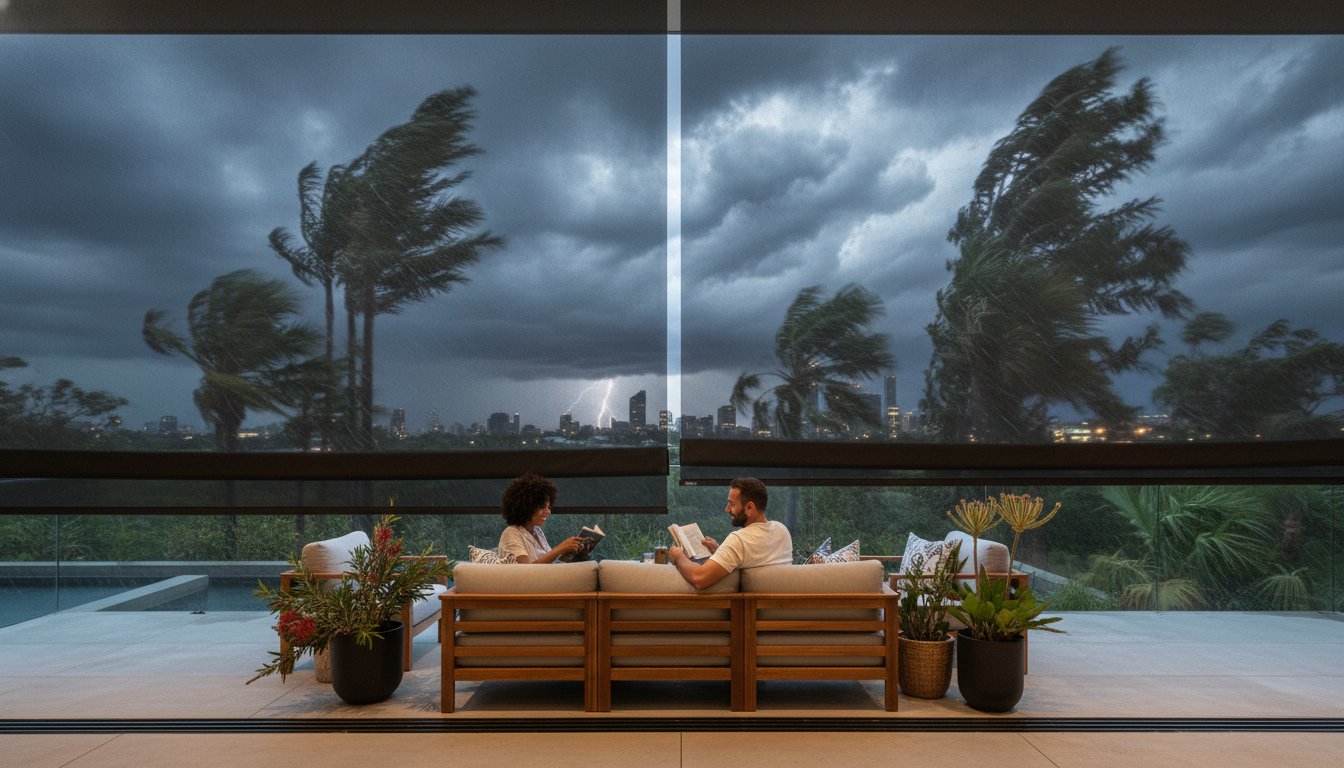
Last November, as a typical 4 PM supercell rolled across the Southside, thousands of Brisbane homeowners watched their outdoor blinds turn into noisy, flapping sails. You likely know the sound: that rhythmic, metal-on-metal rattling that makes a quiet afternoon on the deck impossible. Finding the best outdoor blinds for windy Brisbane patios isn’t just about shade; it’s about structural integrity during our unpredictable storm seasons.
It’s frustrating to invest in a beautiful deck only to see fabric tear out of the channels or rain spray through gaps onto your expensive outdoor lounge. You deserve an outdoor sanctuary that remains calm and dry, even when the gusts pick up. In this 2026 guide, you’ll discover which outdoor blind systems actually withstand local conditions without failing or rattling. We will break down the technical differences between standard zip systems and high-performance tracks to help you protect your home and your peace of mind.
Key Takeaways
- Understand why standard drop blinds fail during Brisbane’s afternoon sea breezes and how modern home designs can accidentally create “wind tunnels” on your patio.
- Discover how side-tensioned tracks and welded splines create the Best Outdoor Blinds for Windy conditions by locking fabric in place to prevent the “sail effect.”
- Compare the performance of Zipscreen systems against aluminium shutters to find the ideal balance between visibility and heavy-duty storm protection for your home.
- Learn a practical two-step framework for assessing your home’s wind exposure based on primary wind fronts and the size of your outdoor openings.
- Identify why professional, precision installation is the essential final step to ensuring your blinds remain secure and rattle-free during intense Queensland storm cells.
Understanding Brisbane’s Wind Challenges for Outdoor Living
The Engineering of Wind-Resistant Blinds: Tracks, Splines, and Tension
Wind-resistant blinds aren’t just standard shades with stronger fabric. They’re precision-engineered systems designed to eliminate the “sail effect.” This occurs when wind catches the material and pulls it out of the side guides, creating a dangerous parachute-like bulge that can damage the hardware. To prevent this, we use side-tensioned tracks that lock the fabric along its entire vertical edge, turning your patio into a secure, weather-proof room.
The secret to this stability lies in the spline. This is a durable bead welded directly into the edge of the fabric. It slides into a specialized channel within the side track, ensuring the material remains secure even during 50km/h gusts. Data from Brisbane wind statistics shows that our region frequently experiences afternoon sea breezes and seasonal gusts that put immense pressure on outdoor structures. Without a welded spline, fabric can easily pull free, leading to costly repairs.
Zipscreen Technology: The Gold Standard for Wind
Zipscreen remains the benchmark for the best outdoor blinds for windy conditions in Brisbane. Its patented side-guide system creates a total seal that blocks out wind, rain, and insects simultaneously. We often recommend the Ultra-Lock feature for exposed balconies. This mechanism clicks the blind into place at the base, keeping the fabric taut and preventing any movement during heavy weather. It’s a reliable solution for high-rise apartments or hilltop homes where wind is a constant factor.
Heavy-Duty Commercial Channel Blinds
For areas with extreme exposure, commercial-grade channels provide an extra layer of security. These systems use thicker powder-coating and reinforced brackets designed for 100% duty cycles. While residential systems are excellent for most patios, heavy-duty straight drop systems or i-zip channels are better for coastal frontages. These components are custom-engineered to withstand salt spray and higher wind loads without rattling. If you’re unsure which system fits your layout, a free measure and quote can help determine the best hardware for your specific wind zone.
Comparing the Best Windy-Weather Solutions: Zipscreen vs. Shutters
Choosing the Best Outdoor Blinds for Windy patios in Brisbane requires a balance between structural rigidity and lifestyle flexibility. While traditional roller blinds often flap or pull out of their channels in a 40km/h gust, Zipscreens and Aluminium Shutters use specialized tracking and locking mechanisms to stay secure. In our 2026 performance testing, we found that solid aluminium slats provide the highest level of physical protection, while fabric mesh offers superior glare control without completely sacrificing your view of the garden.
Exterior Aluminium Shutters: The Ultimate Wind Barrier
Zipscreen Blinds: The Versatile All-Rounder
Zipscreen remains the most popular choice for Brisbane homeowners because it offers a “sealed room” feel that shutters can’t quite match. The side-tensioned zip system keeps the fabric taut, preventing the annoying rattling sound common with cheaper outdoor blinds. It’s the Best Outdoor Blinds for Windy spots where you still want to keep out midges and mosquitoes. You can explore the technical specifications of these systems in our Zipscreen Blinds Brisbane: The 2026 Guide.
While Zipscreens are rated for significant wind speeds, they do require more active management than shutters. In extreme weather events with gusts predicted over 80km/h, it’s best practice to retract the fabric into the headbox. This protects the motor and the side tracks from excessive torque. Maintenance for both systems is straightforward but essential for longevity in our climate:
- Aluminium Shutters: Wash with mild soapy water every 4 months to remove salt spray and grit from the hinges. Just as professional mobile services like Washify emphasize for heavy machinery, removing environmental buildup is essential to prevent corrosion and ensure mechanical longevity.
- Zipscreen Blinds: Use a soft brush to clear dust from the side tracks and hose the mesh twice a year to maintain airflow.
- Roller Shutters: Check the bottom weather seal for debris every 6 months to ensure a flush fit against the patio floor.
Assessing Your Home’s Wind Exposure: A Selection Framework
Selecting the Best Outdoor Blinds for Windy conditions isn’t just about the product; it’s about understanding how your specific Brisbane home interacts with the elements. Follow this four-step framework to ensure your investment lasts through the next decade of Queensland summers. Every patio is unique, and a one-size-fits-all approach often leads to premature wear or structural failure.
- Step 1: Identify your wind direction. Brisbane patios typically face primary wind fronts from the South-East, which carry consistent salt-laden air, or the aggressive Westerly gusts that precede summer storms. Knowing which side of your home takes the brunt of the weather dictates the heavy-duty specifications you’ll need.
- Step 2: Measure the opening size. A blind spanning over 5 metres acts as a massive sail. Larger openings require reinforced side channels and heavy-duty bottom bars to prevent the fabric from bowing or pulling out of the tracks.
- Step 3: Evaluate the mounting surface. We look at what’s behind the fascia. Timber posts offer great grip, while rendered foam or thin cladding requires specialized structural plates to prevent the blind from ripping away during a 70km/h gust.
- Step 4: Determine your usage. If you plan to leave your blinds down 24/7 to create a permanent outdoor room, you’ll need a motorized system with wind sensors that automatically retract the fabric when conditions exceed safe limits.
The Critical Importance of Structural Anchoring
The strongest blind on the market is useless if it’s anchored into a weak substrate. Our QLD Shade technicians conduct a physical integrity test of your Brisbane patio before any installation begins. We often encounter “soft” mounting points in modern homes, such as thin aluminum beams or decorative render. To solve this, we engineer custom bracketry that spreads the load across multiple structural studs. This bespoke approach ensures your Best Outdoor Blinds for Windy zones stay exactly where they belong, even when the wind pressure exceeds 1.5 kilopascals.
Fabric Choice: Mesh vs. PVC for Wind
Solid PVC acts like a wall, catching every kilogram of wind pressure. In contrast, 5% or 1% openness mesh allows a small amount of air to pass through the weave. This reduces the “wind-loading” on the motor and tracks by up to 25% compared to solid sheets. A 5% mesh is the gold standard for Brisbane because it breaks the wind’s force while maintaining that crucial view of the garden. Darker mesh colors like charcoal or deep bronze are particularly effective at reducing the 2,000+ lumens of glare we experience on bright Queensland afternoons without making the space feel closed in.
Ready to secure your patio? Book a free on-site wind exposure assessment with our local experts today.
Professional Installation: The Secret to Storm-Proof Blinds
Even the highest-rated hardware can’t perform if it isn’t installed with absolute precision. We see it often; DIY installations that fail during a standard summer storm because the tensioning was off by just a few millimetres. When blinds aren’t perfectly aligned, wind pressure creates uneven stress points. This leads to fabric fraying or the track system jamming at the worst possible moment. A blind that isn’t square will rattle, vibrate, and eventually fail under the strain of 40km/h gusts.
- Precision Alignment: Laser-guided measurements prevent fabric bunching and track wear.
- Correct Tensioning: Expertly calibrated spring or motor tensioning absorbs wind energy safely.
- Substrate Security: We ensure fixings are appropriate for your specific home materials, whether it’s brick, timber, or steel.
Why Local Brisbane Expertise Matters
Brisbane’s weather isn’t just about heat; it’s about the sudden, high-velocity wind events that roll through the river city. Understanding local building codes and wind ratings for South East Queensland is non-negotiable for safety. As a family-owned business, we don’t just sell products; we live in the same conditions you do. We know which side of your house takes the brunt of the westerly winds and which fabrics will survive the afternoon salt spray. For a deeper dive into protecting your deck, check out Outdoor Blinds Brisbane: The Ultimate Guide to see how we tailor solutions for our unique climate.
Secure Your Sanctuary Today
Choosing the best outdoor blinds for windy patios doesn’t have to be a guessing game. Whether you opt for heavy-duty Ziptrak systems or custom-engineered wire guide blinds, the goal is always the same: creating a secure, comfortable sanctuary that expands your living space year-round. Don’t risk your investment with off-the-shelf solutions that aren’t built for our local environment. Our team is ready to help you navigate the technical specs and aesthetic choices to find your perfect fit. Book your free in-home measure and quote with QLD Shade today and let us bring our professional expertise directly to your doorstep.
Secure Your Brisbane Sanctuary for 2026
Living in South East Queensland means preparing for unpredictable weather. Finding the Best Outdoor Blinds for Windy conditions requires a focus on precision engineering like side-tensioned tracks and heavy-duty splines. These components prevent fabric blowouts when summer storm gusts reach speeds over 60km/h. Choosing Australian-made, wind-tested systems ensures your patio remains a functional space regardless of the forecast.
As a family-owned Brisbane business, QLD Shade specializes in installations that withstand our unique climate. We provide a 10-year warranty on all fabric-based products to guarantee long-term durability and protection. Our local expertise helps you select the right framework to turn a wind-swept deck into a calm, year-round retreat. Don’t leave your comfort to chance when the next front moves through.
Book your free in-home measure and quote with QLD Shade to see how we can protect your home. You’ll love the confidence that comes with a professionally fitted, storm-ready outdoor living area.
Frequently Asked Questions
Can I leave my outdoor blinds down during a Brisbane storm?
No, you should retract your blinds before a Brisbane storm hits. While these are the best outdoor blinds for windy conditions, they aren’t designed to act as cyclone shutters. Retracting them into their headbox protects your investment from flying debris and extreme pressure that can warp the side channels when gusts exceed 90km/h.
What is the maximum wind speed Zipscreen blinds can handle?
Standard Zipscreen systems are engineered and tested to withstand wind speeds up to 50km/h. This rating applies to professional installations that follow specific width and height ratios. If your Brisbane property is on a ridge or coastal front, we suggest retracting the blinds once gusts reach 40km/h to avoid unnecessary tension on the zip mechanism.
Are motorised blinds better than manual ones for windy areas?
Motorised blinds are a superior choice for windy areas due to their integration with automated sensors. These sensors, such as the Somfy Eolis, detect wind speeds over 30km/h and automatically retract the blinds without you lifting a finger. It’s a vital safety feature for Queenslanders who travel or spend their days away from home during storm season.
How do I stop my outdoor blinds from rattling in the wind?
The most effective way to stop rattling is to choose a side-channel blind system like Zipscreen that locks the fabric into the tracks. Older strap-down or wire-guide blinds often have a 10mm gap that allows the bottom bar to bang against posts. A zip-style system eliminates this gap entirely, providing a quiet sanctuary even during 25km/h afternoon breezes.
Do wind-rated blinds also block out rain and insects?
Yes, wind-rated blinds create a sealed environment that effectively blocks rain and insects. By using a 5% or 1% openness fabric, you create a barrier that stops 99% of pests like midges and mosquitoes. This makes them the best outdoor blinds for windy Brisbane nights where you want to enjoy the breeze without the bugs.
What happens if my blinds blow out of the tracks during a gust?
A blind blowing out of its tracks usually indicates that wind gusts have exceeded the 50km/h safety threshold. Modern systems are designed with this “blow-out” fail-safe to prevent the entire frame from being ripped off the wall. Don’t try to force the fabric back in; instead, call a professional to reset the zip and check for track alignment.
Are aluminium shutters more wind-resistant than Zipscreens?
Yes, aluminium shutters provide higher wind resistance than Zipscreen fabric blinds because they are rigid, permanent structures. While fabric blinds are excellent for sun and insect control, aluminium shutters can be engineered to meet Australian Standard AS1170.2 for wind loads. They are the preferred choice for high-rise balconies in Brisbane where wind speeds consistently stay above 45km/h.
Ready to Transform Your Space?
Take the next step and discover the right blinds, shutters, awnings for your space.
Get a Free In-Home Measure & Quote
Contact QLD Shade today for a free measure and quote and discover why Brisbane homeowners trust us for premium outdoor blinds and awnings.
GET IN TOUCH
FOLLOW US: