



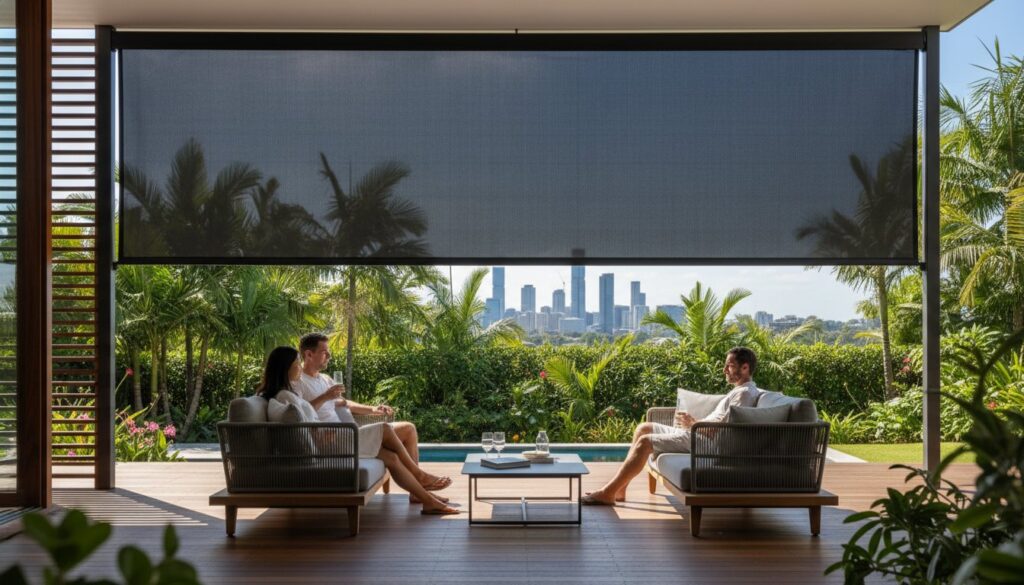
If you’re waiting until the sun hits your window glass to try and cool your home, you’ve already lost the fight. Most Brisbane homeowners find themselves cranking the air conditioning while closing every internal curtain, yet the house still feels like an oven. It’s a common frustration in our climate, especially when you consider that Brisbane recorded a sweltering 38.7°C in October 2025. You want to Reduce Heat effectively, but internal solutions simply can’t stop the thermal energy once it has already entered your living space.
We understand that you’re looking for more than just a temporary fix for your fading furniture and rising energy bills. This guide will show you how to slash indoor temperatures and lower your electricity costs by stopping Queensland’s heat before it makes contact with your windows. We’ll walk you through the technical benefits of custom-engineered solutions like Zipscreens and heavy-duty channel blinds, explaining how these Australian-standard installations create a year-round sanctuary. From understanding the 2026 pricing for motorised systems to navigating QBCC licensing requirements for projects over $3,300, you’ll gain the expert knowledge needed to transform your home into a cool, stylish retreat even during a midday heatwave.
Key Takeaways
- Understand why external shading is up to 90% more effective than internal treatments at blocking solar heat gain before it enters your home.
- Learn how Zipscreen technology uses side channels to eliminate heat leakage and stop annoying wind rattle on your patio.
- Discover how to permanently Reduce Heat and slash electricity bills by choosing fabrics with the right openness factor and thermal properties.
- Identify the best fabric colors and materials to protect your furniture from UV damage while maintaining your outdoor view.
- See why a professional in-home measure and quote is essential for ensuring your blinds are custom-engineered for Queensland conditions.
The Science of Heat Gain: Why Brisbane Homes Get So Hot
Solar heat gain refers to the increase in temperature within a building caused by the absorption of solar radiation through windows and glass doors. While we love our bright, open-plan living areas, standard window glass acts as a one-way valve for energy. It allows short-wave solar radiation to pass through easily, but once that energy hits your floors or furniture, it transforms into long-wave infrared heat. This heat cannot pass back out through the glass effectively, creating a literal greenhouse effect in your lounge room.
In Brisbane, the western sun is the primary culprit for late-afternoon misery. As the sun dips lower in the sky, it hits west-facing glass at a direct, perpendicular angle, pouring intense energy into rooms that have already been warming up all day. To effectively Reduce Heat, you have to account for your home’s construction materials as well. If your house is built with heavy materials like brick or concrete, they act as a thermal sponge. These materials have high thermal mass, meaning they soak up the day’s intensity and continue to radiate that stored heat into your living spaces long after the sun has set.
The Role of Solar Radiation and Infrared Light
Understanding The Science of Heat Gain requires looking at the invisible spectrum. Visible light provides the brightness we enjoy, but it’s the infrared rays that carry the actual thermal energy. Standard clear glass offers almost no resistance to these rays, allowing them to penetrate deep into your home. When this energy enters, it’s absorbed by dark carpets, leather sofas, and timber floors. These surfaces then become secondary radiators, pushing the temperature up even if you have the air conditioner running at full capacity.
Why Internal Blinds Fail to Reduce Heat Effectively
Many homeowners try to Reduce Heat by pulling their indoor curtains or adjusting internal shutters. Unfortunately, once the sun has touched your glass, the battle is mostly lost. The space between your window and an internal blind becomes a convection trap, where air is superheated and then spills over the top or sides into the rest of the room. It’s an inefficient way to manage climate because the heat is already inside your building envelope. This is exactly why outdoor blinds Brisbane residents rely on are so much more effective. By intercepting the sun’s rays on the exterior, you prevent the glass from ever heating up, keeping your internal environment naturally stable and comfortable.
External Shading vs. Internal Treatments: The Efficiency Gap
Many Brisbane homeowners believe that closing the curtains is the best way to keep a room cool. It isn’t. While internal blinds provide privacy, they are significantly less effective at temperature control because they attempt to manage heat that has already entered your home. Data shows that professional external shading can block up to 90% of solar heat gain, creating a much more effective thermal barrier than any indoor product. By the time the sun hits your window glass, the cooling battle is largely lost; stopping that energy on the outside is the only way to permanently Reduce Heat.
Heavy-duty outdoor blinds are the gold standard for local conditions. Unlike internal treatments, which have a lower practical R-value due to the heat trapped against the glass, external solutions prevent the window itself from becoming a radiator. This also provides a critical secondary benefit: protecting your window frames and rubber seals. In our climate, direct exposure to the intense Queensland sun can cause window seals to perish and timber frames to warp within just a few years. A professional exterior installation acts as a sacrificial layer, preserving the structural integrity of your home’s openings.
Blocking Heat Before It Hits the Glass
The physical barrier created by an external blind is your first line of defense. When you install a heavy-duty blind, you create a dedicated air-gap between the fabric and the window. This space allows for natural air-flow, which dissipates heat through convection before it can conduct through the glass. This is especially vital for homes with expensive double-glazing. While double-glazed windows are excellent for insulation, they can suffer from significant thermal stress if one pane becomes much hotter than the other. External shading keeps the entire window unit at a stable temperature, extending its lifespan and performance.
Energy Bill Savings: The ROI of Professional Shading
Investing in high-quality shading is a strategic move for your household budget. By using external products to reduce solar heat gain, you significantly lower the cooling load on your air conditioning system. When your AC doesn’t have to fight a constant influx of solar energy, it runs more efficiently and lasts longer. This approach is known as “passive cooling,” a staple of modern Australian architecture that prioritises smart design over mechanical cooling. For homeowners seeking the absolute highest level of thermal insulation and security, our roller shutters offer an even more robust solution. If you want to see how these systems can work in your specific space, a free on-site measure can help determine the best configuration for your home’s orientation.
Heavy Duty Outdoor Blinds: The Ultimate Heat Reduction Tools
When you’re dealing with a record-breaking 38.7°C day like Brisbane saw in late October 2025, a basic piece of fabric won’t cut it. You need a system that acts as a structural extension of your home. Zipscreen technology is widely considered the premier solution for local patios because it addresses the two biggest failures of traditional blinds: wind-rattle and heat leakage. While generic awnings might offer some relief, educational data suggests that external devices are about 50 percent more effective than internal treatments at blocking solar gain, provided they are installed correctly.
The side-channel system is the secret to this performance. By locking the fabric into a dedicated track, these blinds eliminate the gaps at the edges where hot air usually escapes into your living space. This creates a total seal that helps you Reduce Heat more effectively than any loose-hanging product. Because our hardware is custom-engineered and powder-coated to Australian standards, it won’t corrode in the humid, salty air that drifts in from the coast. This durability is vital for long-term performance, ensuring your investment stands up to the 1497.6 mm of rainfall Brisbane recorded in 2025.
Choosing a custom-engineered solution over a “one-size-fits-all” DIY kit is about more than just a better fit. Professional installation ensures the blind is tensioned correctly to withstand high wind loads without tearing. It also ensures your project complies with QBCC licensing requirements, which are mandatory in Queensland for external window shading installations exceeding $3,300. This no-nonsense approach to quality is what separates a permanent heat solution from a temporary fix.
Zipscreen Blinds: Seamless Heat and Glare Control
The side-fastening system of a Zipscreen blind creates a complete seal between the fabric and the channel. This prevents insects from entering your patio and stops the sun’s glare from bouncing off your windows. By creating this barrier, you transform an exposed deck into a year-round sanctuary that stays comfortable even at midday. To see the full range of custom colors and specifications, explore our detailed guide on zipscreen blinds for local homes.
Motorised vs. Manual: Convenience Meets Efficiency
While manual crank handles are reliable, motorised blinds offer a level of efficiency that manual systems can’t match. You can Reduce Heat automatically by programming your blinds to close during the peak afternoon sun, even if you aren’t home. Modern high-torque motors can be integrated with smart-home systems for solar tracking, adjusting the blind’s position based on the sun’s angle. This proactive approach to cooling ensures your home stays at a stable temperature, preventing the “greenhouse effect” from ever taking hold in your west-facing rooms.
Fabric Science: Choosing Materials to Block UV and Infrared
The fabric on your outdoor blinds isn’t just a decorative choice; it’s a high-performance filter designed for the harsh Queensland sun. To effectively Reduce Heat, you need to understand how different weaves interact with solar energy. While standard internal curtains simply block light, our technical meshes are engineered to reflect infrared radiation before it reaches your windows. At QLD Shade, we only use materials that meet strict Australian standards for UV protection, and we back our fabric range with a 10-year warranty. This long-term durability ensures your blinds won’t become brittle or lose their shape after a few seasons of intense exposure.
The Openness Factor: Balancing View and Protection
When selecting a sun-control fabric, the “openness factor” is the most critical technical specification. This percentage refers to the tightness of the weave and determines how much heat and light pass through. We typically offer three main levels of openness:
- 1% Openness: A very tight weave that offers maximum privacy and heat blockage. This is the best choice for west-facing rooms that bear the brunt of the afternoon sun.
- 5% Openness: The industry “sweet spot” for Brisbane homes. It blocks approximately 95% of UV rays while still allowing you to see your garden or pool area clearly.
- 10% Openness: A more open weave that prioritises airflow and visibility. This is ideal for south-facing areas where glare is less of a concern but cooling breezes are essential.
For west-facing Brisbane windows, we generally recommend a 1% or 5% openness to ensure you Reduce Heat effectively during the hottest parts of the day. This mesh allows for “convection cooling,” where air passes through the fabric to carry heat away from the glass surface, preventing the greenhouse effect inside.
Colour Selection for Heat Reflection
There’s a common myth that you must choose white or light-coloured fabrics to stay cool. In reality, modern dark-coloured meshes are often more effective for Australian homes. While light colours reflect visible light, they can also create significant glare that makes it difficult to see through the blind from the inside. Darker fabrics like charcoal or slate absorb visible light and heat, but because the blind is installed externally, that heat is radiated back into the atmosphere rather than into your home. This provides superior glare reduction and visual comfort, allowing you to enjoy your view without squinting. If you’re ready to see these materials in person, contact us for a free measure and quote to explore our full range of technical fabrics.
Tailored Cooling: The QLD Shade Professional Installation Process
Achieving a cool home involves more than just selecting the right fabric. It requires a precise installation that accounts for the unique architecture of your property. Our 8-person local family team approaches every project as a bespoke engineering challenge. We don’t believe in “off-the-shelf” fixes because every Brisbane home faces different environmental pressures. From the initial consultation to the final quality check, we focus on creating a seamless thermal barrier that helps you Reduce Heat and maintain comfort year-round.
Our manufacturing process is entirely local. Every blind is custom-engineered right here in Queensland to meet Australian standards for durability and safety. This local focus isn’t just about regional pride; it’s about quality control. We understand the specific stresses our products face, from intense UV radiation to sudden tropical storms. By building for our conditions, we ensure that your investment provides long-term value that mass-produced alternatives simply cannot match.
Why Precision Measurement Matters for Heat Control
A “free in-home measure and quote” is the foundation of a high-performing shading system. In our experience, gaps as small as 5mm between a blind and its channel can allow significant heat entry, undermining the effectiveness of the entire system. These tiny thermal leaks allow hot air to bypass the fabric, creating localized “hot spots” near your glass. By ensuring a custom fit, we eliminate light gaps and ensure your Zipscreen or heavy-duty channel blinds provide a complete seal. This level of precision requires an installer who acts as a knowledgeable partner, identifying potential issues like uneven window frames or structural obstacles before the manufacturing process begins.
Built for the Local Sun: The QLD Shade Guarantee
The final stage of our process is the installation and rigorous quality check. We test every motorised and manual system to ensure it operates smoothly and provides optimal wind and heat performance. We don’t leave until we’re confident the system is perfectly tensioned and ready to protect your home. This professional oversight de-risks the purchase for you, providing the peace of mind that comes with a job done right the first time. If you’re ready to Reduce Heat and reclaim your outdoor space, we invite you to create your year-round backyard sanctuary with a team that understands the Queensland lifestyle.
Take Control of Your Home’s Comfort Today
Stopping solar radiation before it makes contact with your glass is the only proven way to Reduce Heat and maintain a liveable home during a Brisbane summer. We’ve explored how technical fabrics and precision-engineered side-channels create a thermal seal that internal curtains simply can’t match. By choosing a solution built for our specific conditions, you’re investing in the long-term protection of your living space and your family’s comfort.
Our 8-person local family-owned team is here to help you navigate these choices with technical expertise and neighborly warmth. Every installation is custom-engineered for the Queensland climate and backed by a 10-year warranty on all fabric products. This commitment ensures your new outdoor blinds provide a seamless transformation that lasts for years. If you’re ready to lower your energy bills and reclaim your west-facing rooms, Book Your Free In-Home Measure & Quote Today. We look forward to helping you create the perfect sanctuary for your home.
Frequently Asked Questions
Do outdoor blinds really reduce heat more than indoor ones?
Yes, external blinds are significantly more effective because they intercept solar radiation before it penetrates your window glass. While internal curtains only manage heat that has already entered the room, high-quality outdoor blinds can block up to 90% of solar gain. This prevents the glass from heating up and stops the greenhouse effect from warming your home’s internal thermal mass.
Can outdoor blinds survive strong Brisbane winds and storms?
Our custom-engineered systems are built to withstand intense local conditions, including heavy rain and high winds. Zipscreen technology locks the fabric into side channels to prevent the blind from rattling or tearing during a storm. Professional installation is vital here to ensure the hardware is tensioned correctly to handle the 1497.6 mm of rainfall and gusty conditions Brisbane often experiences.
Will installing heavy-duty blinds block my view of the garden?
You won’t lose your view if you select the correct openness factor for your home’s orientation. A 5% mesh is the most popular choice because it blocks 95% of UV rays while maintaining clear visibility of your pool or garden. This technical balance allows you to Reduce Heat effectively without feeling closed in or losing the benefit of natural light.
How much can I expect to save on my energy bills?
You can significantly lower your electricity costs by using external shading to decrease the cooling load on your air conditioning. Data from the U.S. Department of Energy indicates that external awnings can lower solar heat gain by up to 77% on west-facing windows. This passive cooling approach means your AC doesn’t have to work as hard to maintain a comfortable temperature.
What is the best fabric colour for reducing heat in Queensland?
Darker colours like charcoal or slate are actually the most effective for our specific climate. While light colours reflect visible light, they often create a hazy glare that makes it difficult to see outside. Modern dark meshes absorb heat and radiate it outward, away from your windows, while providing superior visual comfort and glare reduction for your living areas.
Can I automate my blinds to close when the sun is at its hottest?
Yes, our motorised blinds can be integrated with smart-home systems for complete automation. You can set your blinds to close automatically based on solar tracking or pre-set schedules during peak afternoon heat. It’s a proactive way to Reduce Heat even when you aren’t home, ensuring your lounge room stays at a stable, comfortable temperature all day.
How long do heavy-duty outdoor blinds typically last?
High-quality outdoor blinds are built for longevity and include a 10-year warranty on all fabric products. The hardware is powder-coated and custom-engineered to resist corrosion in Brisbane’s humid and salty coastal air. With professional installation and minimal maintenance, these systems are a permanent investment in your home’s comfort and structural protection.
Is a professional measure and quote really necessary for heat reduction?
Precision is essential because a gap as small as 5mm can allow enough hot air to leak in to undermine the system’s efficiency. A professional measure ensures the blind fits perfectly within its channels, eliminating the light gaps that cause thermal leaks. Furthermore, a QBCC-licensed installer ensures your project complies with all local safety and wind-loading standards.