

10/349-351 MacDonnell Rd,
Clontarf, Qld 4019
Electric Roller Blinds: The Ultimate 2026 Homeowner’s Checklist
Angie Neal | May 23, 2026
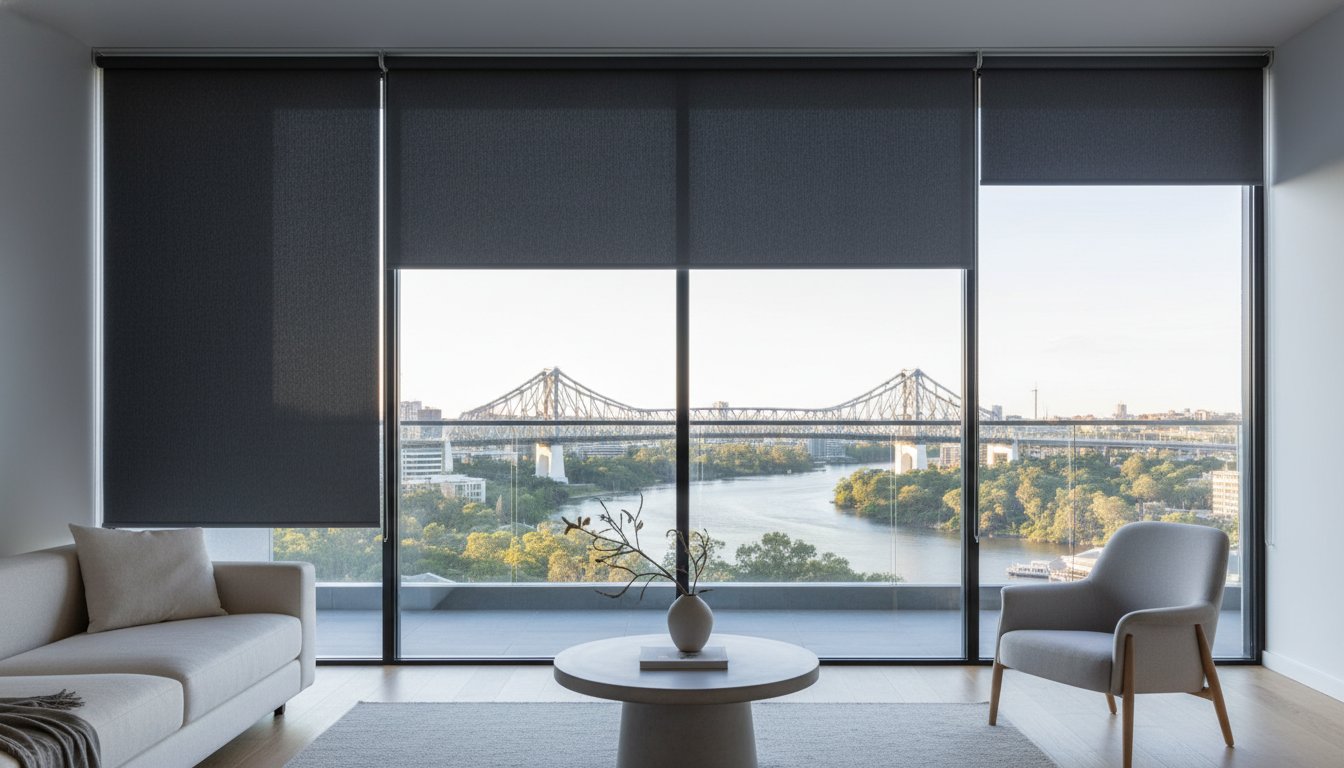
What if your window treatments did more than just block the sun, acting instead as a silent, automated shield against the intense Brisbane heat? Most homeowners are tired of wrestling with tangled manual chains or struggling to reach blinds tucked away in high-ceiling voids. You deserve a living space that responds to your needs without the physical effort, especially when the afternoon sun starts to spike your indoor temperature.
Choosing electric roller blinds is a strategic move for your home’s efficiency, offering a potential return on investment of up to 70% when used to manage thermal gain. This 2026 checklist will show you exactly how to select, power, and install a system that enhances your daily comfort while reducing cooling costs. We’ll preview the latest Matter-compatible smart motors, navigate the strict Australian child safety standards, and help you achieve a professional finish that eliminates light gaps for good.
Key Takeaways
- Understand why electric roller blinds have transitioned from a luxury feature to a standard necessity for energy-efficient modern homes.
- Evaluate the differences between rechargeable battery motors and hardwired systems to determine the most reliable power source for your renovation or new build.
- Identify the best thermal blockout and sunscreen fabrics to shield your living spaces from the specific intensity of the Brisbane sun and humidity.
- Master the essential pre-installation checks, including recess depth measurements and power access planning, to ensure a flawless fit.
- Discover how professional calibration protects your investment by preventing common mechanical issues like fabric telescoping and motor burnout.
What Are Electric Roller Blinds and Why Are They Trending in 2026?
Electric roller blinds are internal window coverings that feature a discreet motor integrated directly into the roller tube. This specialized engineering replaces the traditional manual chain, allowing the fabric to rise or lower with perfect consistency. In 2026, we’ve seen these systems transition from a high-end luxury to a standard expectation for Brisbane homeowners. As our local architecture continues to favor large glass spans and high-ceiling voids, the practical necessity of motorization has become clear. These systems aren’t just about convenience; they are a strategic response to the South East Queensland climate.
One of the most significant drivers behind this trend is the focus on passive cooling. By automating your window treatments, you can ensure your home stays shielded from the sun even when you aren’t there to pull a cord. This proactive approach to heat management significantly reduces the load on your air conditioning, leading to lower energy bills. Beyond the thermal benefits, motorization protects the longevity of your investment. Manual operation often involves uneven tension, which leads to fabric fraying and mechanical misalignment over time. A motor provides a smooth, controlled motion that keeps the fabric square and the mechanism protected for years of reliable use. It’s a “no-nonsense” solution for those who value durability and a tranquil living environment.
Motorised vs. Automatic: Understanding the Difference
While traditional motorized blinds are operated on demand via a remote or wall switch, 2026 technology offers much more. Automatic systems use sensors or pre-set schedules to move without any user input, reacting to temperature spikes or sun position. Smart integration takes this further, allowing you to connect your electric roller blinds to Apple HomeKit, Google Home, or Alexa for seamless voice control and whole-home automation routines.
The Problem with Manual Chains in High-Traffic Homes
Manual chains are a frequent point of failure in busy households. They tangle, snap, and often require maintenance long before the fabric itself wears out. Modern safety standards are also pushing for “cordless by design” interiors to protect children and pets. Removing these dangling plastic or metal chains creates a minimalist, high-end look that highlights your window’s architecture. Transitioning to electric roller blinds ensures a clean, professional finish that manual alternatives simply cannot replicate.
To achieve this level of sophistication in your own home, you can explore Roller Shades from Luxe Drapery and Shades, which are renowned for their sleek, bracketless designs and whisper-quiet operation.
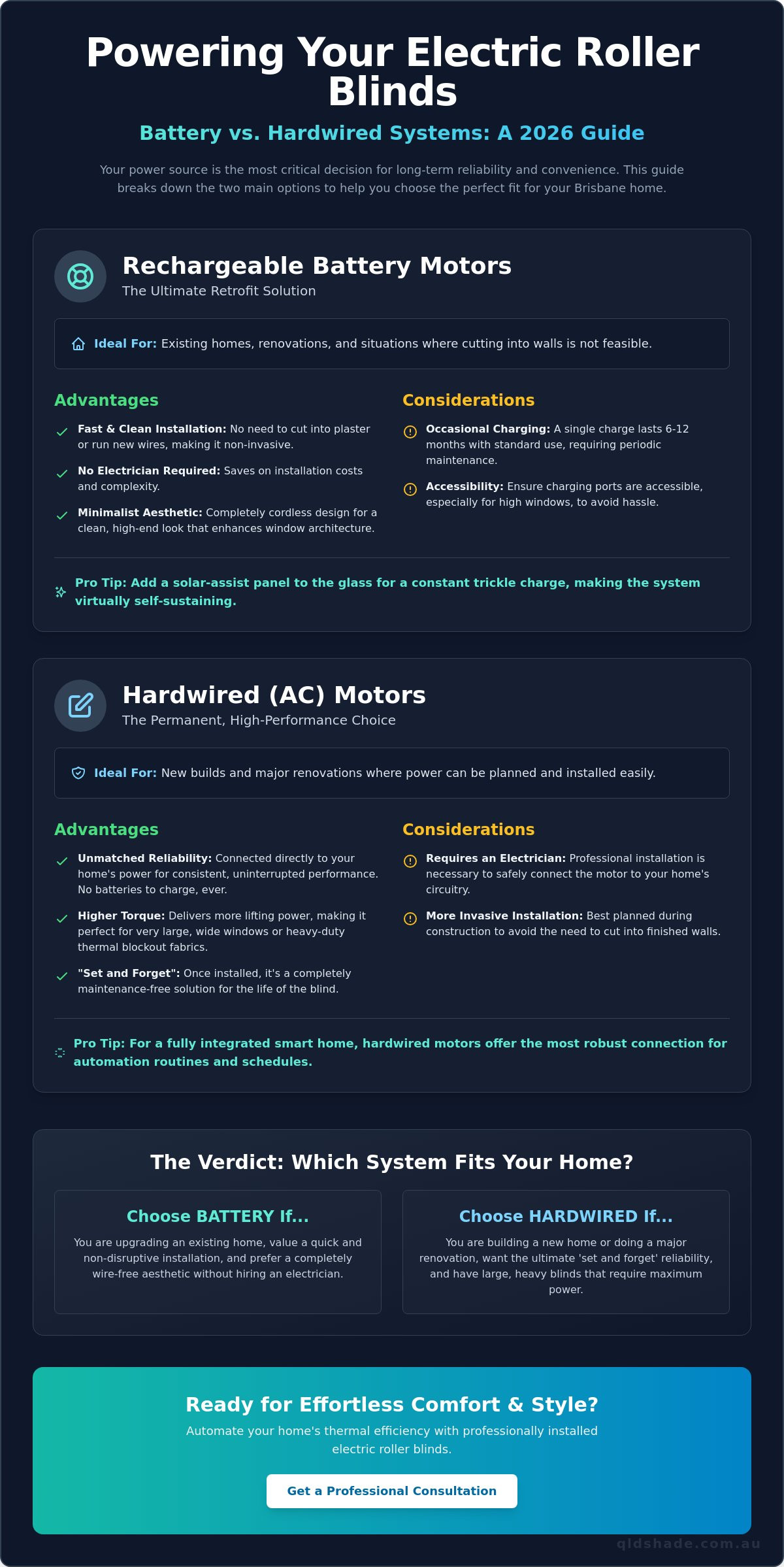
Powering Your Blinds: Battery vs. Hardwired Systems
Powering your electric roller blinds is the most critical technical decision you’ll make. The right choice ensures your system remains reliable for years without unnecessary maintenance. In Brisbane, where sun exposure is intense, your power source needs to handle frequent daily cycles as the blinds move to block heat. Whether you’re retrofitting a classic Queenslander or finishing a modern new build, the infrastructure behind the motor determines the long-term success of your installation.
Rechargeable battery motors are the perfect solution for retrofitting existing homes. You don’t need to cut into plaster or hire an electrician, which keeps the installation process fast and clean. These motors sit discreetly inside the roller tube, keeping the aesthetic cord-free and minimalist. Typically, a single charge lasts between 6 and 12 months with standard use. This gives you the freedom to reduce heat gain in the summer by automating your blinds to close during the hottest parts of the day.
Rechargeable Battery Solutions: Pros and Cons
Installation is straightforward and non-invasive. You won’t have to worry about complex wiring or structural changes to your window frames. However, you do need to remember to charge them occasionally. We recommend choosing motors with accessible charging ports so you don’t have to remove the entire blind every time the battery runs low. For windows with high sun exposure, solar-assist panels can be mounted to the glass to provide a constant trickle charge, effectively making the system self-sustaining and reducing manual maintenance.
Hardwired Systems: The Permanent Solution
Hardwired (AC) motors are the preferred choice for new builds and major renovations where power is easily accessible. Because they connect directly to your home’s electrical circuit, they offer unmatched reliability and higher torque. They are ideal for heavy-duty fabrics or very wide windows that require more lifting power. Since there’s no battery to deplete, the motor’s performance remains consistent regardless of how many times a day the blinds are adjusted.
Planning is the key to a successful hardwired setup. You must coordinate with your builder and electrician early in the project to ensure power is run to the correct side of each window recess. This “set and forget” approach is often quieter than battery alternatives, providing a premium feel to your home automation. If you’re currently in the planning stages of a project, a professional assessment can help you map out exactly where your electrical points should be positioned for a seamless finish.
We rely on industry-leading brands like Somfy and Automate for our electric roller blinds. These manufacturers design components specifically for durability in varied climates. Their motors handle the South East Queensland humidity and heat with ease, providing a level of reliability that generic alternatives can’t match. Selecting a trusted brand ensures your investment operates smoothly for the long haul.
Selecting Fabrics for the Brisbane Sun and Humidity
Brisbane’s subtropical climate demands more from your window treatments than mere aesthetics. While the motor provides the movement, the fabric acts as the primary barrier between your living space and the intense South East Queensland sun. Selecting the wrong material for your electric roller blinds can lead to premature fading, brittle textures, and even mould growth during our humid summer months. You need a solution that balances durability with high-performance thermal protection.
West-facing windows are the biggest challenge for local homeowners. Without high-quality thermal blockout fabrics, these rooms often become uninhabitable by mid-afternoon. Unlike generic alternatives that only focus on darkening a room, technical thermal fabrics are designed to insulate. This specialized engineering ensures your interiors remain cool and comfortable, regardless of the temperature outside. We prioritize materials that are treated for moisture resistance to prevent the buildup of mould and mildew, ensuring your investment stays fresh for years.
The Science of Heat Reflection
The color of your fabric’s backing plays a vital role in thermal performance. White or silver-toned backings are highly effective at reflecting solar radiation away from the glass before it can enter your home. This prevents the greenhouse effect where heat becomes trapped behind the window. Research shows that smart window treatments can significantly cut energy consumption by reducing the need for mechanical cooling. Automated electric blinds can reduce internal temperatures by up to 5 degrees during peak summer periods.
Balancing Privacy and Natural Light
For living areas where you want to preserve your view while managing glare, screen fabrics are the ideal choice. These materials feature a specific openness factor that allows light to filter through while blocking up to 95% of harmful UV rays. This protection is crucial for preventing your timber flooring and expensive furniture from fading. If you need total versatility, a day-night dual roller system is the best approach. This setup combines a sheer screen for daytime glare control with a blockout blind for nighttime privacy. It’s the ultimate way to leverage the precision of electric roller blinds across every hour of the day, providing a bespoke environment that responds to the shifting Brisbane light.
The Ultimate Electric Roller Blind Pre-Installation Checklist
Before you finalize your fabric selection, your home must be technically prepared for the installation. Site-readiness is what separates a seamless automation experience from a frustrating series of mechanical delays. When installing electric roller blinds, the physical environment must accommodate both the hardware and the communication signals required for operation. Our “no-nonsense” checklist ensures your windows are ready for a professional upgrade that stands the test of time.
- Measure the Window Recess: Ensure there’s enough depth for the motor head and bracket. Motorized units often require more clearance than manual ones to house the integrated tech.
- Identify Power Access: Locate nearby GPOs for battery charging or plan wire paths with your electrician if you’ve chosen a hardwired system.
- Check Signal Strength: Verify that your Wi-Fi or RF signal reaches the specific window location, especially in larger Brisbane homes with thick masonry or multiple levels.
- Evaluate Weight and Size: Determine if your window dimensions require a heavy-duty motor with higher torque to lift the fabric consistently.
- Assess Mounting Surface: Confirm the architrave or lintel is structurally sound enough to support the weight of a motorized unit and its housing without bowing.
Step 1: The Precision Measurement
A 2mm error might seem minor, but in the world of motorization, it’s the difference between a smooth glide and a binding motor. You must decide between a reveal fit, which sits inside the window frame for a clean look, or a face fit, which covers the entire opening to maximize light blockout. Reveal fits require absolute precision to ensure the motor overhang doesn’t rub against the frame, which can lead to premature wear and motor burnout. Taking the time to get these numbers right protects your investment from day one.
Step 2: Connectivity and Control Planning
Think about how you’ll interact with your blinds daily. A single-channel remote is fine for one window, but most homeowners prefer multi-channel remotes to control entire rooms at once. If you’re moving toward a full smart home ecosystem, place your smart hub centrally to minimize latency. This ensures your automated scenes, like closing the blinds when the afternoon sun hits your living room, trigger instantly without signal drops. Reliability is the foundation of practical luxury.
Step 3: Professional Consultation
DIY estimates often miss the small details that cause big problems. An in-home measure identifies obstructions like window winders, protruding handles, or security sensors that could snag the fabric as it descends. For tailored advice that considers your home’s specific layout and environmental stressors, consulting an expert in custom blinds Brisbane is the safest way to de-risk your purchase. You can book your on-site measurement today to ensure every technical requirement is met before you order.
Why Professional Installation Beats DIY for Electric Blinds
While off-the-shelf kits promise simplicity, the reality of installing electric roller blinds involves technical nuances that DIY projects often overlook. Achieving a high-end finish requires more than just a drill and a level; it requires an understanding of how motorized components interact with your home’s architecture. When you choose professional installation, you aren’t just paying for labor. You’re investing in the long-term health of your motor and the structural integrity of your window treatments. Our approach focuses on de-risking your purchase through precision and local expertise.
Precision leveling is the foundation of a successful install. If a blind is even slightly tilted, the fabric will “telescope” as it rises. This means the material rolls unevenly to one side, eventually rubbing against the brackets and causing the edges to fray. A professional installer ensures the headrail is perfectly square, which preserves the fabric and keeps the motor running smoothly. Additionally, setting the electronic upper and lower limits correctly is vital. Incorrect programming can cause the motor to strain against the brackets, leading to premature burnout and a voided warranty. We calibrate these limits to the millimeter, ensuring a soft start and stop every time.
Avoiding the “DIY Gap”
Generic, store-bought electric blinds frequently suffer from poor fitment, leaving unsightly light gaps that compromise your privacy and thermal efficiency. Professional installers specialize in achieving a flush finish that integrates seamlessly with your existing decor. This level of detail is especially important if you’re looking to have your electric roller blinds work in harmony with other systems, such as roller shutters for external security. We take pride in hiding cables and mounting hardware to maintain the minimalist aesthetic you expect from a modern automated home.
Long-Term Support and Local Reliability
The true value of a professional service emerges long after the installation day. If a motor requires adjustment or a smart hub needs re-syncing, having access to local technicians is far superior to dealing with overseas call centers. Our blinds are built to Australian-made standards, specifically engineered to withstand the South East Queensland climate rather than a milder European environment. This local manufacturing ensures that parts are always available and support is just a phone call away. You gain the peace of mind that comes with a 10-year fabric warranty and the security of a family-owned business that stands by its craftsmanship.
Don’t leave your home’s comfort to chance with a DIY estimate. Our team provides the technical expertise and neighborly warmth you need to transform your living space with confidence. Book your free in-home measure and quote with QLD Shade today.
Upgrade Your Home with Automated Precision
Investing in electric roller blinds is more than just a home improvement project; it is a commitment to long-term comfort and energy efficiency. By matching the right motorization system with high-performance, Brisbane-tested fabrics, you create a living environment that responds intelligently to the South East Queensland sun. The technical success of your installation depends on precise site readiness and professional calibration. These steps are essential to prevent mechanical issues like fabric fraying or motor burnout, ensuring your system operates silently for years.
As a family-owned team of Brisbane specialists, we deliver Australian-made quality specifically engineered for our local conditions. Every installation we provide is backed by a 10-year warranty on all fabric products, giving you the security you deserve. We’re ready to help you navigate the technical requirements and achieve a flawless, automated finish for your windows. Take the first step toward a more comfortable, efficient home today.
Get a Free In-Home Measure & Quote for Electric Blinds
Frequently Asked Questions
Do electric roller blinds need to be hardwired into the house power?
You don’t necessarily need to hardwire your blinds into the house power. While hardwired systems offer a permanent solution for new builds, many homeowners choose high-quality battery-powered motors for existing rooms. These rechargeable units eliminate the need for an electrician and provide a clean, cord-free look without the need to cut into your plaster or structural lintels.
How long does the battery last on a motorised roller blind?
A typical battery-powered motor lasts between 6 and 12 months on a single charge under normal daily use. Factors like the size of the window and the weight of the fabric will influence the exact duration. Most modern systems feature a simple micro-USB or USB-C charging port, making it easy to top up the power once or twice a year.
Can I control my electric blinds with my smartphone or Alexa?
Yes, you can fully integrate your electric roller blinds with smartphone apps and voice assistants like Alexa, Google Home, or Apple HomeKit. This requires a small smart hub that bridges the signal between your home Wi-Fi and the blind’s motor. Once connected, you can set automated schedules, create custom “scenes,” or operate your blinds remotely from anywhere in the world.
What happens if the power goes out? Can I still operate my blinds?
Your ability to operate the blinds during a power outage depends entirely on the motor type. Battery-powered blinds will continue to function normally since they rely on internal stored energy. Hardwired systems will remain stationary until the power is restored. Because motorized systems lack manual chains, you shouldn’t attempt to move them by hand as this can damage the internal gears.
Are electric roller blinds noisy during operation?
High-quality electric roller blinds are designed for near-silent operation, producing only a soft, low-frequency hum that is barely audible. Premium brands like Somfy and Automate engineer their motors to be extremely discreet, ensuring they don’t disrupt the tranquility of your home. They are significantly quieter than traditional manual chains clattering against the glass or window frame.
Can I retrofit electric motors to my existing manual roller blinds?
Retrofitting a motor to existing manual blinds is technically possible if the roller tube diameter is compatible with standard motor sizes. However, older tubes often aren’t designed for the precision required by modern motors. For the most reliable result and to ensure your warranty remains valid, we recommend a complete system where the motor and tube are factory-matched for perfect stability.
How do I clean electric roller blinds without damaging the motor?
You can clean the fabric of your blinds with a damp cloth or a soft vacuum brush attachment while they are fully extended. It’s vital to keep moisture away from the motor head located at the end of the roller tube. Never spray cleaning liquids directly into the mechanism or the charging port. Always allow the fabric to dry completely before retracting the blind to prevent moisture buildup.
Are motorised blinds safe for homes with small children?
Motorized blinds are the safest choice for homes with small children and pets because they are completely cordless by design. This eliminates the strangulation risks associated with traditional manual chains. In Australia, where strict safety regulations govern corded window coverings, moving to an electric system provides the ultimate peace of mind for your family’s security and meets all national standards.
Ready to Transform Your Space?
Take the next step and discover the right blinds, shutters, awnings for your space.
Get a Free In-Home Measure & Quote
Contact QLD Shade today for a free measure and quote and discover why Brisbane homeowners trust us for premium outdoor blinds and awnings.
GET IN TOUCH
FOLLOW US: