

10/349-351 MacDonnell Rd,
Clontarf, Qld 4019
How to Clean Outdoor Blinds: The Brisbane Guide to All-Weather Maintenance
Angie Neal | June 13, 2026
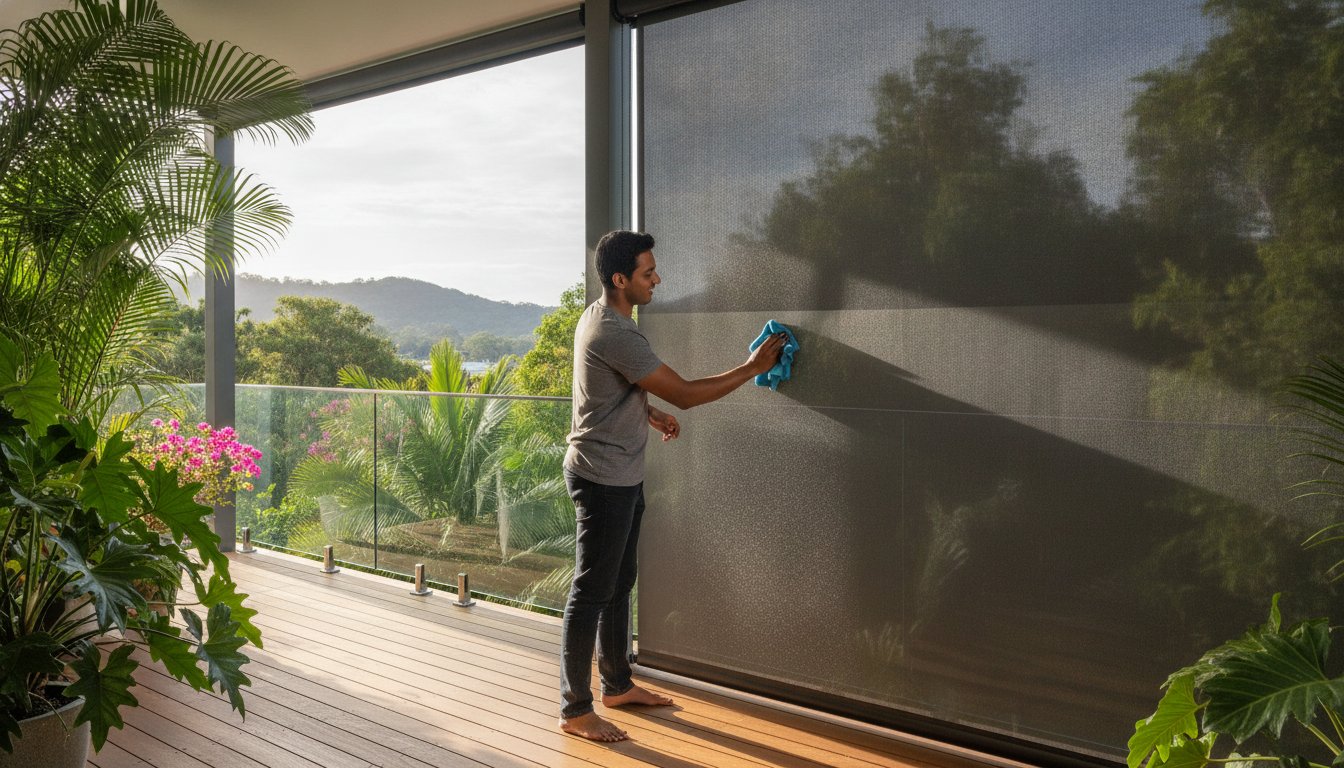
In the humid heart of South East Queensland, your outdoor blinds are doing far more than just providing shade; they are constantly at war with the elements. Whether it is the sticky moisture of a January afternoon or the abrasive salt spray drifting in from the coast, Brisbane’s climate is notoriously tough on external fabrics and hardware. You likely chose your Zipscreen or pivot arm blinds for their durability, yet watching mould take hold or hearing tracks grind can make any homeowner feel uneasy about the longevity of their investment.
We understand that you want to protect your home without accidentally damaging the very materials designed to shield you. It’s a common concern that using the wrong cleaning agent might strip away essential UV coatings or degrade the fabric. This guide shares the professional secrets you need to clean outdoor blinds effectively using a simple, no-nonsense routine. You’ll learn how to maintain that “brand new” look for ten years or more, preserving the all-weather functionality that makes your outdoor living space so special. We will cover everything from managing salt crystallisation to the safest ways to tackle mildew without resorting to harsh, corrosive chemicals.
Key Takeaways
- Understand how Brisbane’s high humidity accelerates mould buildup. Proactive maintenance is the only way to stop it.
- Get our step-by-step method to clean outdoor blinds without stripping away the specialized UV coatings that protect your home.
- Learn why petroleum-based cleaners are the leading cause of material failure and which pH-neutral alternatives keep your mesh looking new.
- Discover how to clear debris from Zipscreen tracks and pelmets to ensure your motorised systems operate without jamming.
- Identify the specific signs that your blinds require a professional service to extend their life for a decade or more.
Why Regular Maintenance is Vital for Brisbane’s All-Weather Blinds
Maintaining outdoor blinds in South East Queensland involves more than just a quick seasonal dust. True “all-weather” maintenance means keeping the fabric and hardware clear of the organic debris that traps moisture and heat. Brisbane’s climate is unique. Our high humidity levels act as a catalyst for mould growth, especially when spores find a food source in the dust settled on uncleaned mesh. If you don’t clean outdoor blinds regularly, you are essentially providing a nursery for mildew to thrive right where you entertain guests.
The impact of salt air is another factor that local homeowners often overlook. Even if your property is a few kilometres inland, salt spray can travel on the breeze and crystallise on your blinds. These salt deposits are highly corrosive. They don’t just dull the finish; they can actually compromise the structural integrity of the mesh over time. We provide a 10-year warranty on our fabric products because we know they are built to last, but that longevity depends on basic care. Regular cleaning ensures these environmental stressors don’t cut the life of your investment short.
The Cost of Neglect in South East Queensland
Neglecting your blinds leads to more than just aesthetic issues. Dirt particles are abrasive. When you operate your blinds, these tiny grains of grit act like sandpaper, grinding against the fibres and the motor mechanisms. This friction causes premature wear that is entirely preventable. Our local flora adds another layer of risk. Eucalyptus leaves are rich in tannins. If a leaf gets caught in your blind as it rolls up, it can leave a permanent brown stain within days. A “set and forget” approach is the fastest way to turn a premium shade solution into a maintenance headache.
Preserving Your Blinds’ UV and Weather Resistance
Modern outdoor fabrics are engineered with heat-reflective coatings designed to keep your patio cool. However, a layer of grime acts as an insulator, trapping heat rather than reflecting it. This reduces the energy efficiency of your home and makes your outdoor space less comfortable during a mid-summer heatwave. Keeping the fabric weave clear also ensures that you maintain the airflow and insect protection that high-quality mesh provides. While all weather blinds Brisbane are built for durability, they require consistent cleanliness to function as the protective barrier they were designed to be.
Step-by-Step: How to Clean Outdoor Blinds by Material
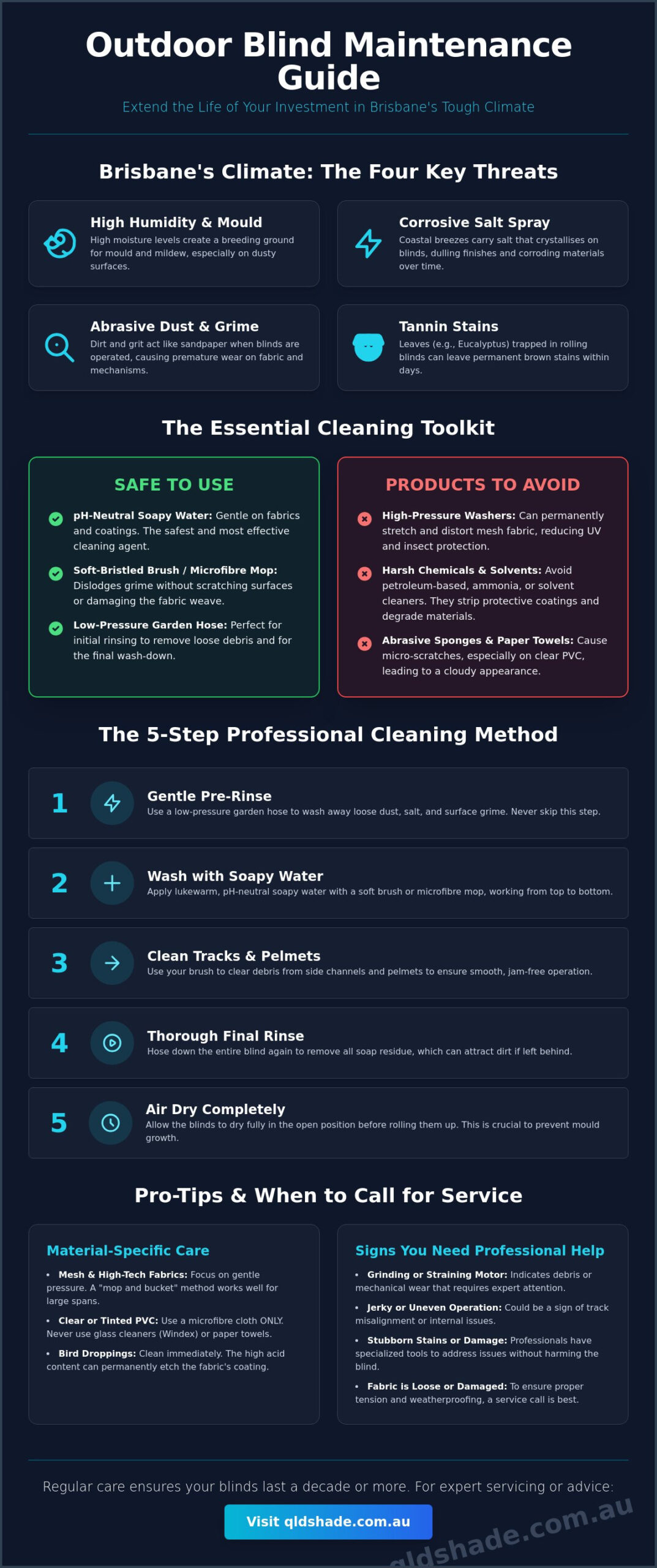
Learning how to clean outdoor blinds correctly starts with understanding the material you’re working with. Different fabrics and metals react differently to moisture and cleaning agents. However, one universal rule applies to every installation: always begin with a gentle hose-down. Using a standard garden hose at low pressure removes the loose grit, dust, and salt that settle on the surface. If you skip this step and go straight to scrubbing, those tiny particles act like sandpaper, scratching the finish or damaging the weave of the fabric.
For popular mesh systems like Zipscreen, the best approach involves a bucket of lukewarm, pH-neutral soapy water and a soft-bristled brush. This combination is effective enough to break down Brisbane’s environmental grime without being abrasive. While you are at it, ensure you run the brush along the side channels. Debris trapped in these tracks is the primary cause of jerky movement or jamming, so keeping them clear is essential for smooth operation.
Cleaning Mesh and High-Tech Fabrics
While it might be tempting to blast away dirt with a high-pressure washer, you should avoid this at all costs. The intense pressure can “open” the weave of the mesh, permanently distorting the fabric and reducing its ability to block UV rays and heat. For large vertical spans, a “mop and bucket” method works wonders. Using a clean microfibre mop allows you to apply even, gentle pressure across the entire surface without needing a ladder. Be sure to pay close attention to bird droppings. The high acid content in droppings can etch into the high-tech fibres of your blinds, leading to permanent staining if left for more than a few days.
Caring for Clear or Tinted PVC
PVC requires a specific set of rules to maintain its clarity. You should never use Windex, ammonia-based glass cleaners, or any solvent-based products on PVC. These chemicals strip away the plasticisers in the material, eventually making it brittle, yellow, or cracked. A microfibre cloth is your best friend here. Avoid paper towels or rough sponges, as they create microscopic scratches that eventually lead to a “cloudy” or hazy appearance. To prevent water spots in the intense Brisbane sun, don’t let the blinds air-dry after washing. Buff them dry with a clean, soft cloth to ensure a streak-free finish. If you find your current window coverings are becoming difficult to manage, upgrading to high-quality motorised blinds can simplify your maintenance routine by allowing for easier positioning during cleaning.
Finally, for those with aluminium shutters, maintenance is straightforward but vital. Simply wipe down the slats with a damp cloth once a month. This prevents the “salt crusting” common in South East Queensland, which can eventually pit the powder-coated finish and dull the look of your outdoor area.
Choosing the Right Cleaning Products (and What to Avoid)
When you decide to clean outdoor blinds, the most critical choice isn’t how hard you scrub, but what you put in your bucket. We live by a simple “Golden Rule” here in Brisbane: if you wouldn’t feel comfortable putting a product on your skin, you shouldn’t put it on your blinds. Many high-end outdoor fabrics feature specialized coatings designed to repel water and reflect heat. Harsh chemicals can strip these layers away in a single afternoon, leaving your blinds vulnerable to the very elements they were designed to block.
Petroleum-based cleaners are the primary culprit behind premature blind failure. These oils might make a surface look shiny for a moment, but they actually cause a chemical reaction that breaks down the molecular structure of synthetic fibres and PVC. Over time, this leads to brittleness and cracking. Similarly, “old school” home remedies like vinegar or bleach are far too acidic or alkaline for modern materials. They can cause irreversible discolouration and weaken the fabric’s integrity. For Zipscreen systems and other high-performance fabrics, sticking to specialist, manufacturer-approved cleaners is the only way to ensure long-term durability.
The Safe DIY Cleaning Solution
For a reliable, day-to-day clean, you don’t need expensive chemicals. A simple mixture of lukewarm water and a small drop of mild dish soap is often the most effective tool. The key is ensuring the soap is “pH neutral.” This means it won’t react with the protective UV inhibitors in the fabric. Before you commit to the whole screen, always test your solution on a small, inconspicuous area. This quick check gives you peace of mind that your cleaning routine won’t cause unexpected spotting or fading. It’s a small step that protects the visual appeal of your outdoor living space.
Chemicals That Will Void Your Warranty
Protecting your investment means knowing exactly what to keep away from your patio. Bleach and ammonia are absolute “No-Go” substances; they eat through fabric and corrode aluminium tracks. You should also avoid abrasive scouring pads, which leave micro-scratches that trap future dirt. A hidden danger many homeowners overlook is the use of insecticides. While it’s tempting to spray a spider near the track, the chemicals in bug sprays can degrade the bond on zipscreen blinds side-tape. This tape is vital for the “zip” functionality; solvent exposure can cause it to peel or fail, which often voids your manufacturer’s warranty. Stick to gentle methods to keep your system performing perfectly for years to come.
Maintaining the Mechanics: Tracks, Pelmets, and Motors
While the fabric often gets the most attention, the internal mechanics are what keep your system functional year after year. To effectively clean outdoor blinds, you must address the side channels and the headbox where the motor resides. Dust, salt, and insect nests frequently accumulate in these hidden spaces. In a Zipscreen system, these obstructions create friction. This forces the motor to work harder than necessary, which can lead to overheating or a shortened lifespan for the electronic components. A quick wipe of the pelmet with a damp cloth prevents this grit from falling into the roll and causing abrasions on the fabric.
Lubrication is another area where many homeowners make a critical mistake. You should never use WD-40 or oil-based lubricants on your blind tracks. These products are “wet” and act as a magnet for Brisbane’s dust and grit, eventually creating a thick, abrasive paste that jams the system. Instead, use a dry silicone spray. This provides a slick surface for the zip to glide through without attracting debris. If you have a motorised system, keep your remote and any external sensors clean and dry. A simple wipe with a dry microfibre cloth ensures the signal remains strong and the sensors can accurately detect wind or light levels.
Keeping the Zipscreen Tracks Clear
The side channels of your Zipscreen require regular attention to ensure “jam-free” operation. Use a vacuum cleaner with a soft brush attachment to suck out spider webs, dried leaves, and grit from deep within the tracks. After vacuuming, wipe the internal “zip” guide with a damp cloth to remove any remaining salt or fine dust. If you notice the blind is moving with a jerky motion or making a straining sound, it’s usually a sign that friction is building up. Addressing this early prevents the motor from hitting its torque limit and stopping mid-cycle.
Storm Season Preparation for Brisbane Homes
Brisbane’s storm season presents a specific challenge for outdoor maintenance. We follow a strict “Wash and Dry” rule: never leave your blinds rolled up while they are wet. Doing so traps moisture between the layers of fabric, which is the number one cause of mould and permanent “waffle” patterns in the material. If a storm hits and you must retract them, roll them back down as soon as the weather clears so they can air dry. After a major event, check the bottom bar for mud or organic debris. Keeping this area clear is vital for systems with automatic obstruction sensors, as even a small twig can trigger the safety stop and prevent the blind from closing fully. If you’re noticing your system is still struggling after a thorough clean, it may be time to contact QLD Shade for a professional assessment to ensure everything is aligned correctly.
Professional Support: When to Call QLD Shade
While a consistent routine to clean outdoor blinds will significantly extend the life of your installation, there are moments when a standard wash isn’t enough. Brisbane’s weather can be unpredictable. If you notice your blinds are sitting unevenly, the fabric is starting to “creep” to one side of the roller, or the motor sounds laboured despite clear tracks, it’s time for a professional assessment. These are often signs of minor misalignments that, if left unaddressed, can lead to permanent fabric damage or motor failure. Our team specializes in identifying these subtle mechanical shifts before they become costly repairs.
The longevity of your outdoor shade starts with precision installation. At QLD Shade, we focus on perfect tensioning and alignment from day one, which naturally reduces the amount of debris your system traps. We prioritize Australian-made products because they are engineered specifically for the intensity of the South East Queensland sun and our high-salt coastal air. By choosing materials designed for local stressors, you’re investing in a product that maintains its “all-weather” functionality with far less effort on your part. When your blinds are installed correctly, the maintenance becomes a simple task rather than a weekend chore.
Expert Advice for Brisbane Homeowners
As a family-owned business, we take a personal interest in helping you create durable outdoor living solutions that stand the test of time. Our 8-person team understands the specific challenges of our regional climate, from the heavy afternoon storms to the constant humidity. We don’t just sell products; we provide technical expertise on which materials will best suit your home’s orientation and wind exposure. Whether you need a few maintenance tips for your existing setup or you’re looking to install a brand new system, our specialists are always available to provide honest, no-nonsense advice.
Book Your Free Consultation
If your current blinds are reaching the end of their lifespan or have been damaged by severe weather, upgrading to a modern Zipscreen or motorised system can transform your patio. These high-performance products are designed for easier cleaning and superior wind resistance, giving you peace of mind during storm season. We service the greater Brisbane and Ipswich areas, offering bespoke solutions tailored to your home’s unique architecture. Don’t wait for a minor issue to become a major headache. Contact QLD Shade for your free quote today and let us help you protect your home with the best local shade technology available.
Secure Your Home’s Comfort with Expert Maintenance
Brisbane’s unique climate doesn’t have to be the enemy of your patio. By following a simple, consistent routine to clean outdoor blinds, you effectively prevent the humidity-driven mould and salt corrosion that often shorten the life of external window coverings. Focus on gentle, pH-neutral solutions and keep those Zipscreen tracks clear of debris to ensure your system operates smoothly through every storm season. These small actions preserve the “all-weather” functionality that makes your outdoor space so valuable.
As a family-owned Brisbane business, we understand that your home is your sanctuary. We prioritize Australian-made products specifically engineered to withstand our intense regional stressors, and our fabric products are backed by a 10-year warranty. This commitment to quality ensures your investment remains as functional and beautiful as the day it was installed. If you’re ready to enhance your outdoor living area with precision-engineered shade, our team is ready to guide you.
Get a Free Measure & Quote for Your Brisbane Home
Take the first step toward a more comfortable, low-maintenance lifestyle today and enjoy the peace of mind that comes with professional local expertise.
Frequently Asked Questions
Can I use a pressure washer to clean my outdoor blinds?
No, you should never use a pressure washer on your blinds. The high-intensity stream is powerful enough to “open” the fabric weave and strip away the protective UV coatings that shield your home from the sun. A standard garden hose at low pressure is the safest tool for the job, providing enough force to remove loose grit without risking structural damage to the mesh or PVC.
How often should I clean my outdoor blinds in Brisbane?
We recommend a light clean every three months to effectively manage Brisbane’s high humidity and dust levels. If your property is located near the coast, a monthly hose-down is necessary to prevent salt spray from crystallising on the hardware. Staying on top of this schedule ensures that organic debris doesn’t have the chance to settle into the fibres, which makes your maintenance routine much faster and easier.
What is the best way to remove mould from outdoor blind fabric?
The most effective way to remove mould is by using a soft-bristled brush and a bucket of lukewarm, pH-neutral soapy water. Gently work the solution into the affected area to break the mould’s bond with the fabric weave. It is vital to avoid bleach or acidic “home remedies,” as these will degrade the material’s integrity and discolour the fabric, often voiding your manufacturer’s warranty in the process.
Is it okay to roll up my outdoor blinds when they are wet?
You should avoid rolling up your blinds while they are wet whenever possible. Retracting wet blinds traps moisture between the layers of fabric, creating a breeding ground for mould and causing a permanent “waffle” texture to develop in the material. If you must retract them during a sudden Brisbane storm, ensure you roll them back down to air dry completely as soon as the weather clears.
Should I lubricate the tracks of my Zipscreen blinds?
Yes, but you must only use a dry silicone spray for this task. Never use WD-40 or other oil-based lubricants, as these are “wet” and act as a magnet for Brisbane’s grit and dust, eventually creating a sticky paste that will jam the system. A light application of silicone spray twice a year keeps the side channels slick and ensures the zip glides smoothly without attracting abrasive debris.
Will bird droppings damage my outdoor blinds permanently?
Bird droppings are highly acidic and can cause permanent etching or staining if they aren’t addressed quickly. To safely clean outdoor blinds after a bird strike, wash the area immediately with fresh water and a soft microfibre cloth. Prompt action prevents the acid from eating through the fabric’s protective coatings, which preserves both the appearance and the durability of your shade system.
How do I clean motorised outdoor blinds safely?
To clean motorised blinds safely, you must focus on the fabric and tracks while keeping all water away from the motor and electrical components. Never spray a hose directly into the headbox or pelmet where the motor is housed. Instead, use a damp cloth to wipe down the external hardware and a vacuum with a soft brush attachment to clear the tracks of any debris that could cause motor strain.
Can I use Windex on my clear PVC blinds?
No, you should never use Windex or any ammonia-based glass cleaners on clear or tinted PVC. These harsh chemicals strip away the essential plasticisers that keep the PVC flexible, eventually leading to a brittle, yellowed, or “cloudy” appearance. Stick to using fresh water or a specialized PVC polish with a clean microfibre cloth to maintain the crystal-clear view of your outdoor area.
Ready to Transform Your Space?
Take the next step and discover the right blinds, shutters, awnings for your space.
Get a Free In-Home Measure & Quote
Contact QLD Shade today for a free measure and quote and discover why Brisbane homeowners trust us for premium outdoor blinds and awnings.
GET IN TOUCH
FOLLOW US: