

10/349-351 MacDonnell Rd,
Clontarf, Qld 4019
West Facing Patio Solutions: Find the Right Shade for Your Space
Angie Neal | October 17, 2026
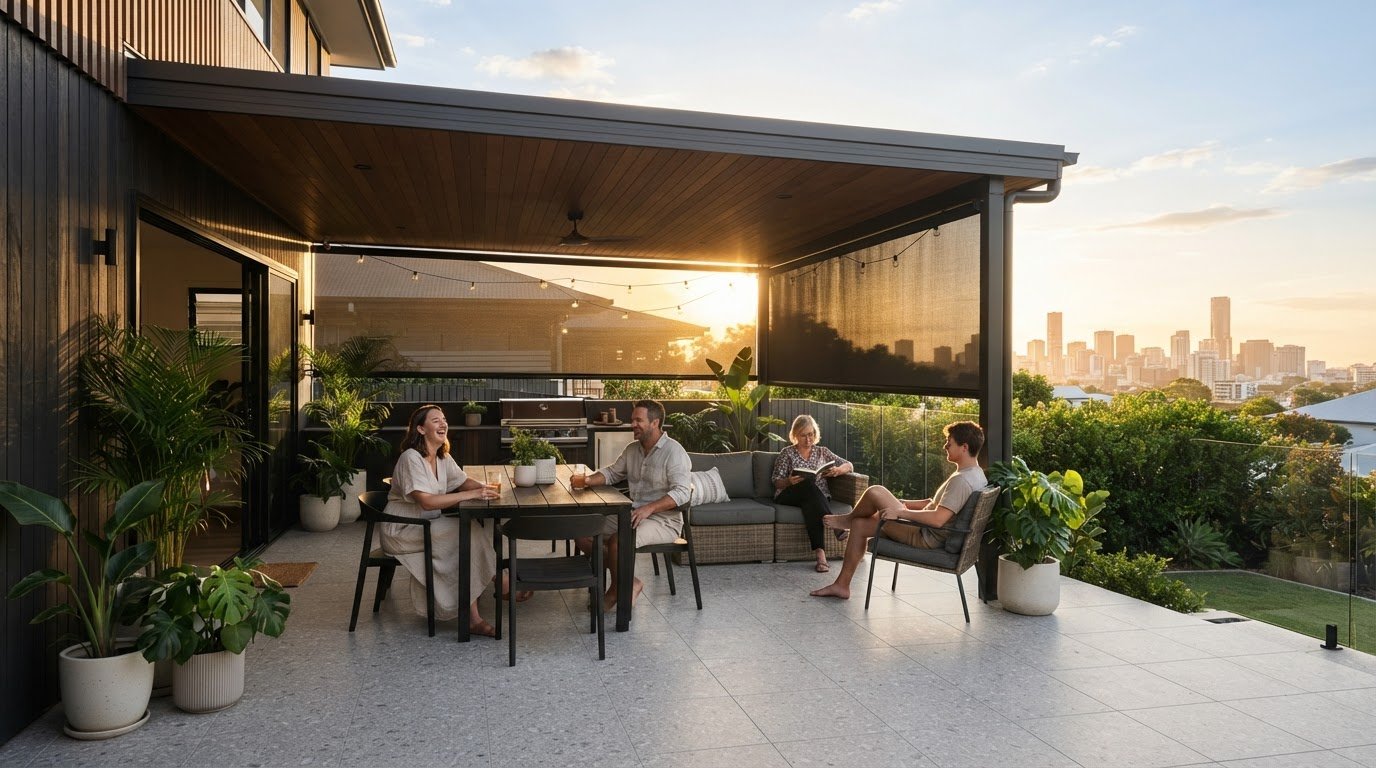
Overhead shade might not be enough for a west-facing patio. As the afternoon sun drops, its low angle can shine beneath a roof or awning and make the space uncomfortable just when you want to use it. In Brisbane, where afternoon heat can linger, effective west facing patio solutions need to address sunlight from the side as well as from above.
If your patio heats up later in the day, the layout and materials may be part of the problem. Walls and paving can absorb the sun’s heat and radiate it back, so choosing shade to suit the patio’s orientation and openings can make the area more usable.
This guide explains why west-facing patios can be challenging and how to compare shade approaches, from outdoor blinds to awnings, based on your space and routine. QLD Shade supplies Australian Made outdoor blinds and awnings with Professional Installation, tailored to your patio. A free in-home measure and quote helps match an option to your layout, with installation in 7 - 14 days.
Key Takeaways
- Track where sunlight reaches your patio through the afternoon to pinpoint when and where extra shade is needed.
- Compare overhead structures, planting and west facing patio solutions such as outdoor blinds or awnings by how they address sun direction and fit your space.
- Prioritise the areas you use most, such as seating or dining spots, before deciding how to shade the patio.
- Brisbane conditions and each home’s layout vary, so plan shade around your own exposure and intended use.
- A free in-home measure and quote can help tailor Australian Made outdoor blinds and awnings with Professional Installation to your patio.
Why West-Facing Patios Get Uncomfortable in the Afternoon
A patio can feel cool and inviting in the morning, then become difficult to enjoy later in the day. On a west-facing patio, the sun moves around to the western side of the home, bringing direct afternoon light into an area that may have been shaded earlier. Sunlight may reach across seating, enter through open sides or shine towards nearby doors and windows.
A roof or other overhead cover can block sunlight from above, but it may not stop rays entering from the side. The shape and direction of the shade matter as much as whether the patio has a cover. Direct sunlight on a chair or paving can make an area harder to use, while a bright but shaded space may still feel comfortable.
West-facing patio shade is cover designed to reduce direct afternoon sun entering from the western side of an outdoor area. The right approach depends on where sunlight reaches your patio and how you want to use the space.
What makes afternoon sun different on a west-facing patio?
The sun’s position changes throughout the day, so the shaded areas of a patio shift too. In the morning, the western side may be out of direct sun. Later, sunlight can pass beneath a roofline or enter through an open side, falling across the parts of the patio you use most.
It helps to consider the sun path alongside the home’s orientation. Passive solar building design considers how orientation and shading affect the sun’s impact on a building. For a patio, the practical question is: at the time you want to be outside, where is the direct sunlight coming from? That tells you whether overhead cover alone addresses the exposure.
Which parts of the patio need shade?
Observe your patio at the times you usually use it, such as during an afternoon meal or while relaxing after work. Notice which areas receive direct sun and which remain comfortable. This helps you focus shade where it supports your routine, rather than assuming the whole space has the same exposure.
- Seating and dining spots: Note whether direct sun reaches chairs, tables or the area where people gather.
- Doors and windows: See whether afternoon light falls on nearby openings as well as the patio.
- Regularly used areas: Include paths between the home and outdoor zones, especially where you pause or spend time.
Consider outdoor and indoor comfort separately. Shade over the patio can help make that area more usable, while sunlight entering a room through a window is a different concern. A clear picture of where the sun falls helps you describe the problem and compare west facing patio solutions for your space.
How Sun Direction Shapes West-Facing Patio Shade
Shade planning starts with the sun’s path across your patio, not just the direction the house faces. Eaves, walls, fences and neighbouring buildings can all change where direct light lands. A roof may shade the centre of the area while the open western edge still lets sun reach a table or doorway. West-facing patios need shade planned around the direction afternoon sunlight enters, not just the space above.
How can you track the sun across your patio?
Observe your patio during the hours you normally spend outdoors. At different points in the afternoon, note where direct sunlight falls and which areas remain shaded. Pay attention to changes across the floor, seating, doors and windows. A few observations on sunny days can reveal patterns without calculations or specialist equipment.
For a useful record, sketch the patio and mark the sunny areas each time you check. Note whether the light shifts towards one side, stays on a particular seat or reaches an opening in the home. This helps distinguish a brief patch of sun from a spot that stays exposed during the time you want to relax or dine outside.
Why can overhead shade leave gaps?
A roof or canopy mainly limits sunlight coming from above. As the sun sits lower in the western sky later in the day, direct light can pass beneath the edge and enter through an open side. If seating is exposed from that direction, overhead cover may leave it in the sun. Side coverage or adjustable shade may better match that pattern.
Look at the patio from the sun-facing side as well as from above. An eave may shade the wall but leave the dining area exposed; a side wall may block some light while an opening beside it admits sun. These details help determine whether shade should cover one edge, several openings or a defined seating zone.
Overhead and side shade address different paths of sunlight. An awning can provide cover above, while outdoor blinds can be considered where sun enters from an exposed side. The best fit depends on the patio’s layout and how you use it, rather than the label “west-facing” alone. In Brisbane, observing your own patio is especially useful because nearby structures and the home’s orientation can alter where afternoon light reaches.
These observations give you a practical starting point for comparing west facing patio solutions. QLD Shade provides a free in-home measure and quote for Australian Made outdoor blinds and awnings with Professional Installation, tailored to your patio’s orientation and layout.
Comparing West-Facing Patio Shade Options
Choose shade by matching it to where sunlight enters, the space available and how you use the patio. A fixed overhead structure, planting and outdoor blinds or awnings each address different needs. For west facing patio solutions, consider whether the main problem is sun from above, low-angle light from the side, or both. No single option suits every layout.
When might an awning or overhead structure suit the space?
An awning or other overhead structure can cover the patio from above and help define an outdoor dining or lounging area. It may suit a space where direct sunlight falls mainly from overhead, or where you want consistent cover over a particular zone. Before choosing this approach, consider whether the western edge remains open to afternoon sun. Overhead coverage alone may leave that side exposed.
When might outdoor blinds suit a west-facing patio?
Outdoor blinds can be considered when sunlight enters through an open side and reaches seating or other regularly used areas. Depending on the blind selected, relevant features may include UV Protection, Ensures Privacy, Insect Blocking or High Wind Resistance. These are distinct features, so consider which matter for your patio rather than assuming every blind provides them all. QLD Shade supplies Australian Made outdoor blinds and awnings with Professional Installation.
Planting offers a natural way to introduce shade, but it needs suitable space and may take time to provide the coverage you want. Use the comparison below to weigh each approach against your patio’s exposure and everyday use.
| Shade approach | Direction of shade | Adjustability | Space needs | May suit |
|---|---|---|---|---|
| Overhead structure | Primarily from above | Depends on the structure | Needs room above the area to be covered | Dining or seating zones needing overhead cover |
| Planting | Where established foliage casts shade | Limited by plant growth and placement | Needs room for plants to grow | Patios where greenery and gradual shade suit the layout |
| Outdoor blinds | Can address exposure from an open side | Depends on the blind style | Needs a suitable side or opening for installation | Areas where afternoon sun reaches in from the side |
| Awnings | Overhead cover for a defined area | Depends on the awning style | Needs suitable space above the patio | Patios where overhead shade fits the main use area |
Think about how each option fits your routine. If you mainly use one section of the patio, targeted cover may be more practical than shading every edge. If the sun comes through an opening, side coverage deserves attention. For more context on choosing outdoor blinds for Brisbane conditions, see this outdoor blinds weatherproofing guide.
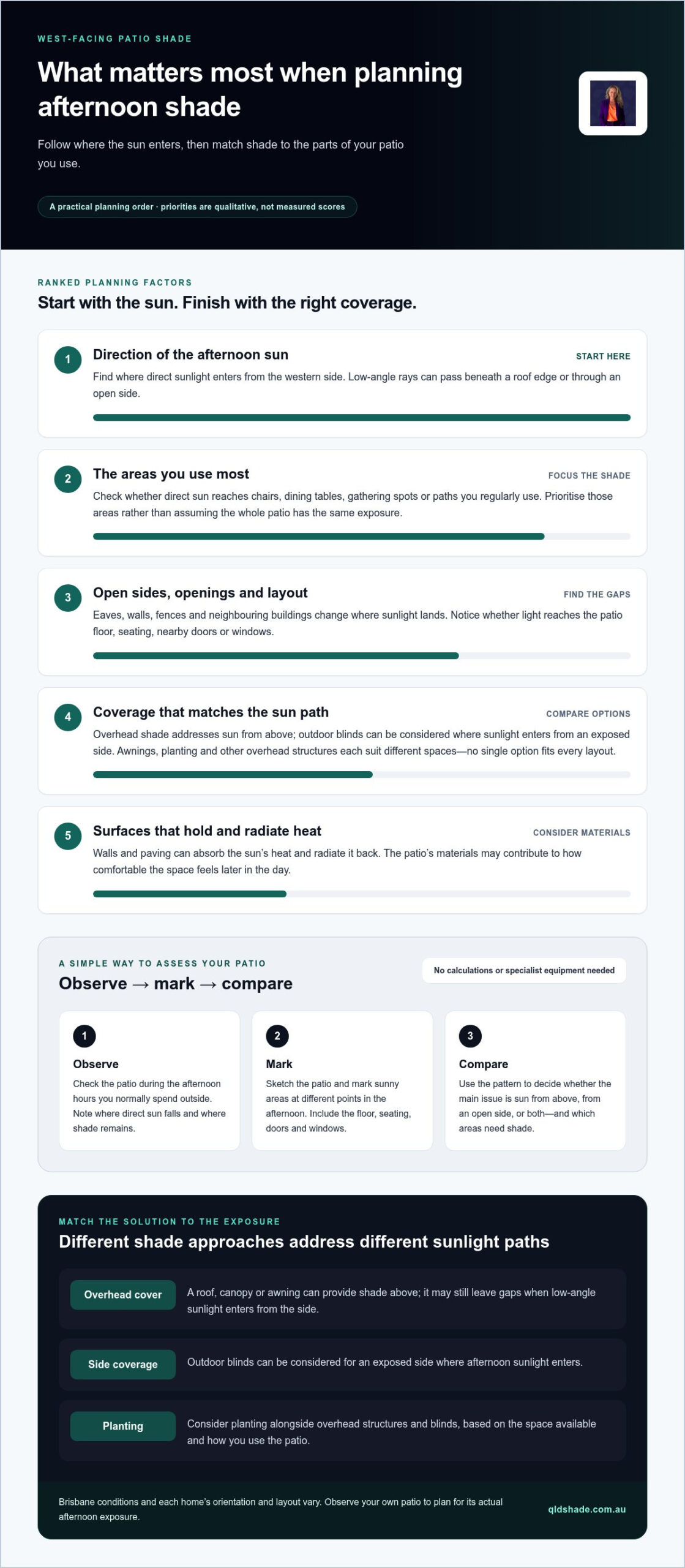
How to Choose Shade for Your Patio and Brisbane Conditions
Brisbane’s sunny afternoons make shade planning important, but patios don’t all receive sunlight in the same way. Orientation, nearby buildings and your home’s layout can change where direct sun falls. Use this sequence to narrow down what your space needs before choosing a shade approach.
- Observe the sun. Check the patio at the times you usually use it. Note where direct sunlight lands and how its position changes across the area.
- Identify priority areas. Decide whether your main concern is a dining table, lounge seating, a doorway or another regularly used spot. Consider whether you want shade across the whole patio or focused on one zone.
- Compare shade direction. If sunlight enters from above, overhead coverage may address the exposure. If it reaches in from an open side, consider whether side coverage is also needed. Some layouts may call for a combination.
- Plan the installation. Consider the patio’s dimensions, existing eaves or overhead cover, access and appearance. Think about how a shade option will fit around furniture, doors and everyday movement through the space.
What should you assess before choosing a shade solution?
Take stock of the patio’s orientation, open sides, existing overhead cover and main seating areas. Then consider whether privacy, Insect Blocking or UV Protection matters for how you use the space. Note any constraints that could affect access, appearance or everyday use, such as a narrow walkway or a door that needs to remain clear.
How does a tailored measure help with fit?
Measuring the actual patio helps account for its layout, openings and dimensions, so the solution can be tailored to the space rather than based on a generic plan. QLD Shade’s process is straightforward: Enquire, Book, Measure, Install. QLD Shade supplies Australian Made outdoor blinds and awnings with Professional Installation, and installation takes 7 - 14 days. A free in-home measure and quote considers the patio’s orientation and intended use.
For more ideas on making an outdoor area work for Brisbane living, explore this Brisbane outdoor living guide. It can help you think about how shade fits into the way you want to use your backyard.
Once you’ve identified the exposure and priority areas, arrange a free in-home measure and quote for a tailored shade option for your patio.
A Tailored West-Facing Patio Solution with QLD Shade
The most suitable shade depends on more than the patio’s west-facing orientation. Open sides, existing overhead cover, dimensions and how you use the space all influence what may work well. QLD Shade’s free in-home measure and quote lets you discuss those details on site, so the solution can be tailored to your patio’s layout and intended use.
What happens from enquiry to installation?
The process follows four clear steps: Enquire, Book, Measure, Install. An in-home measure looks at the actual space, helping account for its dimensions and layout. You can discuss where afternoon sun reaches, which areas matter most and whether outdoor blinds or awnings better suit your patio.
- Enquire about shade for your west-facing patio.
- Book an in-home measure and quote.
- Measure the space and consider its orientation, layout and intended use.
- Install your selected shade option. The installation timeframe is 7 - 14 days.
This measured approach is useful when a patio has an unusual opening, a defined seating area or existing cover that still leaves one side exposed. Rather than choosing shade based only on a general description of west-facing exposure, the in-home measure considers the specific conditions of your Brisbane home.
Why choose QLD Shade for outdoor shade?
QLD Shade is a family-owned Brisbane business with an 8 Person Team and Over 35,000 Installs. Its Australian Made outdoor blinds and awnings come with Professional Installation. QLD Shade’s team measures the space and installs the selected shade option around your patio’s practical needs.
QLD Shade displays a 5.0 rating with 145 reviews and a 4.9 rating with 146 reviews. Fabric is covered by a 10 Year Fabric Warranty. The warranty applies to fabric, not other product components.
Thoughtful planning can help make a west-facing patio more comfortable during the hours you want to use it. To discuss a tailored option for your layout, book your free in-home measure and quote.
Make Your Patio More Inviting This Afternoon
A west-facing patio can become a place you look forward to using, rather than an area you avoid during the afternoon. Choose west facing patio solutions that suit your home’s exposure, layout and daily routine. A tailored measure can help turn your observations into a practical plan for outdoor shade.
QLD Shade supplies Australian Made outdoor blinds and awnings with Professional Installation. With Over 35,000 Installs and a 10 Year Fabric Warranty on fabric, you can explore a shade option with a Brisbane-based team.
Start planning a more comfortable outdoor space with a free in-home measure and quote.
Frequently Asked Questions
What is the best shade for a west-facing patio?
The best shade depends on where afternoon sunlight reaches and which parts of the patio you want to use. If light comes in from an open side, outdoor blinds may be worth considering; if the main exposure is from above, an awning or overhead cover may suit. For west facing patio solutions, also consider the patio’s size, existing cover and whether you want to keep the area open to the garden.
Will a pergola block afternoon sun on a west-facing patio?
A pergola can provide overhead shade, but it may not block sunlight entering through an open side as the afternoon sun shifts. For example, a pergola could shade the centre of a patio while the western edge remains exposed. Consider whether the roof alone addresses your main discomfort or whether additional side coverage would better suit the seating area you use most.
Can outdoor blinds help shade a west-facing patio?
Yes. Outdoor blinds can be considered when direct sun enters through an open side, such as beside an outdoor dining area. The right choice depends on the opening and how you use the space. QLD Shade supplies Australian Made outdoor blinds with Professional Installation. Note which side gets the afternoon sun so the measure and quote can focus on the area you want shaded.
How do I work out where shade is needed on my patio?
Take a few photos from the same spot during the hours you usually use the patio, then compare where sunlight falls. Include the floor and the height of your seating, since a sunny patch may reach a chair even if the surrounding area looks bright. Also note whether glare through a nearby window is a separate indoor concern from shade needed outdoors.
Are awnings or outdoor blinds better for west-facing patios?
Neither is automatically better. An awning provides shade from above, while outdoor blinds can address exposure through an open side. If afternoon light reaches both the patio floor and the seating from the edge, consider how each area can be covered. Base the decision on your patio’s structure, access and preferred outlook, rather than choosing by product type alone.
Can patio shade also help with privacy and insects?
It can, depending on the product selected. QLD Shade’s outdoor range includes options with features such as Ensures Privacy and Insect Blocking, alongside UV Protection and High Wind Resistance. These features aren’t interchangeable, so think about what matters most: screening a neighbour’s view, limiting insects around an outdoor table or managing sun exposure. A tailored discussion can help match your priorities to an option.
How do I get a measure and quote for patio shade in Brisbane?
Request a free in-home measure and quote from QLD Shade, and share when the patio gets direct sun, which areas you use most and any access or layout details that could affect installation. The process is Enquire, Book, Measure, Install. Having those observations ready helps keep the discussion focused on shade for your Brisbane home.
Ready to Transform Your Space?
Take the next step and discover the right blinds, shutters, awnings for your space.
Get a Free In-Home Measure & Quote
Contact QLD Shade today for a free measure and quote and discover why Brisbane homeowners trust us for premium outdoor blinds and awnings.
GET IN TOUCH
FOLLOW US: